History
The name zircon carries a thousand-year journey across languages — and the mineral itself was sold and worn for centuries before chemistry caught up with what it actually was.
The medieval trail starts in 12th- and 13th-century lapidary texts. The forms jargonce, giarconsia, and iargonça appear in old French, Italian, and Spanish, naming a class of clear, fiery gemstones. The old French jargonce sits at the root of them all. The common modern claim that the word ultimately descends from Persian azargun is, on present evidence, a later reconstruction with no surviving link to the medieval forms. A separate gem-trade term, hyacinth — after the flower hyacinthus — covered the yellow, orange, and red varieties of the same species. Jargoon survives today as a name for the pale, near-colourless stones.
The modern spelling settled in German mineralogy. Abraham Gottlob Werner used Zirkon in his 1780 translation of Axel Cronstedt's Försök till en mineralogie, glossing the older Jargon with a short editorial note. German scientists then adopted the name; Martin Klaproth, Ludwig Emmerling, and others established Zirkon as the preferred spelling in scientific literature.
The decisive moment for the mineral's scientific identity came in 1789. Klaproth analysed a jargoon from the island of Ceylon — present-day Sri Lanka — and isolated a new earth he named Zirkonerde: the oxide of an unknown element, zirconium. The mineral that had been bought and sold for centuries as an ornamental stone had given up a new element to chemistry. René Just Haüy carried the German form into French as zircon in his 1801 Traité de minéralogie, and the spelling has held ever since.
A modern point of confusion is worth flagging. Cubic zirconia — the brilliant synthetic stone widely sold as a diamond substitute since the 1970s — is not zircon. It is zirconium dioxide (ZrO₂) grown in a cubic crystal form, while zircon is zirconium silicate (ZrSiO₄). The two share the element zirconium, isolated from zircon in 1789, and nothing else.
Industrial & practical applications
Zircon's most consequential modern use is not as a material but as a clock. Every grain of it is born with a small dose of uranium tucked into its crystal lattice — and once it cools, it refuses to let either the uranium or its lead daughter products escape. Geochronologists exploit that stubbornness to date the rocks that hosted the grain. Zircons are typically dated by uranium–lead (U–Pb), fission-track, and U+Th/He techniques. The mineral is the backbone of the planet's deep-time chronology — and it holds the current record for the oldest known terrestrial material. Zircons from Jack Hills in the Narryer Gneiss terrane, Yilgarn craton, Western Australia, have yielded U–Pb ages up to 4.404 billion years. Oxygen-isotope readings of some of those grains have been interpreted as evidence that liquid water existed on Earth's surface more than 4.3 billion years ago.
In industry
The industrial story rests on zircon sand. The mineral is recovered as a coproduct or byproduct of mining and processing heavy-mineral sands for the titanium minerals ilmenite and rutile. Australia leads world production at 37%; South Africa, Africa's main producer, contributes another 30% of the world total.
The three major end uses of the sand are refractories, foundry sands (including investment casting), and ceramic opacification. As an opacifier, the mineral is consumed mainly by the decorative ceramics industry.
Zircon is also the principal precursor to zirconium dioxide (ZrO₂), a refractory oxide with a melting point of 2,717 °C. The same sand feeds the small zirconium-metal stream. Reactor designers pick zirconium alloys — the Zircaloys — for their low neutron-capture cross-section and resistance to corrosion in hot pressurised water. The metal also serves chemical piping for corrosive environments, heat exchangers, and specialty alloys. Zircon is the primary source of all hafnium as well. The two elements sit in the mineral at a ratio of about 50 to 1, and the hafnium must be separated out before the zirconium can be used in reactors.
As a gemstone
Cut and polished, zircon has been a gem for centuries. The mineral's high refractive index gives it a brilliance close to diamond's, and modern stones come in a wide colour palette. Common brown zircons can be transformed into colourless and blue zircons by heating to 800 to 1,000 °C. The heat-treated blue is the most valuable; prior to World War II it was available in 15-to-25-carat sizes, but stones as large as 10 carats have become very scarce since.
Where it forms, where it's found
- Geological setting
An accessory mineral in igneous and metamorphic rocks.
Varieties
Physical
- Hardness
- 1Talc
- 2Gypsum
- 3Calcite
- 4Fluorite
- 5Apatite
- 6Orthoclase
- 7Quartz
- 8Topaz
- 9Corundum
- 10Diamond
- Lustre
- Adamantine
- Transparency
- Transparent · Translucent · Opaque
- Colour
- Colourless · yellow · grey · reddish-brown · green · brown · black · rarely blue
- Streak
- White
- Tenacity
- brittle
- Cleavage
- Poor/Indistinct
Indistinct on (110)(111)
- Fracture
- Conchoidal
- Density
- 4.6 g/cm³
Optical
- Optical type
- Uniaxial (+)
- Refractive index
- 1.925 – 2.015
- Surface relief
- Very high
- Principal indices
- nω 1.925 – 1.961 · nε 1.98 – 2.015
- Pleochroism
- Weak
- Dispersion
- Very strong
- UV response
- Many zircons are fluorescent, but some (mainly metamict ones) are not. Fluorescent zircon, from dull to bright in intensity, shows shades of yellow, golden-yellow and yellow-brown (SW UV). This property is often diagnostic in identification.
Crystallography
- Space group
- #178
- Cell parameters
- a = 6.607(1) Å · c = 5.982(1) Å
- Z
- 4
- Morphology
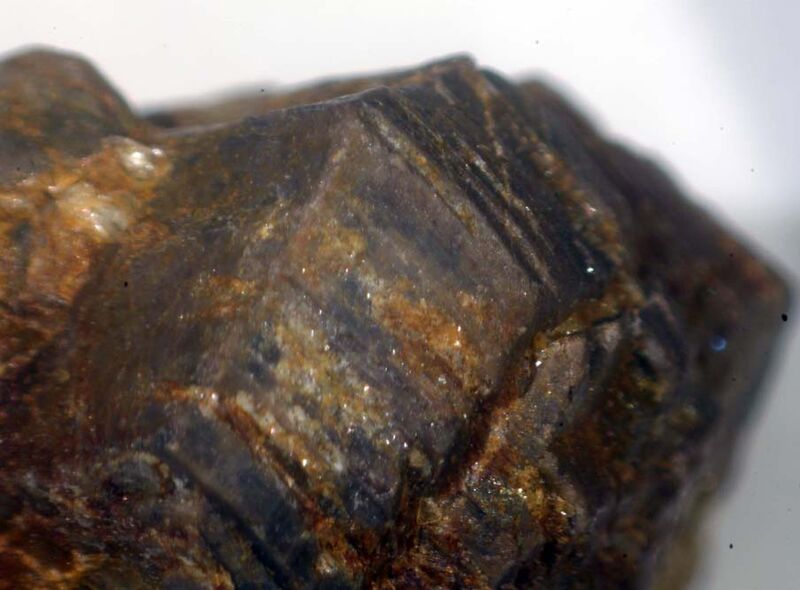
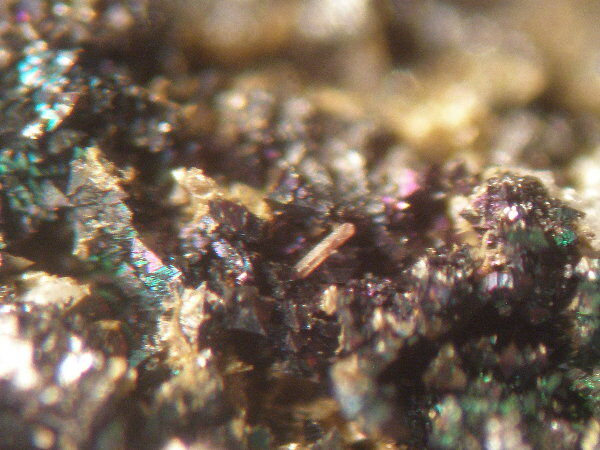
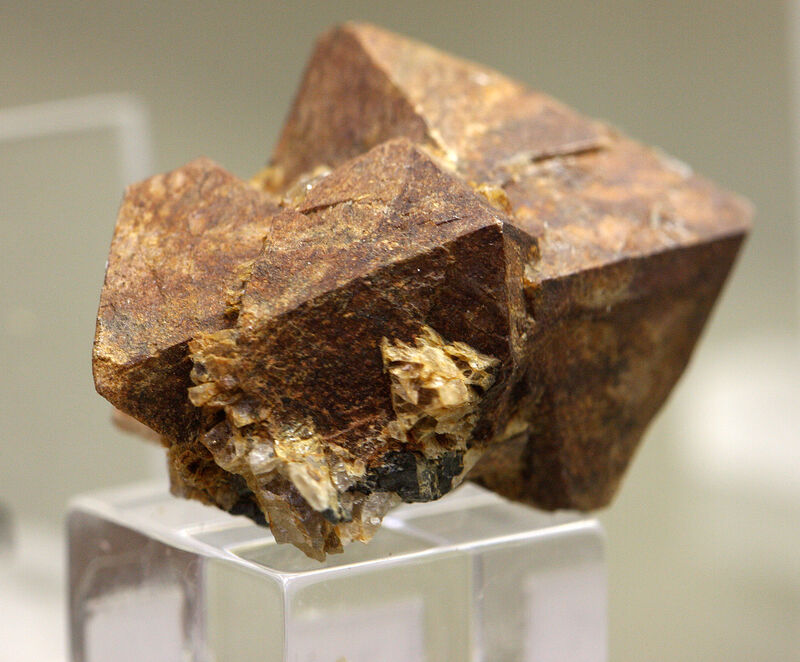
Typically occurs in simple, short to long prismatic crystals, usually capped by bipyramids. Sometimes in pseudo-octahedral bipyramids, and second order prisms and bipyramids may occur. Pinacoids and tabular crystals are less common, as are acanthine crystals.
- Twinning
On (101)
- Comment
May be partly or fully metamict, especially U-/Th-rich crystals. Metamictisation leads to an enlarged unit cell.
Chemical composition
- Impurities
- Hf
- Th
- U
- REE
- O
- H
- H2O
- Fe
- Al
- P
Synonyms
- Açorita
- Açorite
- Azorit
- Azorita
- Azorite
- Circone
- Jargon de Ceylan
- Meta-Zircon (of Leitz)
- Œrsdedtita
- Oesterdit
- Oesterdita
- Oesterdite
- Örstedit
- Örstettit
- Ostranit
- Ostranita
- Ostranite
- Polykrasilith
- Tachyaphaltite
- Turmali
- Zircoi
- Zirconite
- Zircono
- Zirkonit
In other languages
- French
- 10101-52-7 · 14940-68-2 · Silicate de zirconium · zircon · ZrSiO4
- German
- Hyacinth · Zirkon
- Spanish
- Circon · zircón
- Italian
- zircone
- Portuguese
- zircão · Zirconita
- Japanese
- ジルコン · 風信子鉱
- Chinese
- 皓石 · 鋯石 · 锆石
- Simplified Chinese
- 锆石
- Traditional Chinese
- 鋯石
- Russian
- старлит · циркон
- Arabic
- زركون
Classification
9.AD.30
- 9SilicatesClass
- 9.ANesosilicatesDivision
- 9.ADNesosilicates without additional anions; cations in [6] and/or greater coordinationGroup
- 9.AD.30ZirconSpecies
51.05.02.01
- 51Nesosilicates Insular Sio4 Groups OnlyClass
- 51.05Insular SiO4 Groups Only with cations in >[6] coordinationType
- 51.05.02Zircon groupGroup
- 51.05.02.01ZirconSpecies
14.10.1
- 14Silicates not Containing AluminumClass
- 14.10Silicates of Zr or HfGroup
- 14.10.1ZirconSpecies
Group, growth & confusion
 Aeschynite-(Ce)Ce(TiNb)O6Mineral—
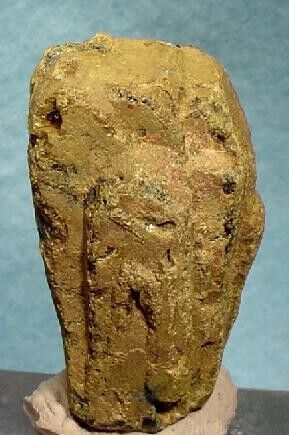 Aeschynite-(Y)Y(TiNb)O6Mineral—
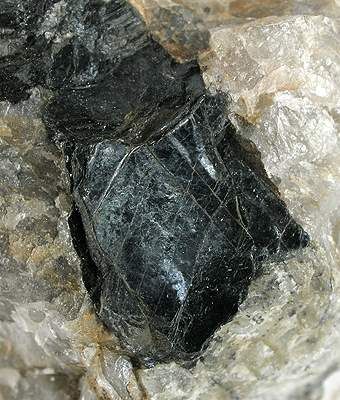 AnniteKFe2+3(AlSi3O10)(OH)2Mineral—
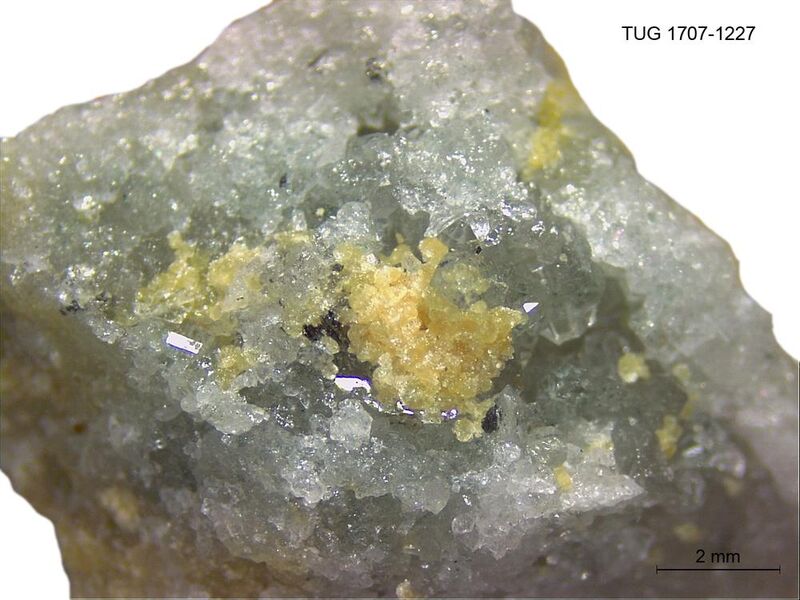 FluorapatiteCa5(PO4)3FMineral—
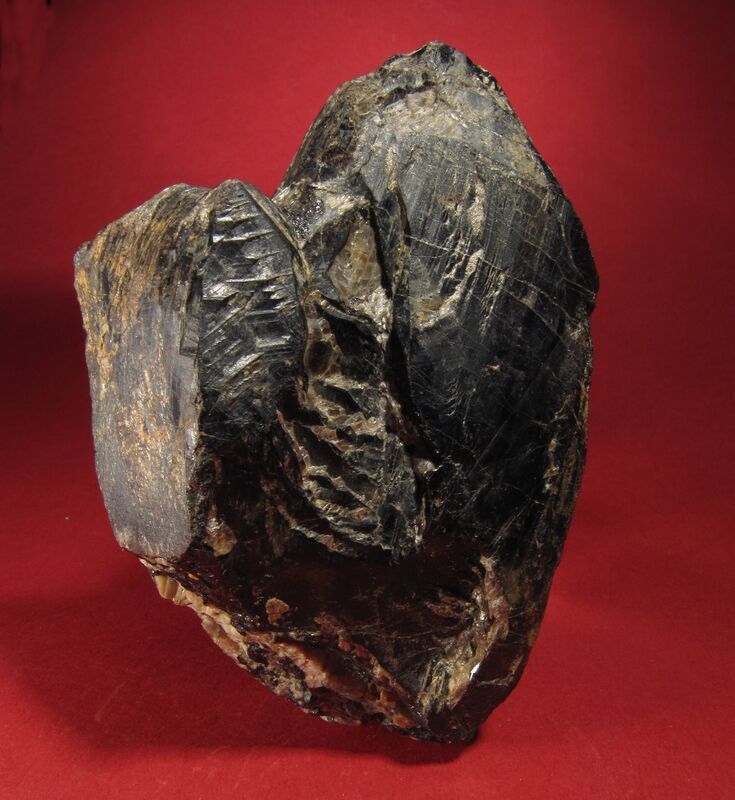 Gadolinite-(Y)Y2Fe2+Be2O2(SiO4)2Mineral—
 Gagarinite-(Y)NaCaYF6Mineral—
 HafnonHf(SiO4)Mineral—
- HomiliteCa2Fe2+B2Si2O10Mineral—
- HydrobiotiteK(Mg,Fe2+)6(Si,Al)8O20(OH)4 · nH2OMineral—
 MarialiteNa4Al3Si9O24ClMineral—
Literature, links & citation
- 1697de Blancourt, Jean Haudicquer (1697) L'art de la verrerie. Claude Jombert.
- 1758Cronstedt, Axel Fredrik (1758) Försök till en Mineralogie eller Mineral Rikets Upställning. J. A. Carlbohm, Stockholm.
- 1783Werner, A.G. (1783) in Romé de l'Isle - Cristallographie, 2nd ed., Paris, 2, 229.
- 1795Klaproth, M. H. (1795) XII. Untersuchung des Zirkons. In Beiträge zur chemischen Kenntniss der Mineralkörper Vol. 1. Rottmann. p.203-226.
- 1795Klaproth, M. H. (1795) XIII. Untersuchung des Hyacinths. In Beiträge zur chemischen Kenntniss der Mineralkörper Vol. 1. Rottmann. p.227-232.
Entry last updated
@misc{mineral2026,
  author    = {Mineral Index editorial board},
  title     = {Zircon — Mineral Index},
  year      = {2026},
  url       = {https://mineralindex.org/minerals/zircon-4421}
}