History
The name cacoxenite is a complaint dressed up in Greek. It joins kakós, meaning bad, with xénos, meaning guest. The bad guest in question is phosphorus.
Cacoxenite forms inside iron ores as a hydrated iron phosphate. When smelters charged those ores into the furnace, the phosphorus carried over into the metal and made it brittle. That was a serious flaw in nineteenth-century iron, and the mineral was named for the unwanted lodger it brought along.
The species was first documented in 1825, at an iron mine at Hrbek in Bohemia. The locality lies in the historical region that today forms the western half of the Czech Republic. That mine remains the type site of the species.
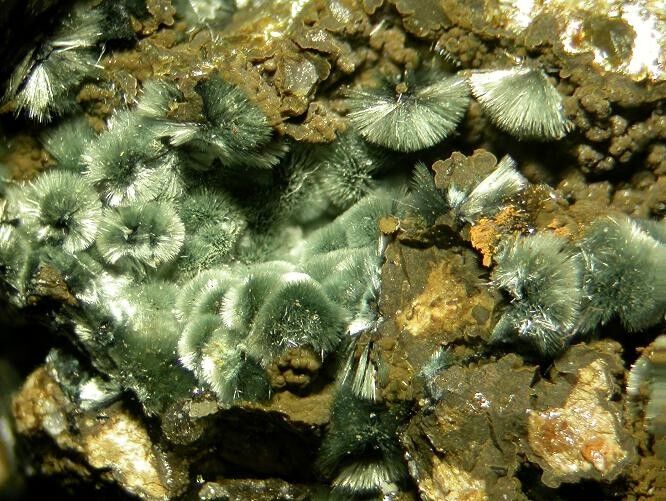
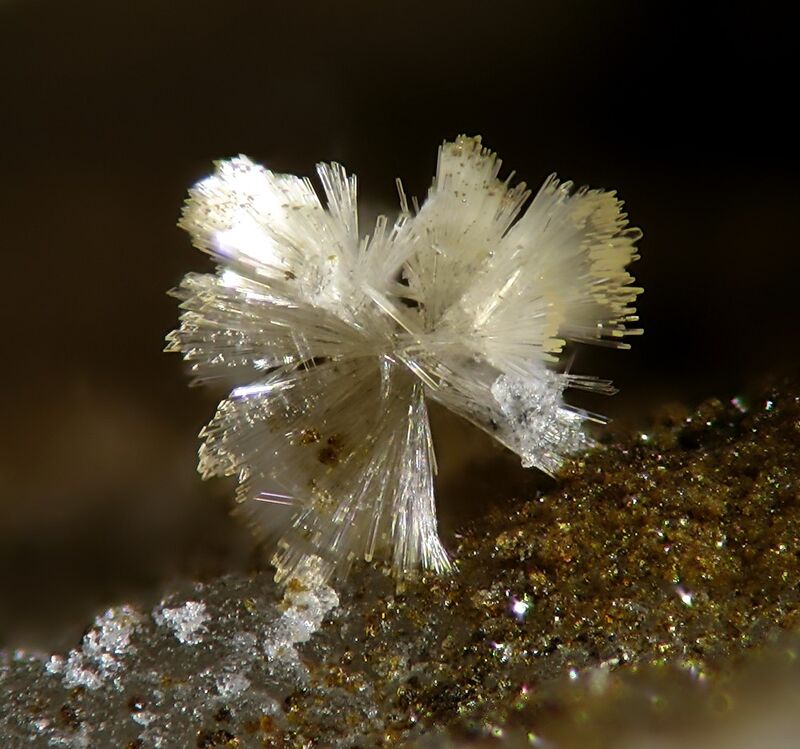
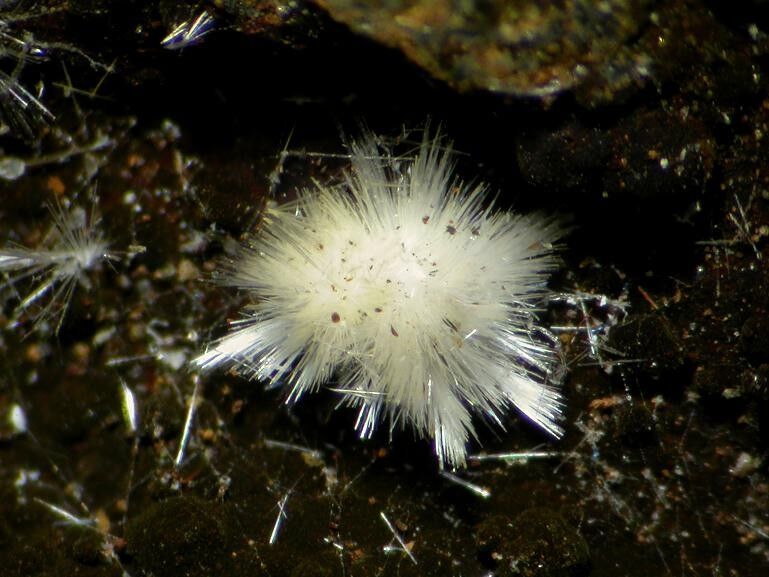
Early descriptions also noted the crystals themselves. They grow as fine needles — acicular, in mineralogical terms — fanning out from a central point in radial or star-shaped sprays. The colour ranges from golden yellow to brownish yellow.
Industrial & practical applications
Cacoxenite has no recorded industrial application. It is sought almost exclusively by collectors and museums, who prize its golden-yellow to brownish-yellow needles arranged in fine radial sprays. Specimens are valued for their colour and the geometry of their crystal tufts, not for any extractable material.
Where it forms, where it's found
- Geological setting
Common accessory mineral in oxidation zone of magnetic and limonite iron ores, novaculites, rarely in iron rich sediments and soils.
- Type locality
- Hrbek Mine
- Svatá Dobrotivá (St Benigna)
- Zaječov
- Beroun District
- Central Bohemian Region
- Czech Republic
49.7595°, 13.8351°
Physical
- Hardness
- 1Talc
- 2Gypsum
- 3Calcite
- 4Fluorite
- 5Apatite
- 6Orthoclase
- 7Quartz
- 8Topaz
- 9Corundum
- 10Diamond
- Transparency
- Translucent
- Colour
- Yellow to brownish yellow · reddish orange · golden yellow · deep orange · green
Yellow in transmitted light.
- Density
- 2.2 g/cm³
Optical
- Optical type
- Uniaxial (+)
- Refractive index
- 1.575 – 1.656
- Surface relief
- Moderate
- Principal indices
- nω 1.575 – 1.585 · nε 1.635 – 1.656
- Pleochroism
- Visible
O = Pale yellow E = Canary yellow to yellow orange
Crystallography
- Space group
- #108
- Cell parameters
- a = 27.559(1) Å · c = 10.55 Å
- Z
- 2
- Morphology
Crystals crudely hexagonal, acicular [0001], with a hexagonal cross section at times and indistinct pyramidal faces. Commonly in compact, concentric, spherical to radial aggregates. In bundles, randomly fibrous; as coatings or intergranular cement.
Chemical composition
Synonyms
- Cacoxene
- Cacoxeniet
- Cacoxenit
- Cacoxeno
In other languages
- French
- Cacoxène · Cacoxénite · Kacoxène
- German
- Kakoxen
- Spanish
- Cacoxenita
- Italian
- Cacoxenite
- Japanese
- カコクセナイト · カコクセン石
Classification
8.DC.40
- 8Phosphates, Arsenates, VanadatesClass
- 8.DPhosphates, etc. with additional anions, with H2ODivision
- 8.DCWith only medium-sized cations, (OH, etc.):RO4 = 1:1 and < 2:1Group
- 8.DC.40CacoxeniteSpecies
42.13.05.01
- 42Hydrated Phosphates, Etc.containing Hydroxyl or HalogenClass
- 42.13MiscellaneousType
- 42.13.05— unnamed intermediate level —Group
- 42.13.05.01CacoxeniteSpecies
19.14.27
- 19PhosphatesClass
- 19.14Phosphates of Fe and other metalsGroup
- 19.14.27CacoxeniteSpecies
Group, growth & confusion
 BerauniteFe3+6(PO4)4O(OH)4 · 6H2OMineral—
 CalcioferriteCa4MgFe3+4(PO4)6(OH)4 · 12H2OMineral—
 Churchite-(Y)Y(PO4) · 2H2OMineral—
 DufréniteCa0.5Fe2+Fe3+5(PO4)4(OH)6 · 2H2OMineral—
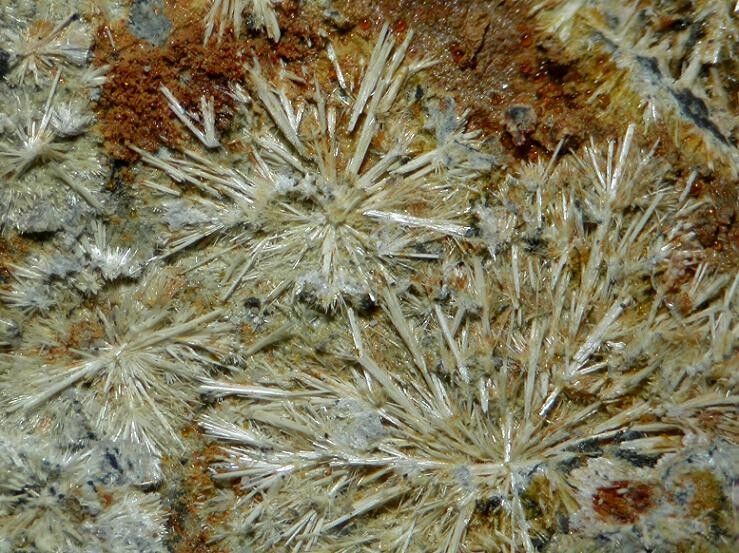 FerristrunziteFe3+Fe3+2(PO4)2(OH)3 · 5H2OMineral—
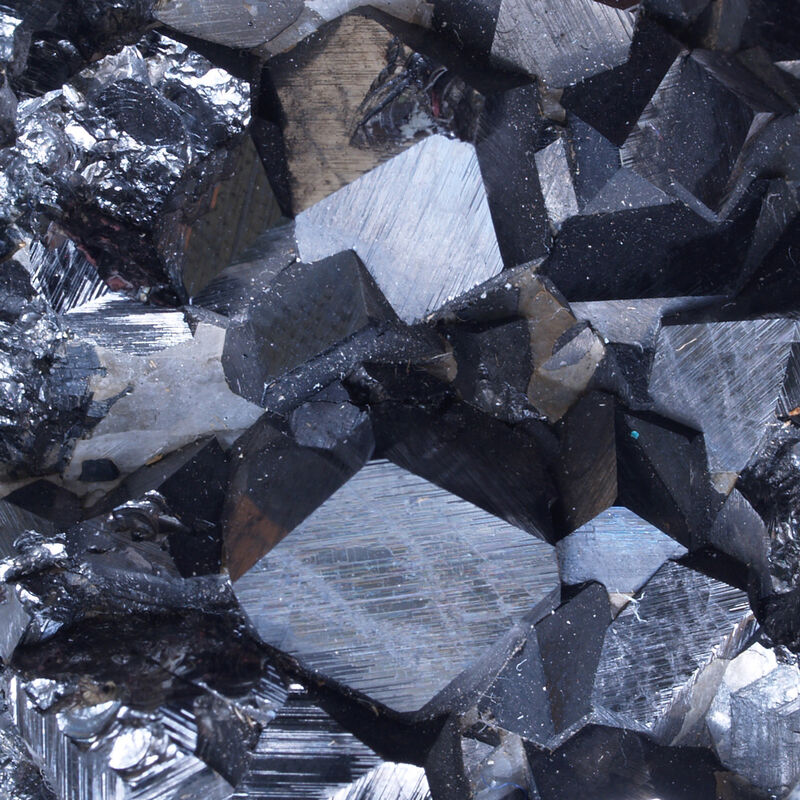 MagnetiteFe2+Fe3+2O4Mineral—
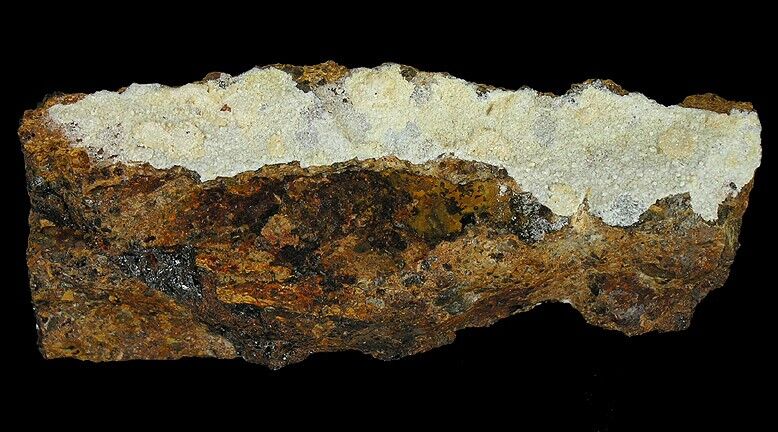 MatulaiteFe3+Al7(PO4)4(PO3OH)2(OH)8(H2O)8 · 8H2OMineral—
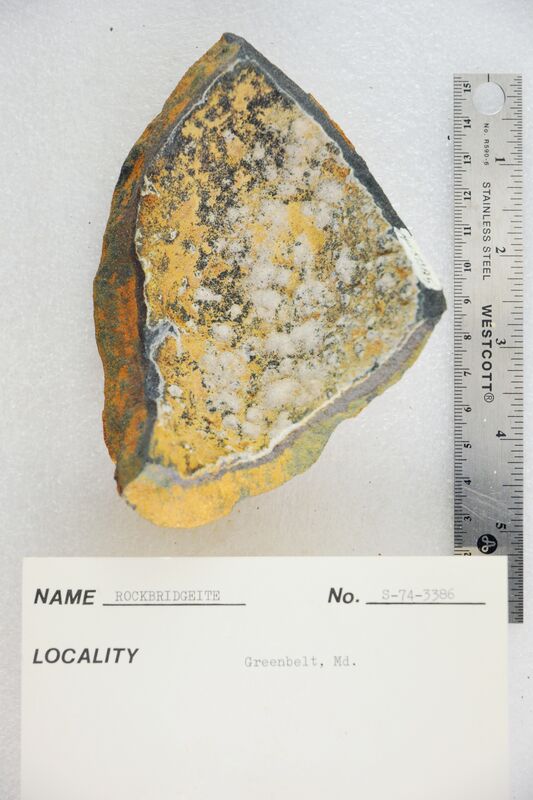 Rockbridgeite(Fe2+0.5Fe3+0.5)2Fe3+3(PO4)3(OH)5Mineral—
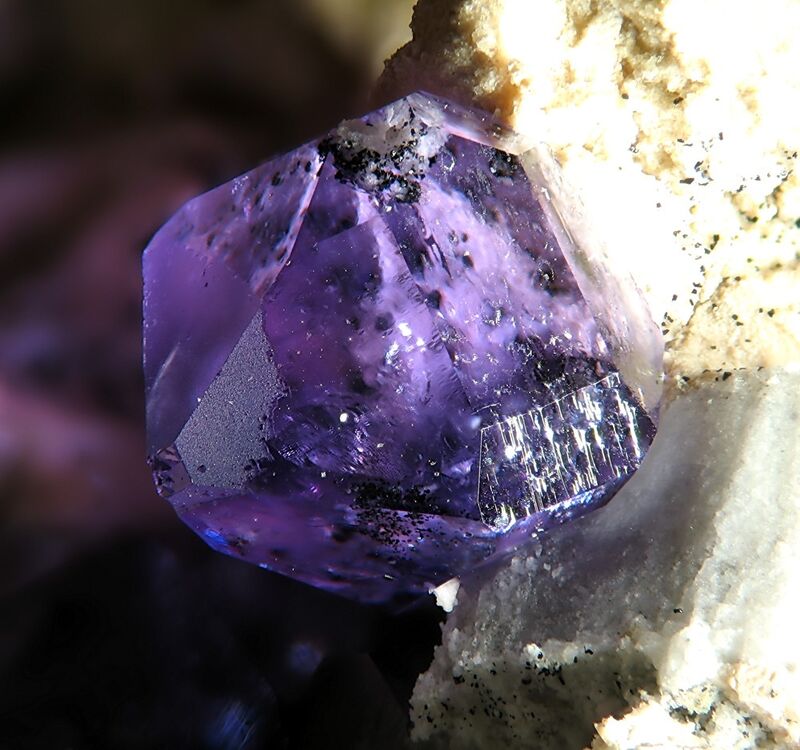 StrengiteFe3+(PO4) · 2H2OMineral—
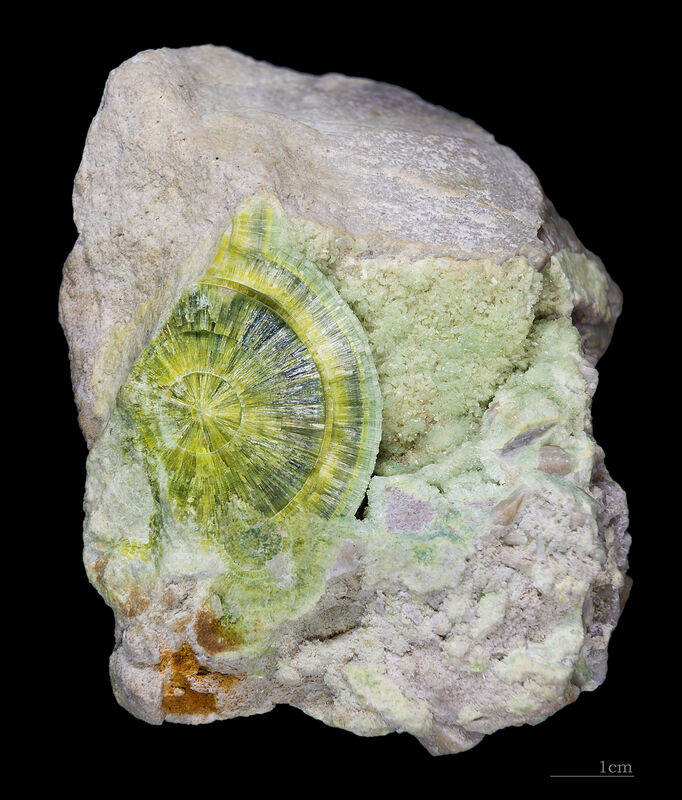 WavelliteAl3(PO4)2(OH)3 · 5H2OMineral—
Literature, links & citation
- 1825Steinmann (1825) Vortr. Böhm. Ges., Prague (as Kakoxen).
- 1826Steinmann, J. (1826) 47. Kakoxen. Handbuch der Oryktognosie, 2, 749-750.
- 1826Steinmann, J. (1826) Kákoxèn. Archiv für die Gesammte Naturlehre, 8, 446-446.
- 1854von Hauer (1854) Neues Jahrbuch für Mineralogie, Geologie und Paleontologie, Heidelberg, Stuttgart: 191.
- 1854von Hauer, K.R. (1854) Ueber die Zusammensetzung einiger Mineralien mit besonderer Rucksicht auf ihren Wasser-Gehalt. Neues Jahrbuch für Mineralogie, Geognosie, Geologie und Petrefaktenkunde, 686-701 (690-693).
Entry last updated
@misc{mineral2026,
  author    = {Mineral Index editorial board},
  title     = {Cacoxenite — Mineral Index},
  year      = {2026},
  url       = {https://mineralindex.org/minerals/cacoxenite-840}
}