History
The name strengite honours a German chemist who never set eyes on the mineral named for him. Johann August Streng — born in Frankfurt on 4 February 1830, dead in Giessen on 7 January 1897 — was Professor of Mineralogy at the University of Giessen.
Streng's career sat squarely at the boundary between chemistry and mineralogy. He had served as an assistant to Robert Bunsen at the University of Heidelberg, and later held a chair of chemistry at the Clausthal Mining Academy. He was an innovator in new methods of chemical titration — the laboratory craft of measuring exactly how much of one substance is needed to react with another.
The mineral itself entered the literature in 1877, as a relatively rare hydrated iron phosphate close in form and composition to the older species variscite. Its lavender, pink and violet hues come from ferric iron (Fe³⁺) in the structure.
Industrial & practical applications
Strengite has no documented industrial application. It is sought mainly by mineral collectors as a representative species of the hydrated iron phosphates, prized for its lavender, pink and violet colours.
Beyond the cabinet, the mineral carries a small footprint in laboratory mineralogy. It is only partially soluble in water. It dissolves most readily at low pH and low oxidation–reduction potential. Those are the conditions of acidic or waterlogged ground, where free oxygen is scarce.
Where it forms, where it's found
- Geological setting
Phosphate-bearing iron ore deposit
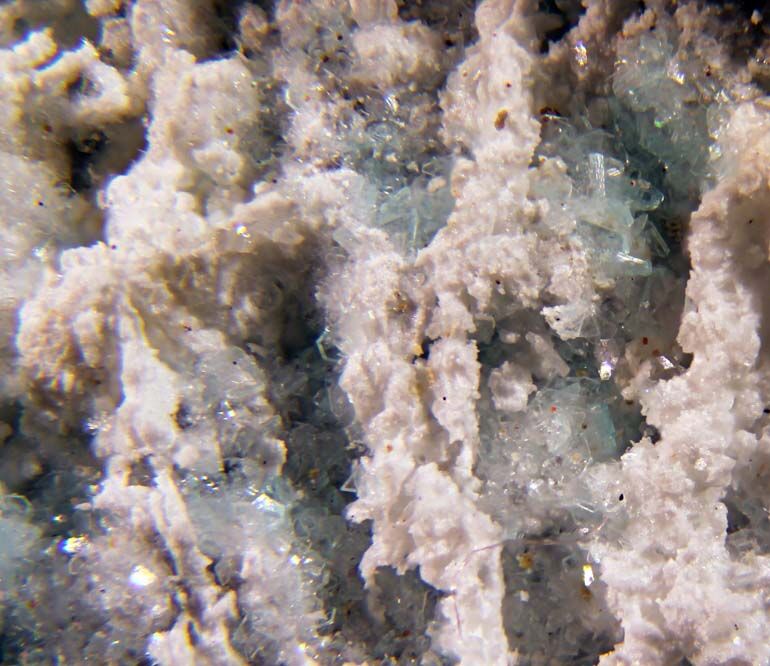
Secondary mineral formed under surface or near-surface conditions by the alteration of iron-bearing phosphates, such as <M>Triphylite</M> in pegmatite, or <M>Dufrenite</M>, or may occur in limonite ore deposits and gossans, magnetite iron ores, late-stage mineralization in granite pegmatites, or rarely as a cave mineral.
- Type locality
- Eleonore Mine
- Fellingshausen
- Biebertal
- Giessen
- Giessen Region
- Hesse
- Germany
50.6356°, 8.5814°
Varieties
Physical
- Hardness
- 1Talc
- 2Gypsum
- 3Calcite
- 4Fluorite
- 5Apatite
- 6Orthoclase
- 7Quartz
- 8Topaz
- 9Corundum
- 10Diamond
- Transparency
- Transparent · Translucent
- Colour
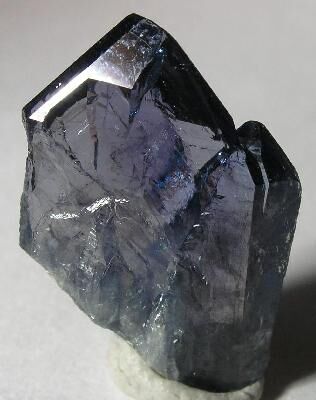
- Purple · violet · pink · peach-blossom-red · carmine · greenish white · colorless · Colourless to pale pink in transmitted light.
Usually lght pink
- Streak
- white
- Tenacity
- brittle
- Cleavage
- Distinct/Good
Good on (010), poor on (001)
- Density
- 2.84 g/cm³
Optical
- Optical type
- Biaxial (+) · 2V measured = 90° · 2V calc = 72 – 88°
- Refractive index
- 1.697 – 1.745
- Surface relief
- High
- Principal indices
- nα 1.697 – 1.708 · nβ 1.708 – 1.719 · nγ 1.741 – 1.745
- Birefringence
- 0.044
- Pleochroism
- Non-pleochroic
- Dispersion
- relatively strong r < v
- UV response
- Not fluorescent in UV
Crystallography
- Space group
- Pbca
- Cell parameters
- a = 8.7233(7) Å · b = 9.886(1) Å · c = 10.122(1) Å
- Ratio a:b:c
- 1 : 1.133 : 1.160
- Unit cell volume
- 872.91 ų
- Z
- 8
- Morphology
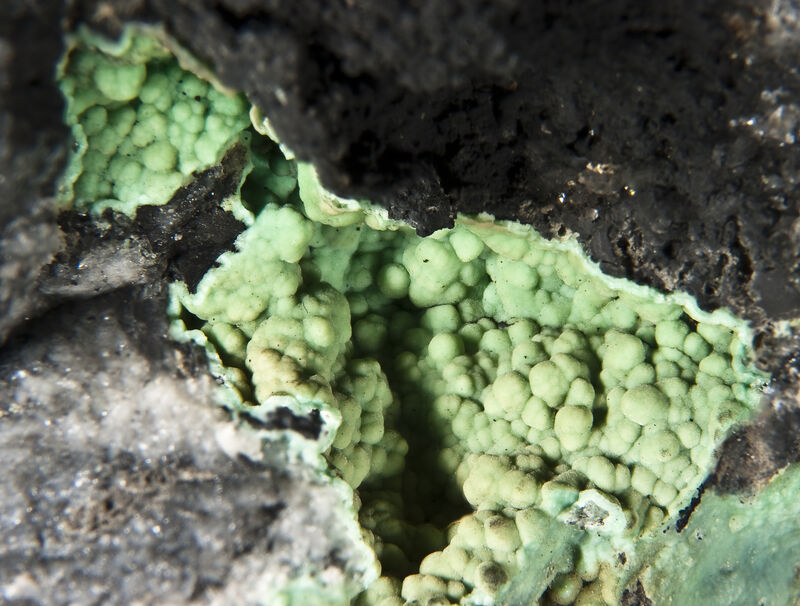
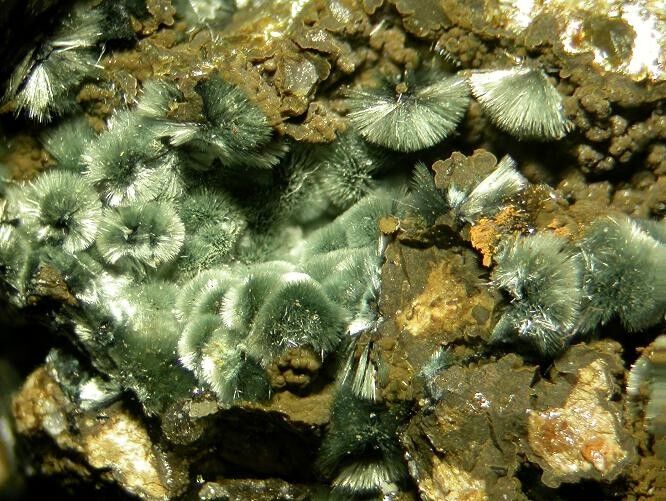
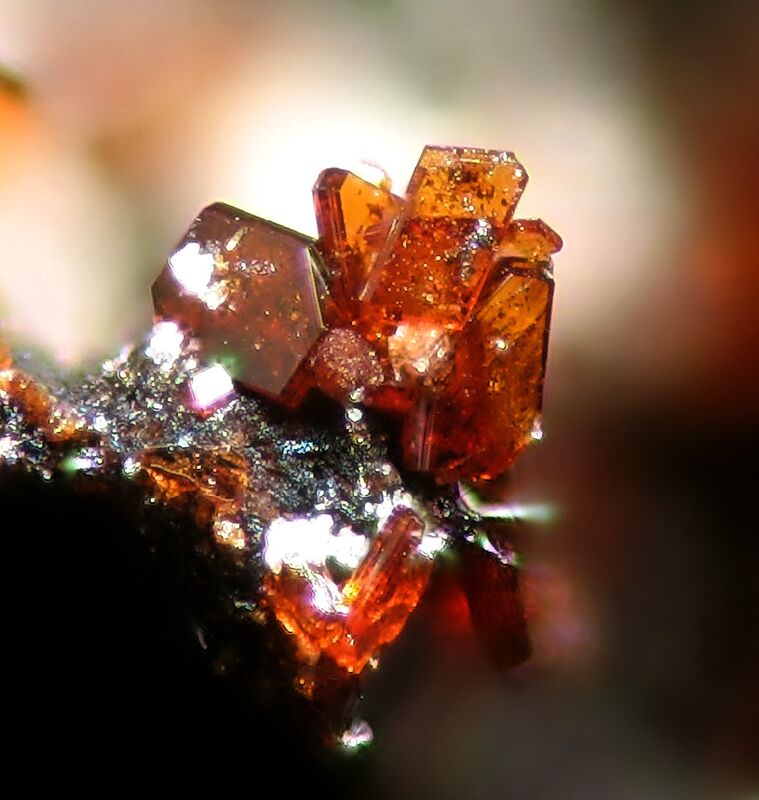
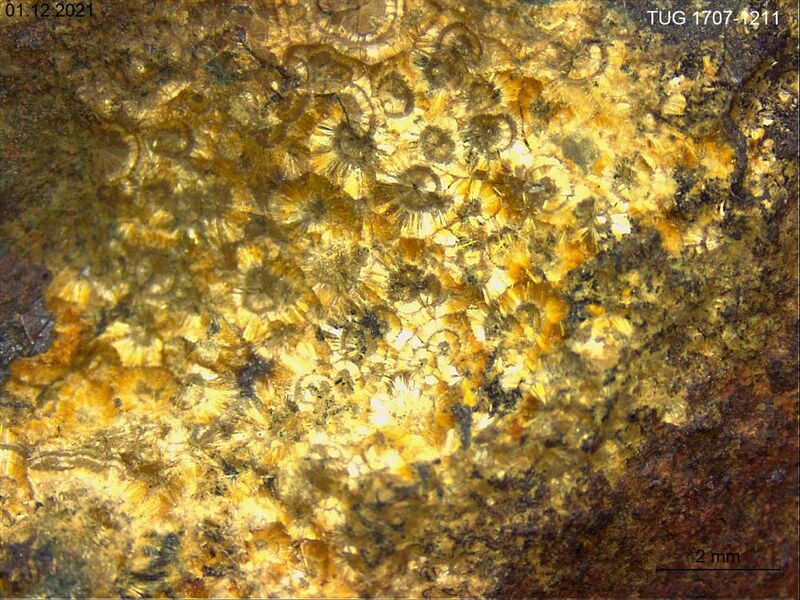
Crystals rarely octahedral (111); usually thick to thin tabular (001); also stout prismatic [100] or [010]. May be lathlike, radial fibrous, botyroidal or spherical aggregates and crusts.
- Twinning
Rarely on (201)
Chemical composition
In other languages
- French
- strengite
- German
- Strengit
- Spanish
- Strengita
- Italian
- Strengite
- Japanese
- ストレング石
Classification
8.CD.10
- 8Phosphates, Arsenates, VanadatesClass
- 8.CPhosphates without additional anions, with H2ODivision
- 8.CDWith only medium-sized cations, RO4:H2O = 1:2Group
- 8.CD.10StrengiteSpecies
40.04.01.02
- 40Hydrated Normal Phosphates, Arsenates and VanadatesClass
- 40.04(AB)5(XO4)2·xH2OType
- 40.04.01Variscite GroupGroup
- 40.04.01.02StrengiteSpecies
19.13.2
- 19PhosphatesClass
- 19.13Phosphates of Fe aloneGroup
- 19.13.2StrengiteSpecies
Group, growth & confusion
 BerauniteFe3+6(PO4)4O(OH)4 · 6H2OMineral—
 BermaniteMn2+Mn3+2(PO4)2(OH)2 · 4H2OMineral—
 BismocliteBiOClMineral—
 CacoxeniteFe3+24AlO6(PO4)17(OH)12 · 75H2OMineral—
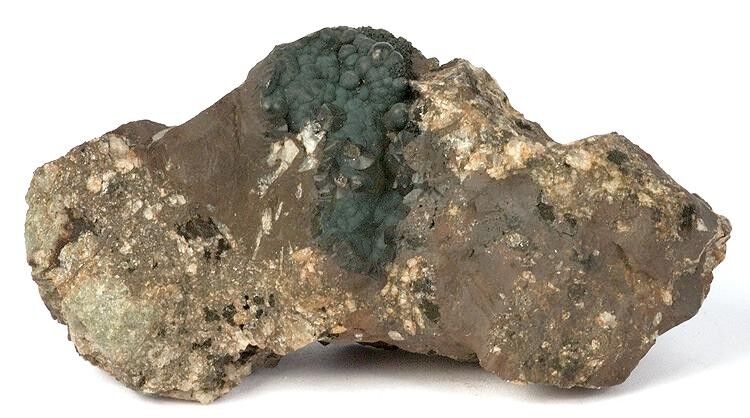 DufréniteCa0.5Fe2+Fe3+5(PO4)4(OH)6 · 2H2OMineral—
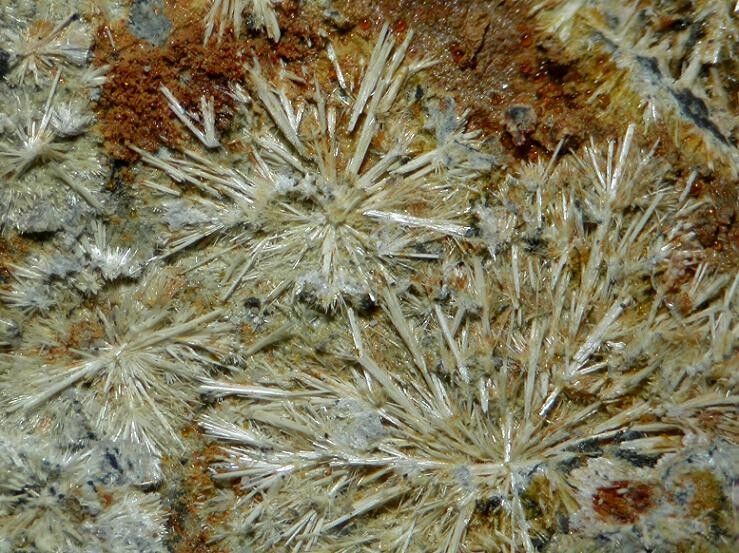 FerristrunziteFe3+Fe3+2(PO4)2(OH)3 · 5H2OMineral—
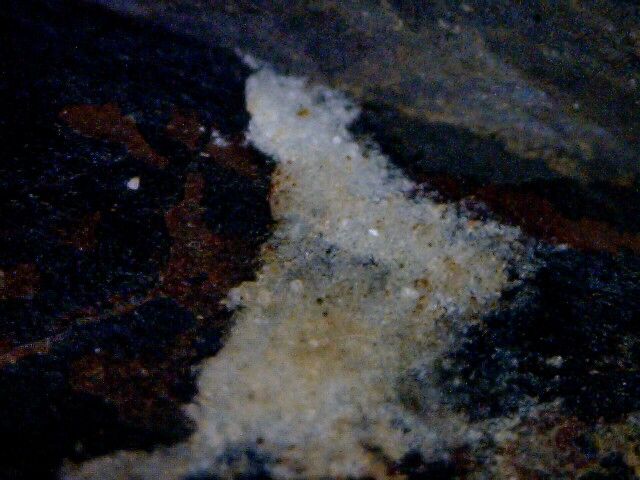 Frondelite(Mn2+0.5Fe3+0.5)2Fe3+3(PO4)3(OH)5Mineral—
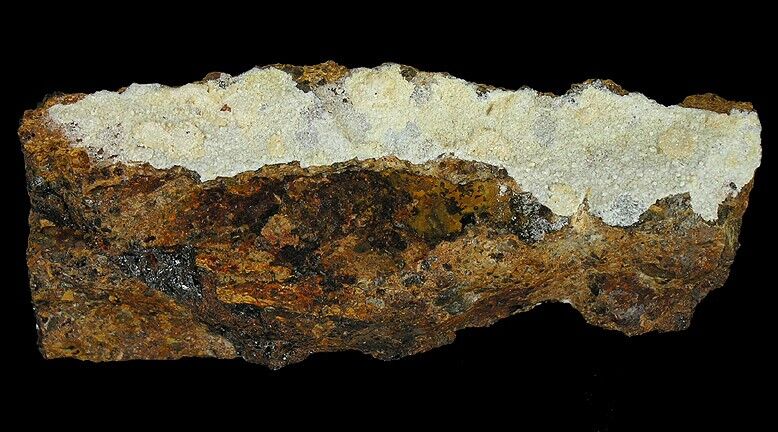 MatulaiteFe3+Al7(PO4)4(PO3OH)2(OH)8(H2O)8 · 8H2OMineral—
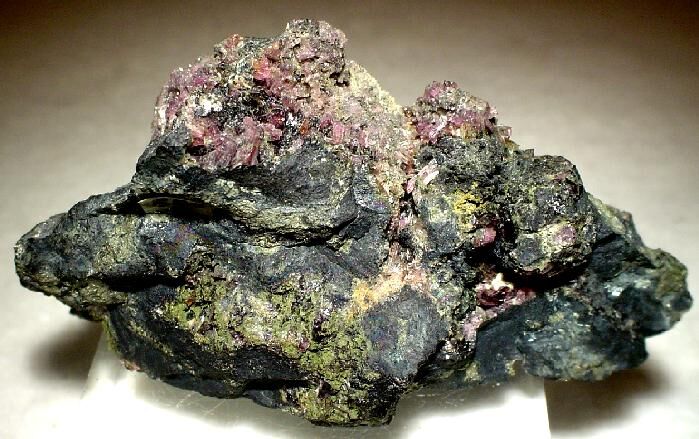 PhosphosideriteFe3+(PO4) · 2H2OMineral—
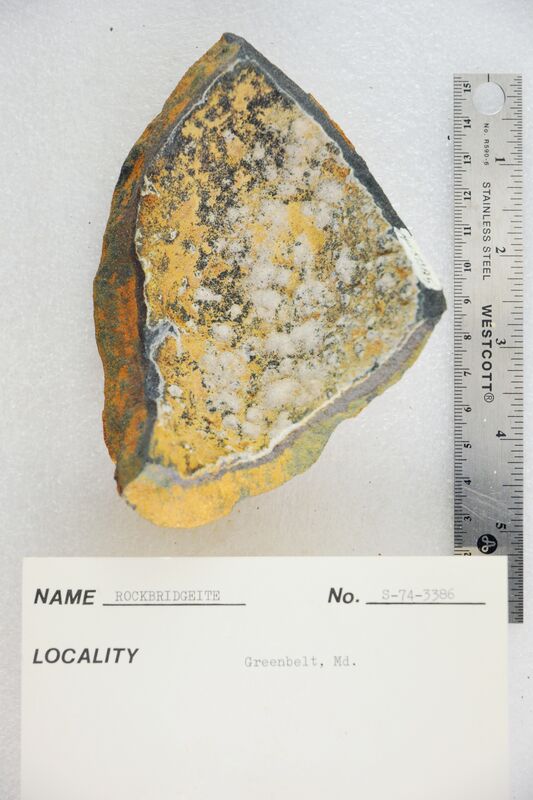 Rockbridgeite(Fe2+0.5Fe3+0.5)2Fe3+3(PO4)3(OH)5Mineral—
Literature, links & citation
- 1867Zepharovich (1867) Königliche Akademie der Wissenschaften, Vienna, Sitzberichte: 56: 20. (As Barrandite.)
- 1877Nies (1877) Neues Jahrbuch für Mineralogie, Geologie und Paleontologie, Heidelberg, Stuttgart: 8-16.
- 1913Schaller, Waldemar Theodore (1913), The refractive indices of strengite: Journal of the Washington Academy of Science: 3: 249.
- 1915Laubmann, H.; Steinmetz, H. (1915) Phosphatführende Pegmatite des Oberpfälzer und Bayerischen Waldes. Zeitschrift für Kristallographie, Mineralogie und Petrographie, 55 (1-6). 523-586 doi:10.1524/zkri.1915.55.1.523DOI: 10.1524/zkri.1915.55.1.523
- 1922(1922) Atlas Der Krystallformen Vol. 8 - Text - Band VIII - Safflorit-Topas. Carl Winters Universitätsbuchhandlung, Heidelberg.
Entry last updated
@misc{mineral2026,
  author    = {Mineral Index editorial board},
  title     = {Strengite — Mineral Index},
  year      = {2026},
  url       = {https://mineralindex.org/minerals/strengite-3801}
}