History
Danburite carries the name of the place that first gave it up. It was named for Danbury, Connecticut, the small New England town where the first crystals turned up.
That find was the work of Charles Upham Shepard, an American mineralogist who taught chemistry and spent decades naming new mineral species. He recognised the Danbury crystals as something not yet on the books. He announced danburite as a new species in 1839, a few years after the original 1837 discovery.
The mineral is a calcium borosilicate — a crystal built from calcium, boron, silicon and oxygen.
Since that first description, far finer crystals have surfaced elsewhere. The San Luis Potosí region of Mexico yields clear, colourless crystals prized by collectors, and good material also comes from Madagascar, Myanmar and Japan.
Industrial & practical applications
Danburite has almost no industrial life. What demand it has comes from collectors and, in a smaller way, from the jewellery trade.
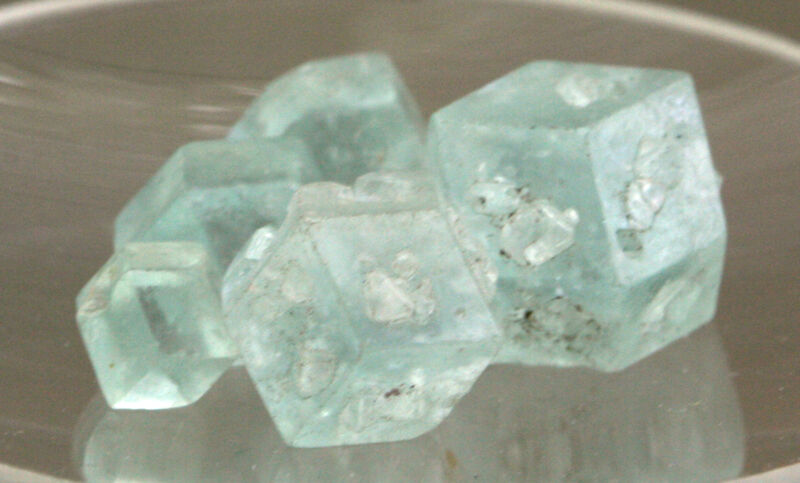
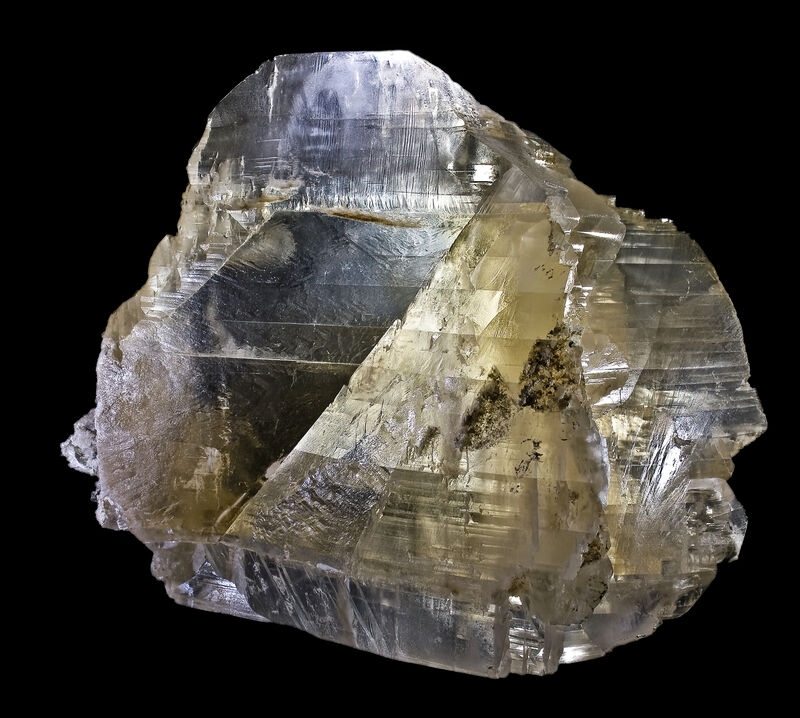
As a gemstone it earns its place on clarity rather than colour. Transparent crystals are faceted into cut stones, helped by good clarity, durability and strong dispersion — the way the stone splits light into flashes of colour. Most material is colourless or white, though pale yellow, straw and brownish stones also turn up. The finest gem-quality crystals come from the San Luis Potosí region of Mexico, with more from Madagascar, Myanmar and Japan.
One thing danburite is not is a source of boron. The crystal does carry boron, locked into a silicate framework. But the mineral is not mined or processed for that boron — the element is drawn instead from borate minerals that release it far more readily. Danburite stays a specimen for the cabinet and a stone for the jeweller, not a feedstock for industry.
Where it forms, where it's found
- Geological setting
Apparently dolomite-rich, high-grade metamorphic rock (outcrop lost).
Granite and metamorphosed carbonates, evaporites.
- Type locality
- Danbury
- Fairfield County
- Connecticut
- USA
41.3966°, -73.4544°
Physical
- Hardness
- 1Talc
- 2Gypsum
- 3Calcite
- 4Fluorite
- 5Apatite
- 6Orthoclase
- 7Quartz
- 8Topaz
- 9Corundum
- 10Diamond
- Lustre
- Vitreous · Greasy
- Transparency
- Transparent · Translucent
- Colour
- Pale yellow · yellowish-brown · colourless
- Streak
- White
- Tenacity
- brittle
- Cleavage
- Poor/Indistinct
Indistinct on (001)
- Fracture
- Irregular/Uneven · Sub-Conchoidal
- Density
- 2.93 g/cm³
Optical
- Optical type
- Biaxial (+/-) · 2V measured = 88 – 90° · 2V calc = 88°
- Refractive index
- 1.627 – 1.639
- Surface relief
- Moderate
- Principal indices
- nα 1.627 – 1.633 · nβ 1.63 – 1.636 · nγ 1.633 – 1.639
- Dispersion
- r < v strong
- UV response
- Charcas, Mexico crystals commonly fluoresce blue under SW or LW toward the clear terminations. Lower opaque portions may fluoresce yellow, green or both. Similar response from some Ural Mountains crystals. Weak white under SW or LW from Cristalmayu, Bolivia. Material from the type locality fluoresces moderately bright pale yellow to cream under SW, MW and LW.
Crystallography
- Cell parameters
- a = 8.038(3) Å · b = 8.752(5) Å · c = 7.730 Å
- Ratio a:b:c
- 1 : 1.089 : 0.962
- Z
- 4
- Morphology
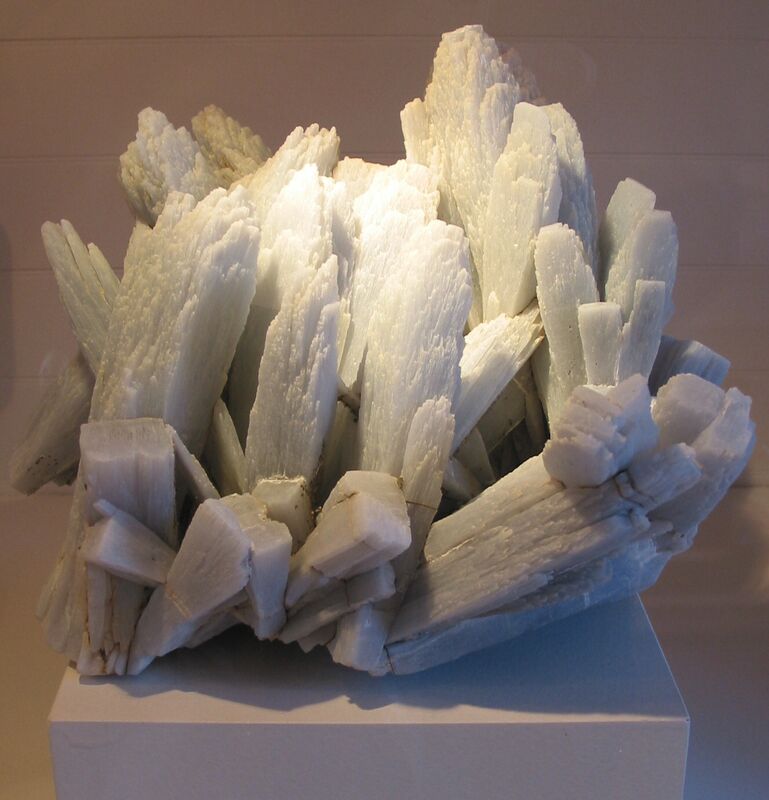
Prismatic crystals, disseminated masses.
- Type-locality form
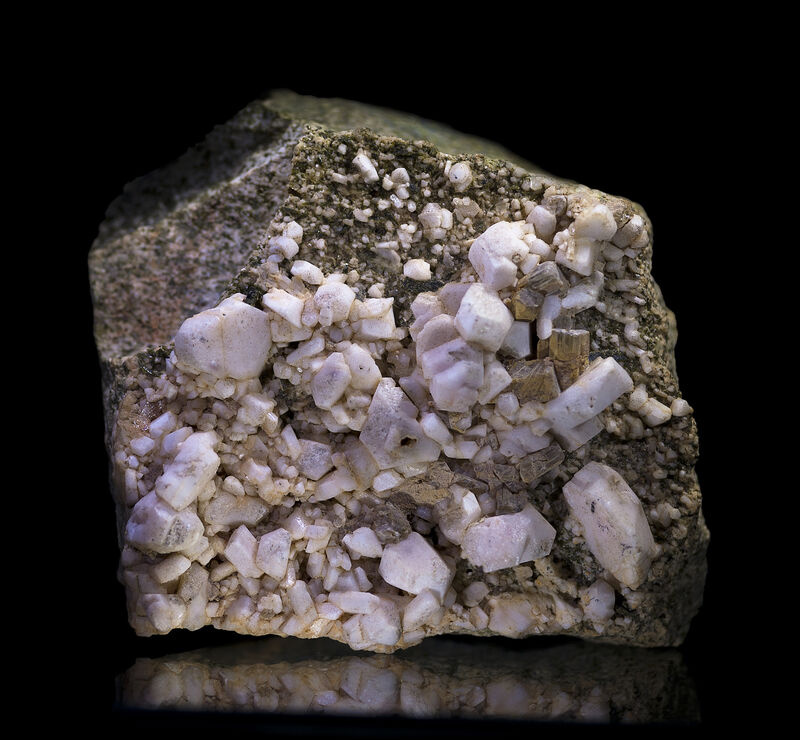
Scattered, subhedral, thick tabular, tan to brown crystals up to 2.5 cm in size in white, coarse-grained albite with lesser gray quartz. Crystals range from translucent to fractured and corroded.
- Comment
Space Group: Pnam:
Chemical composition
- Impurities
- Fe
- Mn
- Al
- Mg
- Sr
- Na
Synonyms
- Bementite (of Dana)
In other languages
- French
- Danburite
- German
- Danburit
- Spanish
- Danburita
- Italian
- Danburite
- Japanese
- ダンビュライト · ダンブリ石
- Chinese
- 赛黄晶
- Russian
- CaB2Si2O8 · Данбурит
Classification
9.FA.65
- 9SilicatesClass
- 9.FTektosilicates without zeolitic H2ODivision
- 9.FATektosilicates without additional non-tetrahedral anionsGroup
- 9.FA.65DanburiteSpecies
56.03.01.01
- 56Sorosilicates Si2o7 Groups, with Additional O, Oh, F and H2oClass
- 56.03Si2O7 Groups and O, OH, F, and H2O with[Si2O7] with borate groupsType
- 56.03.01Danburite GoupGroup
- 56.03.01.01DanburiteSpecies
17.5.11
- 17Silicates Containing other AnionsClass
- 17.5BorosilicatesGroup
- 17.5.11DanburiteSpecies
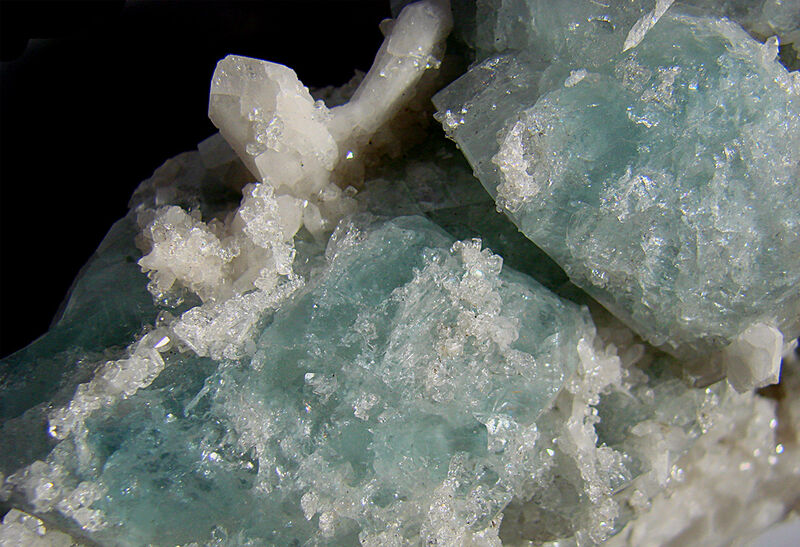
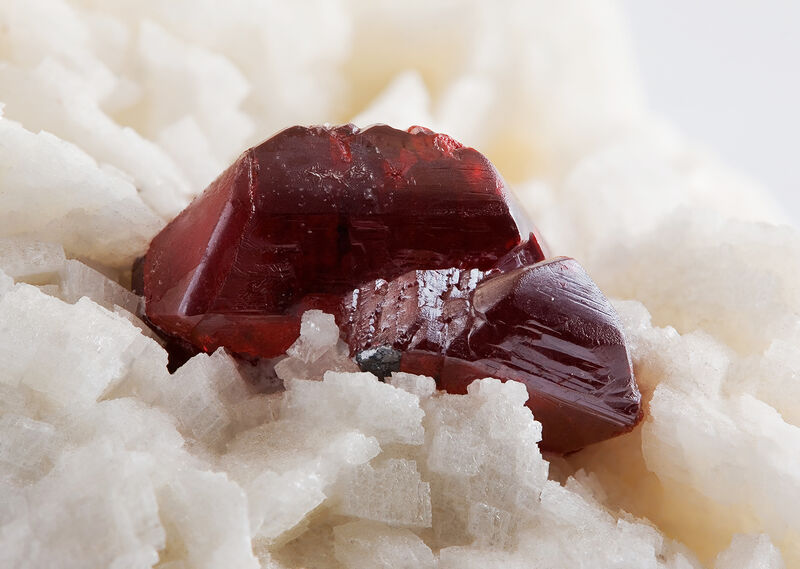
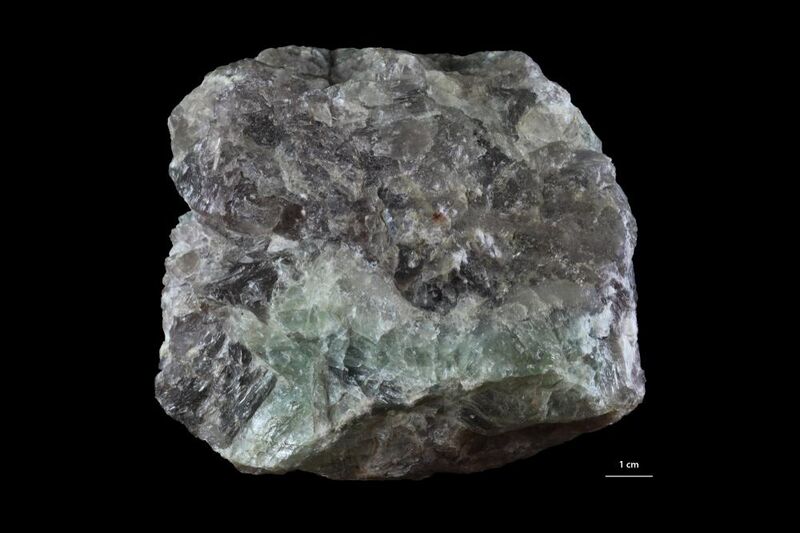
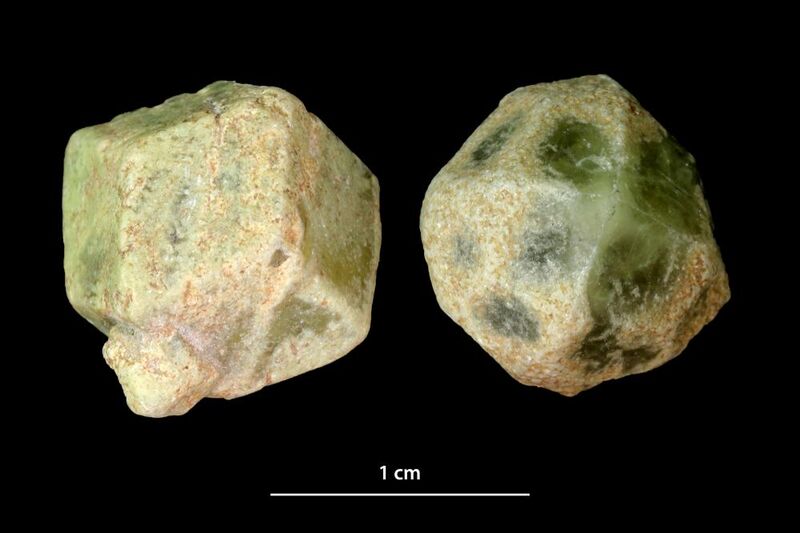
Group, growth & confusion
Literature, links & citation
- 1839Shepard, C.U. (1839) Notice of danburite, a new mineral species. American Journal of Science and Arts: 35: 137-139.
- 1840Shepard, C.U. (1840) Der Danburit, eine neue Mineralspecies. Annalen der Physik und Chemie: 126 (2/050): 182-182.
- 1880Brush, G.J., Dana, E.S. (1880) On crystallized danburite from Russell, St. Lawrence County, New York. American Journal of Science, s3-20(116), 111-118.
- 1931Dunbar, C., Machatschki, F. (1931) Structure of danburite, CaB2Si2O8. Zeitschrift für Kristallographie: 76: 133-146.
- 1974Lindbloom, J. T., Gibbs, G. V., Ribbe, and P. H. (1974) The crystal structure of hurlbutite: A comparison with danburite and anorthite. American Mineralogist, 59 (11-12) 1267-1271
Entry last updated
@misc{mineral2026,
  author    = {Mineral Index editorial board},
  title     = {Danburite — Mineral Index},
  year      = {2026},
  url       = {https://mineralindex.org/minerals/danburite-1218}
}