History
The name points to a Cheshire village the mineral was never truly mined in. Mottramite is named for Mottram St Andrew, England, where the ore was stockpiled — though it was probably dug from the Pim Hill Mine near Shrewsbury, in neighbouring Shropshire.
The story starts a little earlier and elsewhere. In 1868 the American chemist Frederick Augustus Genth characterised a parrot-green mineral he called psittacinite. A related copper-rich material went by the name cuprodescloizite. Both, it later turned out, were the same vanadate that would be named mottramite.
That naming came in 1876. The Manchester chemist Henry Roscoe found vanadium in the green crusts coating the Cheshire ore, and the new species took the village's name. Vanadium is a hard silvery metal; here it sits locked in the crystal as a vanadate, a unit built of vanadium and oxygen. The same work gave a vanadium-bearing mica the chemist's own name — roscoelite.
Mottramite is the copper end of a chemical series that runs to descloizite, its zinc-rich twin. The type material — the reference specimens that define the species — rests at the Natural History Museum in London.
Industrial & practical applications
Mottramite has no significant industrial use today. It is essentially a collector mineral, grown in the oxidized upper zones of base-metal deposits where weathering reworks the original ores.
Its one brush with industry is over. At Tsumeb in Namibia it was once the chief vanadium-bearing mineral, but that vanadium sat only in the shallow levels of the mine. It was worked out long ago.
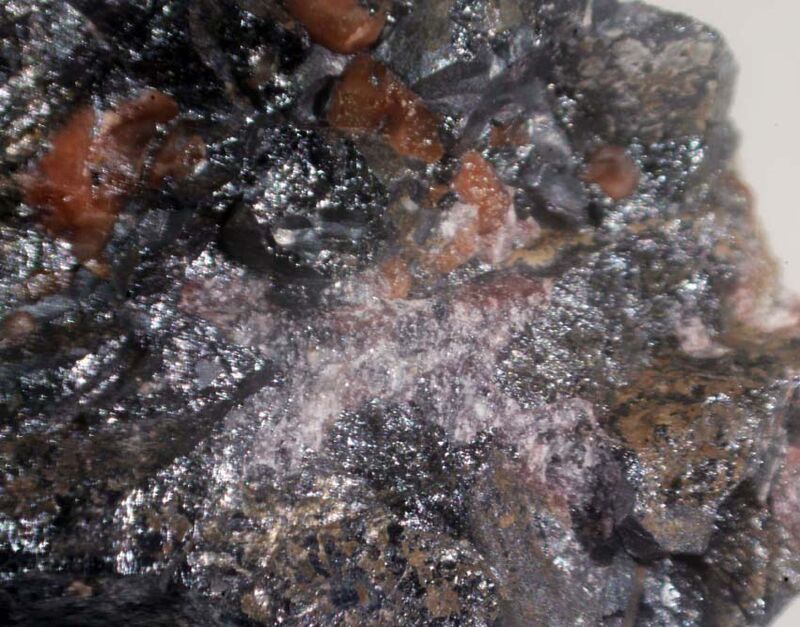
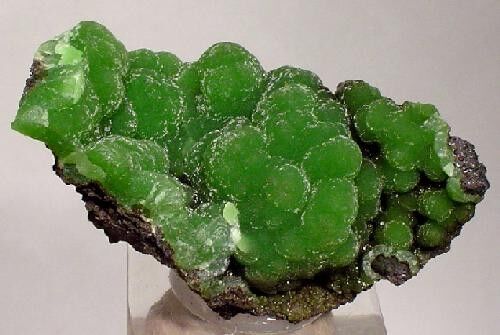
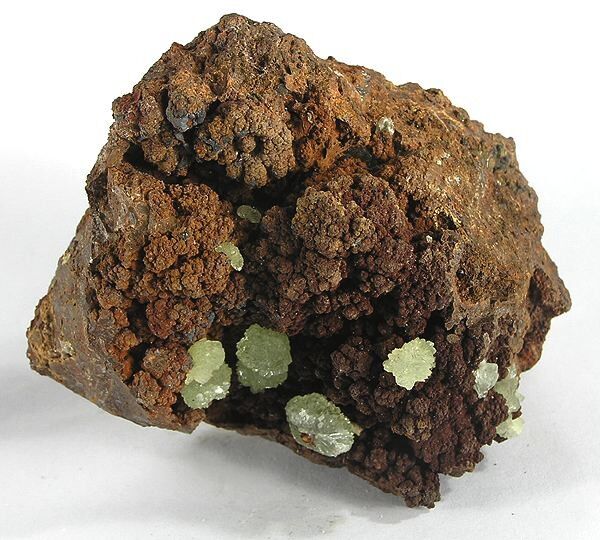
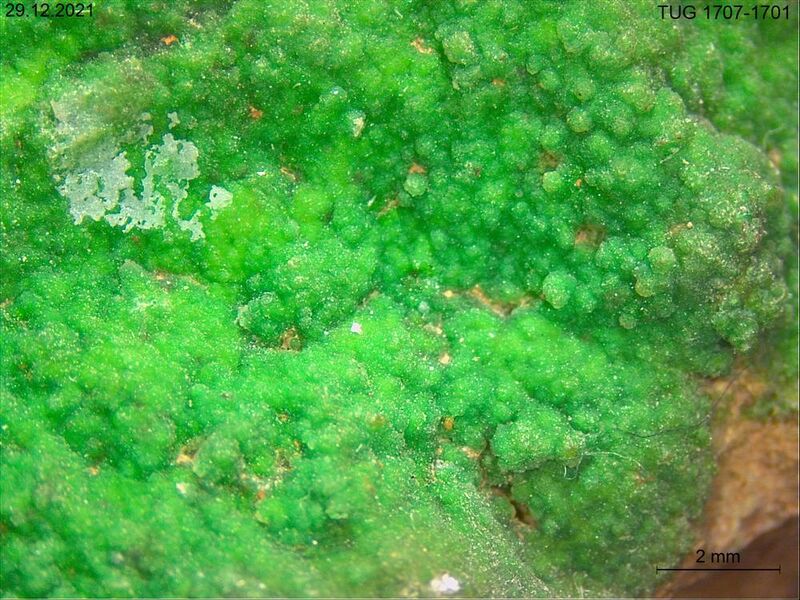
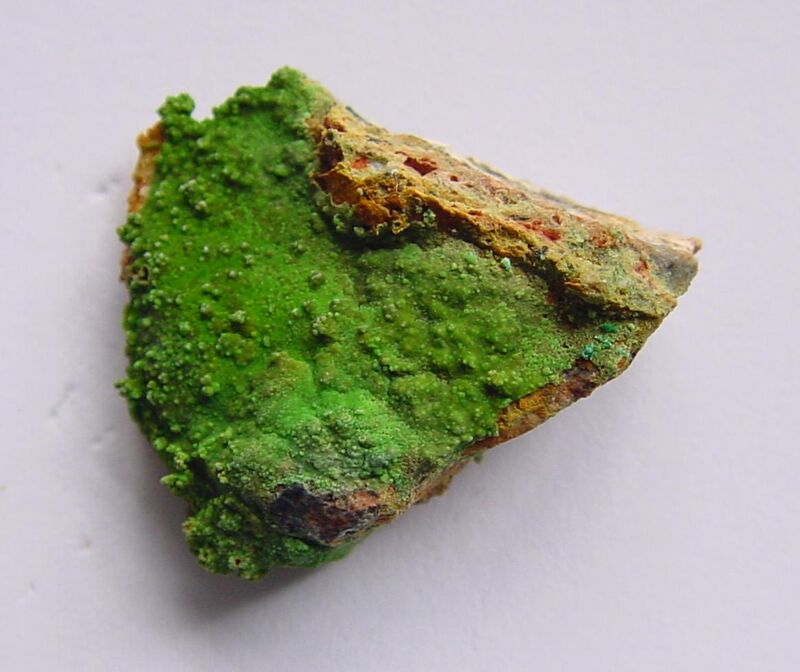
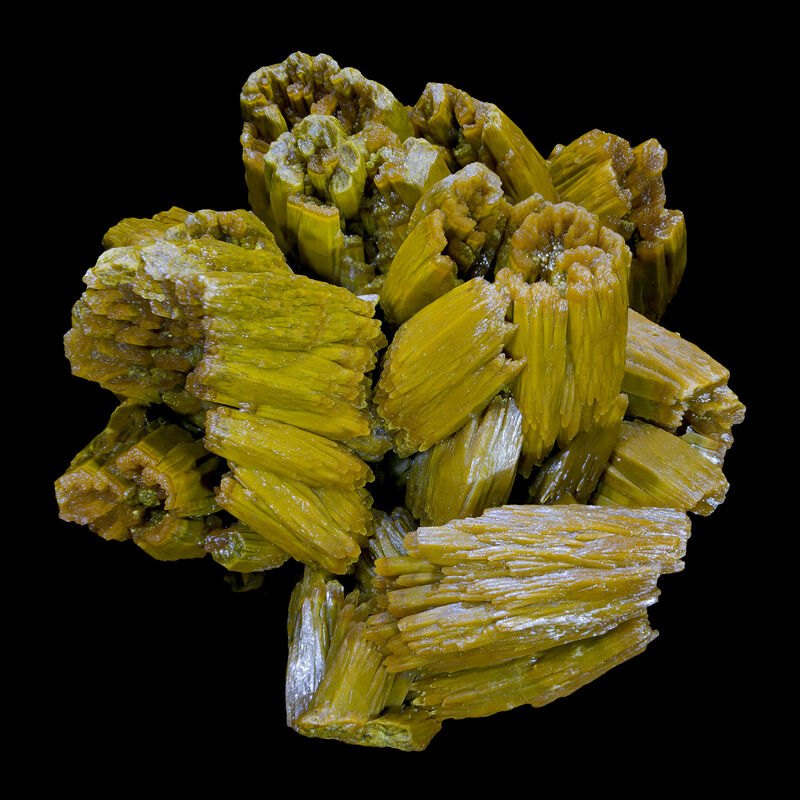
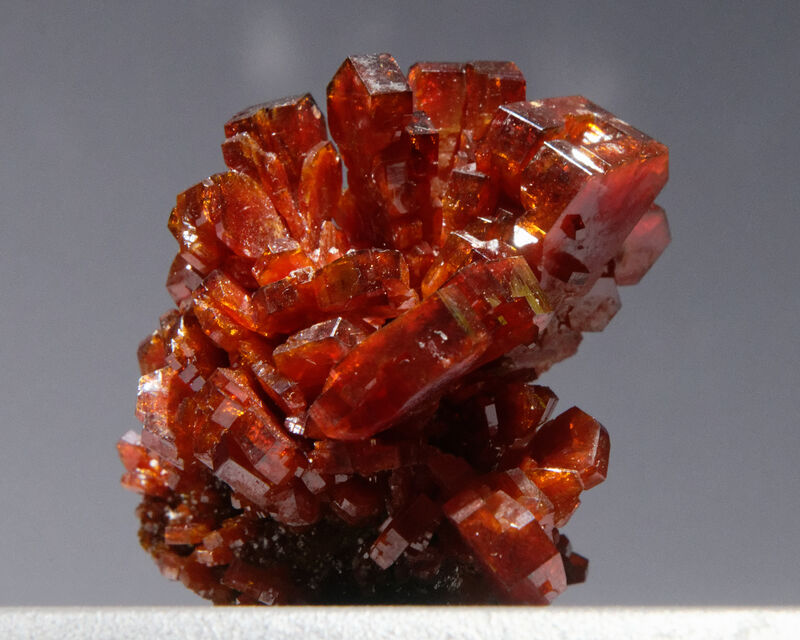
What demand exists now is from collectors. The mineral grows as olive-green to dark greenish-brown crusts, often branching like moss or tiny shrubs, and the best of these — many from Tsumeb — are kept as display specimens.
Where it forms, where it's found
- Geological setting
Oxidation zone of vanadium bearing base metal deposits.
- Type locality
- Mottram St Andrew
- Cheshire
- England
- UK
53.3012°, -2.1906°
Safety & handling
Physical
- Hardness
- 1Talc
- 2Gypsum
- 3Calcite
- 4Fluorite
- 5Apatite
- 6Orthoclase
- 7Quartz
- 8Topaz
- 9Corundum
- 10Diamond
- Transparency
- Transparent · Opaque
- Colour
- Grass-green · olive-green · yellow-green · siskin-green · blackish brown · nearly black
Crystals often exhibit zonal growth with varying colours.
- Streak
- Yellowish green
- Tenacity
- brittle
- Cleavage
- None Observed
- Fracture
- Irregular/Uneven · Sub-Conchoidal
- Density
- 5.9 g/cm³
Optical
- Optical type
- Biaxial (-) · 2V measured = 73° · 2V calc = 46°
- Refractive index
- 2.17 – 2.32
- Surface relief
- Very high
- Principal indices
- nα 2.17 · nβ 2.26 · nγ 2.32
- Pleochroism
- Visible
Weak to strong X=Y= canary yellow to greenish yellow Z= brownish yellow
- Dispersion
- strong r > v rarely r < v
Crystallography
- Space group
- #71
- Cell parameters
- a = 7.68 Å · b = 9.27 Å · c = 6.03 Å
- Ratio a:b:c
- 1 : 1.207 : 0.785
- Z
- 4
- Morphology
Crystals equant, dipyramidal (111), prismatic [001]. Drusy crusts of intergrown crystals common; mammillary or botryoidal surfaces.
Chemical composition
Synonyms
- Chileite
- Cuprovanadite
- Duftite-α
- Psittacinite
- Vesbin
- Vesbina
- α-Duftite
In other languages
- French
- mottramite
- German
- Mottramit
- Spanish
- Mottramita
- Italian
- Mottramite
- Japanese
- モットラム鉱
- Chinese
- 钒铜铅矿
- Simplified Chinese
- 钒铜铅矿
- Traditional Chinese
- 釩銅鉛礦
Classification
8.BH.40
- 8Phosphates, Arsenates, VanadatesClass
- 8.BPhosphates, etc., with additional anions, without H2ODivision
- 8.BHWith medium-sized and large cations, (OH,etc.):RO4 = 1:1Group
- 8.BH.40MottramiteSpecies
41.05.02.02
- 41Anhydrous Phosphates, Etc.containing Hydroxyl or HalogenClass
- 41.05(AB)2(XO4)ZqType
- 41.05.02Descloizite GroupGroup
- 41.05.02.02MottramiteSpecies
21.3.10
- 21Vanadates (and vanadates with arsenate or phosphate)Class
- 21.3Vanadates of Al, rare earths, Pb, V or BiGroup
- 21.3.10MottramiteSpecies
Group, growth & confusion
 AdeliteCaMg(AsO4)(OH)Mineral—
 ArsendescloizitePbZn(AsO4)(OH)Mineral—
 AustiniteCaZn(AsO4)(OH)Mineral—
 ČechitePbFe2+(VO4)(OH)Mineral—
 CobaltaustiniteCaCo(AsO4)(OH)Mineral—
 ConichalciteCaCu(AsO4)(OH)Mineral—
 DescloizitePbZn(VO4)(OH)Mineral—
 DuftitePbCu(AsO4)(OH)Mineral—
- Duftite-alphaPbCu(AsO4)(OH)Mineral—
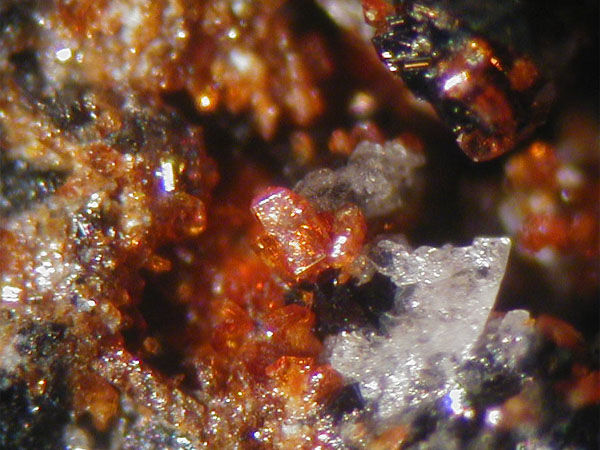 GottlobiteCaMg(VO4)(OH)Mineral—
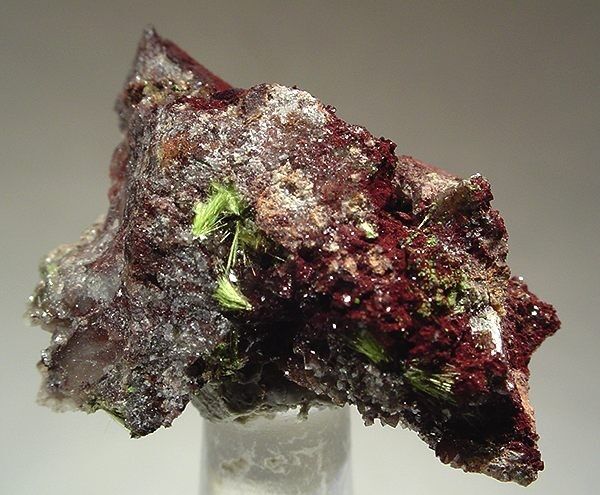
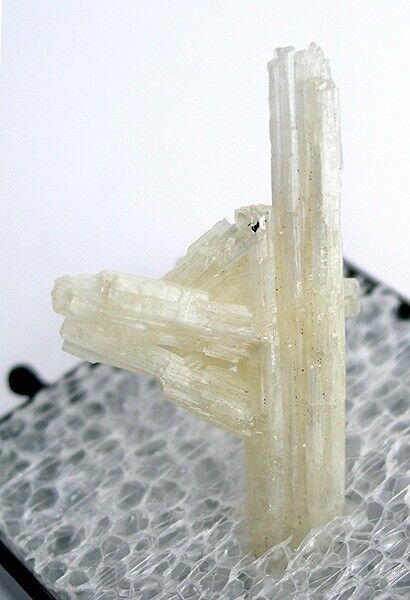
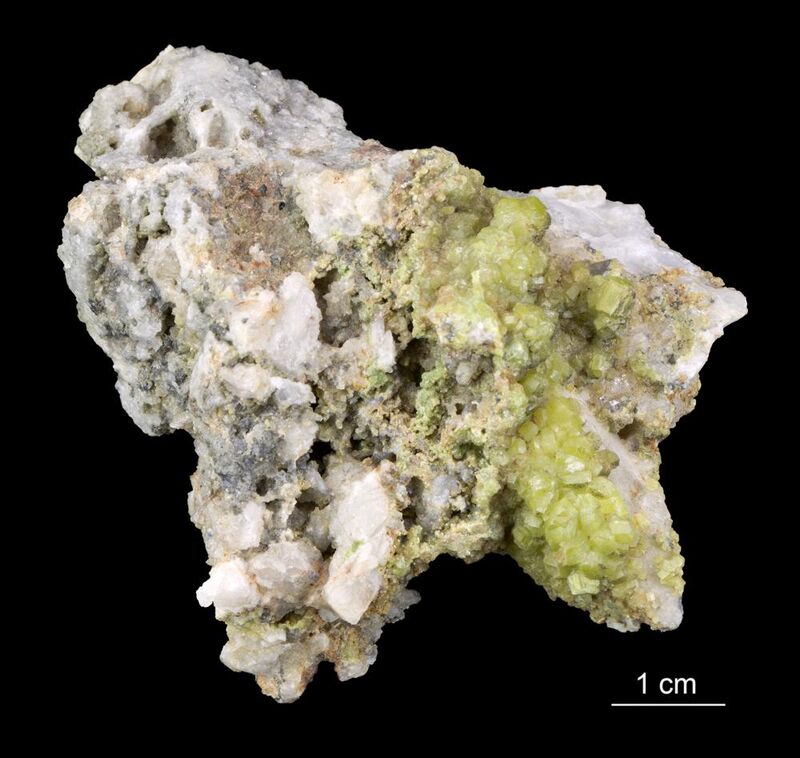
Literature, links & citation
- 1848Domeyko (1848) Annales des mines: 14: 145 (as Chileite).
- 1869Adam, M. (1869) Tableau minéralogique, Paris: 33 (as Cuprovanadite).
- 1874Genth, F. A. (1874) Contributions from the Laboratory of the University of Pennsylvania. No. III. On American Tellurium and Bismuth Minerals. Proceedings of the American Philosophical Society, 14. 223-231
- 1877Roscoe, H. E. (1877) IV. On two new vanadium minerals. Proceedings of the Royal Society of London, 25 (171) 109-112 doi:10.1098/rspl.1876.0023DOI: 10.1098/rspl.1876.0023
- 1879Scacchi (1879) Acc. Napoli, Att.: 8: 1 (as Vesbine).
Entry last updated
@misc{mineral2026,
  author    = {Mineral Index editorial board},
  title     = {Mottramite — Mineral Index},
  year      = {2026},
  url       = {https://mineralindex.org/minerals/mottramite-2792}
}