History
The mineral carries the name of the man who first described it. In 1854, the French chemist Augustin Alexis Damour christened it descloizite in honour of his colleague Alfred Des Cloizeaux (1817–1897). Des Cloizeaux was Professor of Mineralogy at the University of Paris, and the first to describe the new mineral. Damour, a chemist, gave it its name. The honoree and the namer are two different people — a small but persistent confusion in popular write-ups.
The first specimens came from the Sierra de Córdoba in Argentina. They came from the oxidised upper levels of a base-metal vein — the weathered cap where surface water has broken down the original sulfides. That setting turned out to be the rule. Descloizite is a secondary mineral of the oxidised zones of lead and zinc deposits. It forms there in the company of pyromorphite, vanadinite, wulfenite, mottramite, mimetite and cerussite — all minerals born from the slow chemical undoing of buried ores.
A vanadium ore in southern Africa
In the early to mid-20th century, descloizite earned its one chapter as a working ore mineral. The Otavi Mountainland in northern Namibia was once considered home to the greatest vanadium deposits in the world. Its major mines were Berg Aukas, Abenab, Baltika and Uitsab. At each, descloizite and its copper analogue mottramite were the two main ore minerals on site. Those mines have since closed.
Industrial & practical applications
Descloizite has no significant modern industrial use. It is, very rarely, mined as an ore of vanadium — a curiosity status rather than a primary supply role.
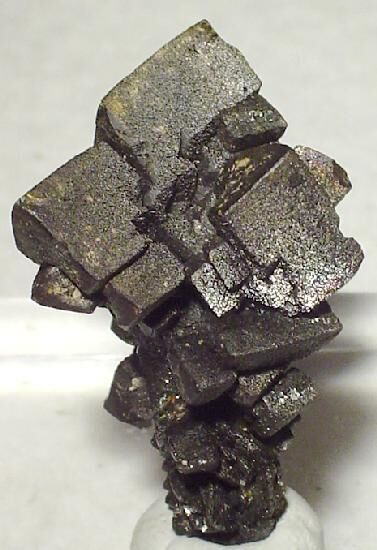
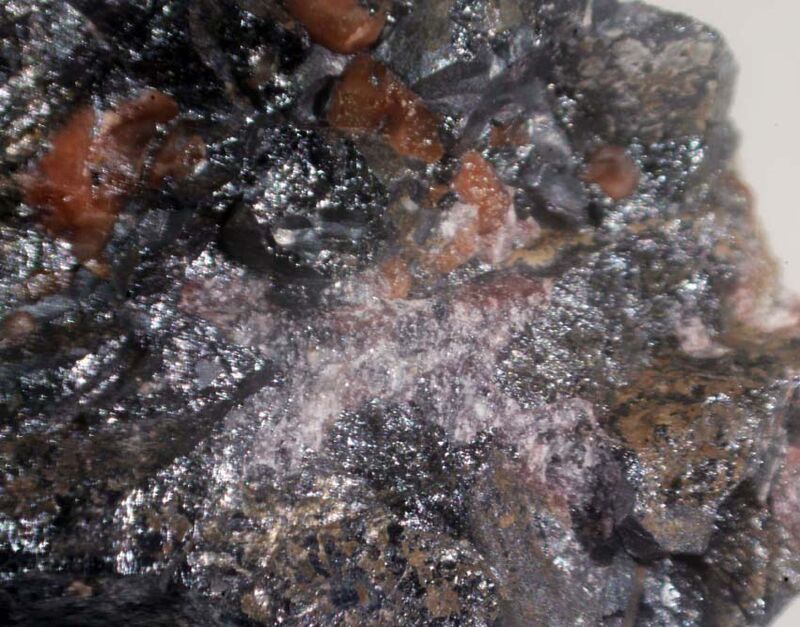
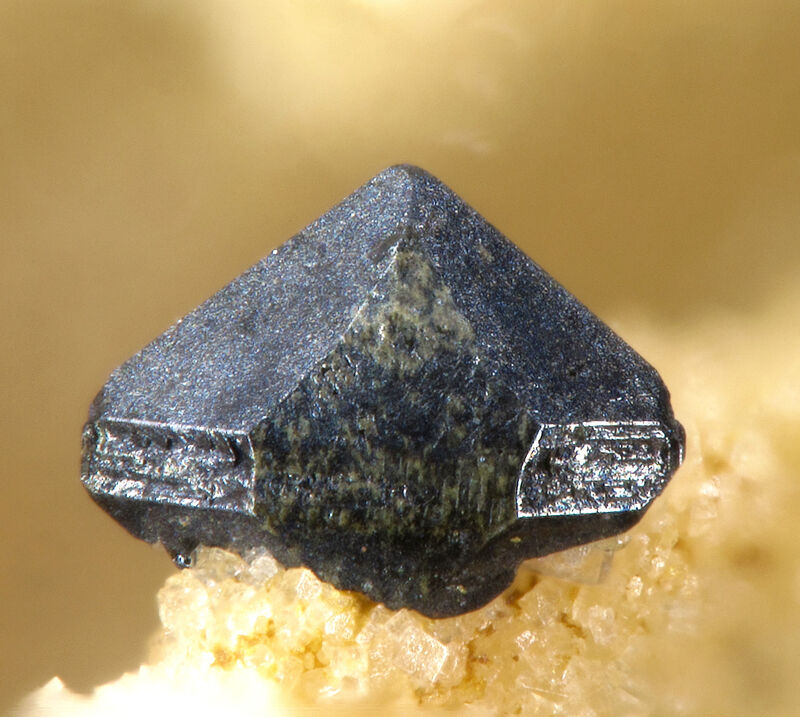
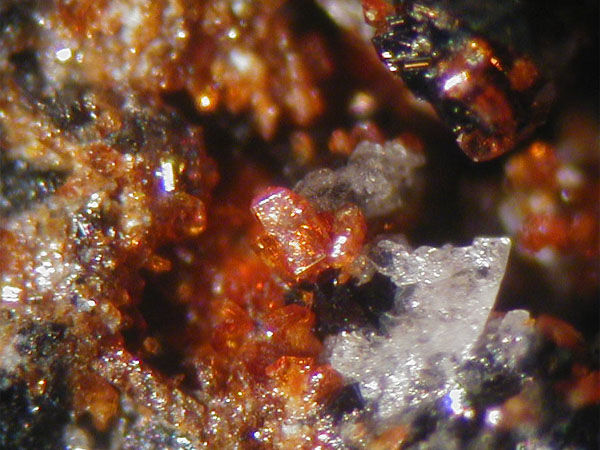
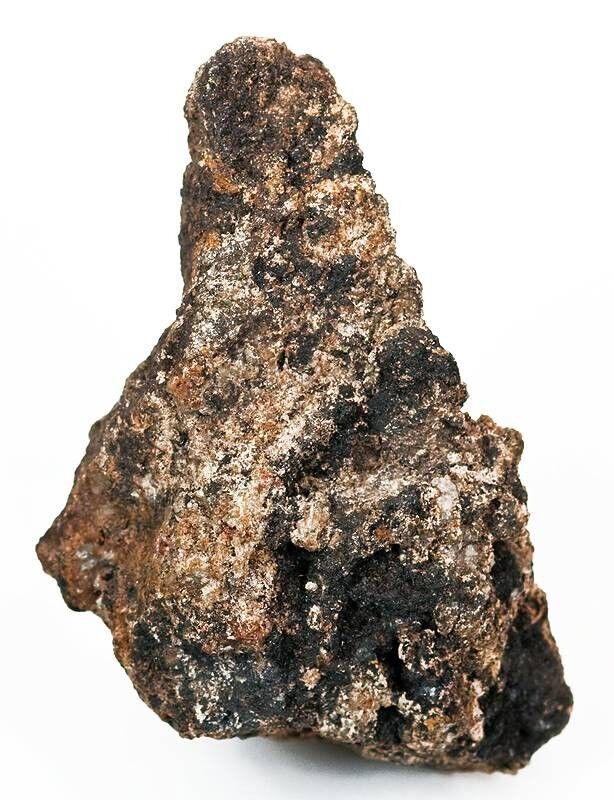
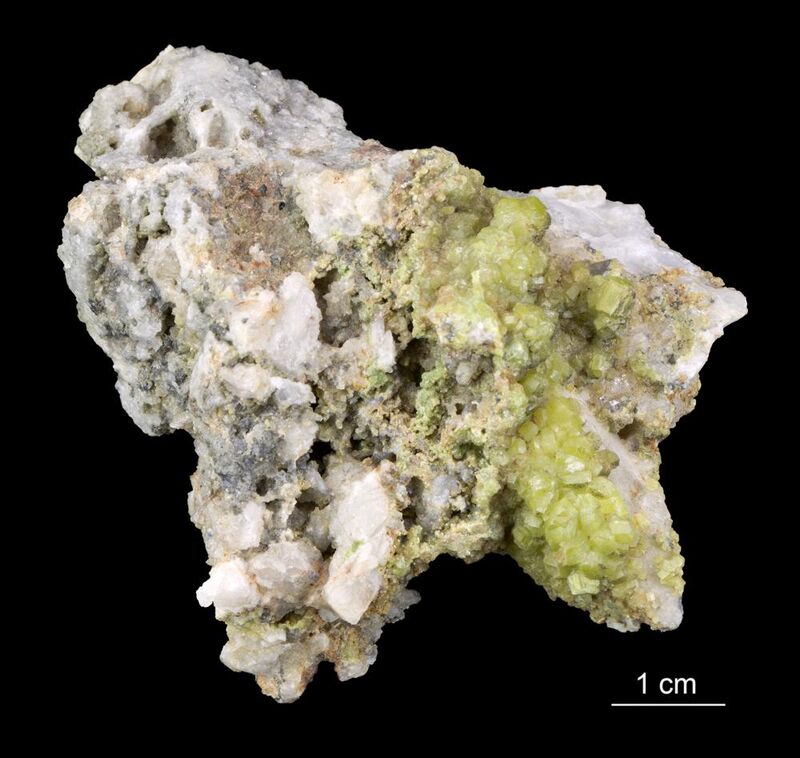
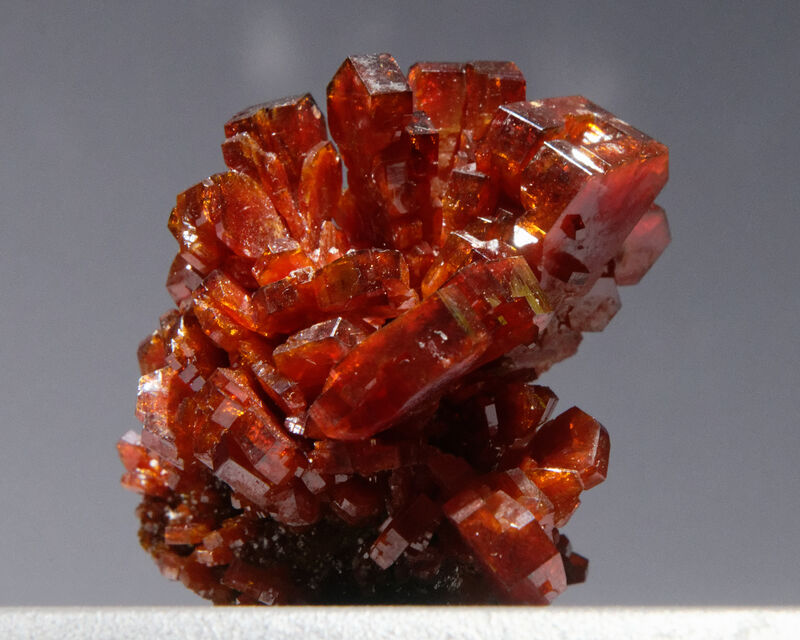
The species is sought mainly by collectors and museums. Its deep cherry-red, brown or black crusts and small prismatic crystals make it a recognisable specimen from the oxidised zones of base-metal deposits.
Where it forms, where it's found
- Geological setting
Pb, Zn, U, and V deposit.
Secondary mineral in oxidized zone of vanadium bearing base metal deposits.
- Type locality
- Sierra de Córdoba
- Córdoba Province
- Argentina
Varieties
Safety & handling
Physical
- Hardness
- 1Talc
- 2Gypsum
- 3Calcite
- 4Fluorite
- 5Apatite
- 6Orthoclase
- 7Quartz
- 8Topaz
- 9Corundum
- 10Diamond
- Transparency
- Transparent · Translucent
- Colour
- Brownish red · red-orange · reddish brown to blackish brown · nearly black
Crystals often exhibit zonal growth with varying colours.
- Streak
- Orange to brownish red
- Tenacity
- brittle
- Cleavage
- None Observed
- Fracture
- Irregular/Uneven · Sub-Conchoidal
- Density
- 6.2 g/cm³
Optical
- Optical type
- Biaxial (-) · 2V measured = 85 – 90° · 2V calc = 88°
- Refractive index
- 2.185 – 2.35
- Surface relief
- Very high
- Principal indices
- nα 2.185 · nβ 2.265 · nγ 2.350
- Birefringence
- 0.165
- Pleochroism
- Visible
Weak to strong: X = Y = Canary yellow to greenish yellow Z = Brownish yellow
- Dispersion
- strong r > v rarely r < v
- Extinction
- X = c; Y = b; Z = a.
- UV response
- Not fluorescent.
Crystallography
- Space group
- #71
- Cell parameters
- a = 7.593 Å · b = 6.057 Å · c = 9.416 Å
- Ratio a:b:c
- 1 : 0.798 : 1.240
- Z
- 4
- Morphology
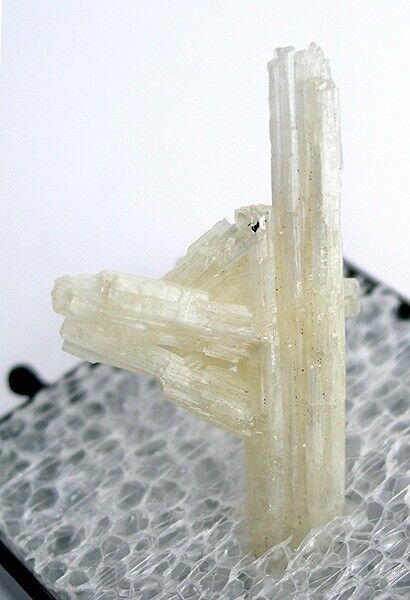
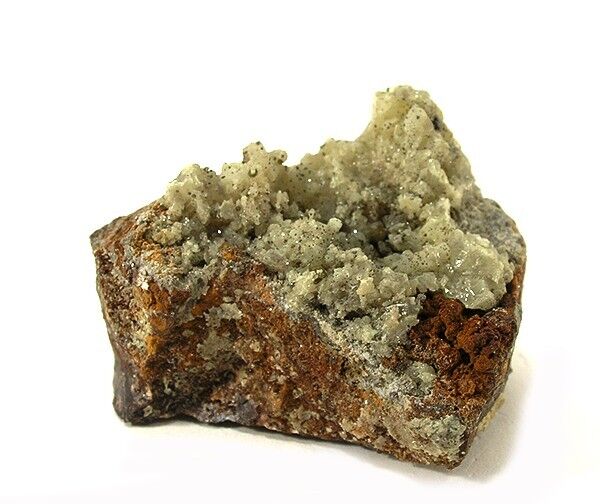
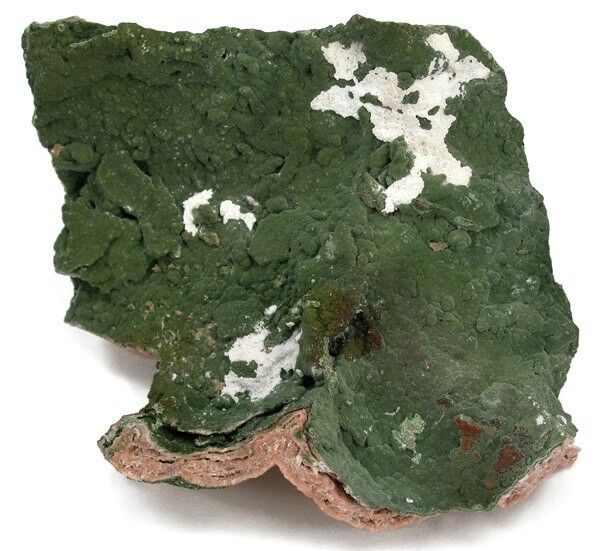
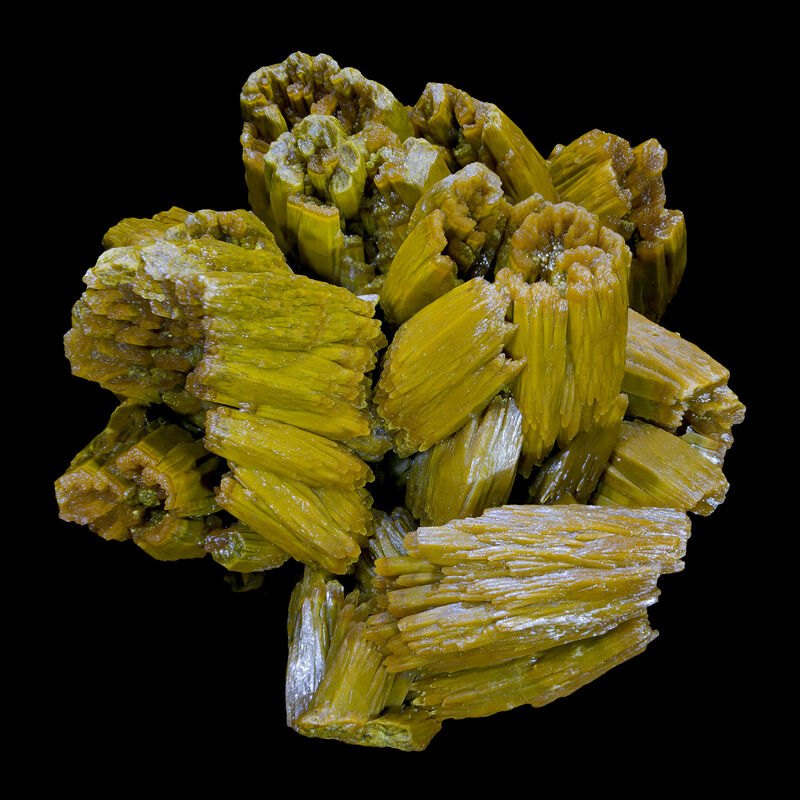
Crystals equant to pyramidal (111), prismatic [001], rarely tabular (100) or short prismatic [100]. Crystal faces are commonly uneven or rough, with frequent sub-parallel growth. Drusy crusts of intergrown crystals common; also stalactitic or massive with a coarse fibrous structure and mammillary or botryoidal surface. Massive granular at times, compact to friable.
- Comment
Pnam
Chemical composition
Synonyms
- Descloisite
- Descloizeauxit
- Descloizeauxita
- Descloizeauxite
- Discloizita
- Eusynchite
- La Ramarita
- Ramirite
- Rhombischer Vanadit
- Schaffnerit
- Tritochorit
- Tritochorite
In other languages
- French
- Descloizite
- German
- Descloizit
- Spanish
- descloizita · ramarita
- Italian
- descloizite
- Japanese
- デクロワゾー石
- Chinese
- 羟钒锌铅石 · 釩鉛鋅礦
- Russian
- Деклуазит
- Arabic
- ديكلوازيت
Classification
8.BH.40
- 8Phosphates, Arsenates, VanadatesClass
- 8.BPhosphates, etc., with additional anions, without H2ODivision
- 8.BHWith medium-sized and large cations, (OH,etc.):RO4 = 1:1Group
- 8.BH.40DescloiziteSpecies
41.05.02.01
- 41Anhydrous Phosphates, Etc.containing Hydroxyl or HalogenClass
- 41.05(AB)2(XO4)ZqType
- 41.05.02Descloizite GroupGroup
- 41.05.02.01DescloiziteSpecies
21.3.11
- 21Vanadates (and vanadates with arsenate or phosphate)Class
- 21.3Vanadates of Al, rare earths, Pb, V or BiGroup
- 21.3.11DescloiziteSpecies
Group, growth & confusion
 AdeliteCaMg(AsO4)(OH)Mineral—
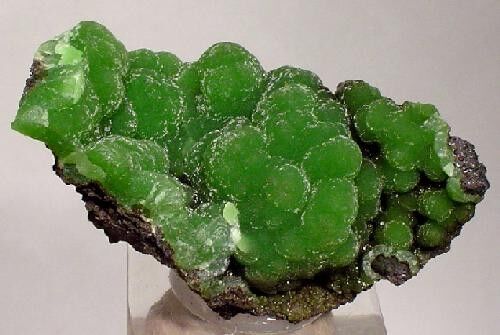 ArsendescloizitePbZn(AsO4)(OH)Mineral—
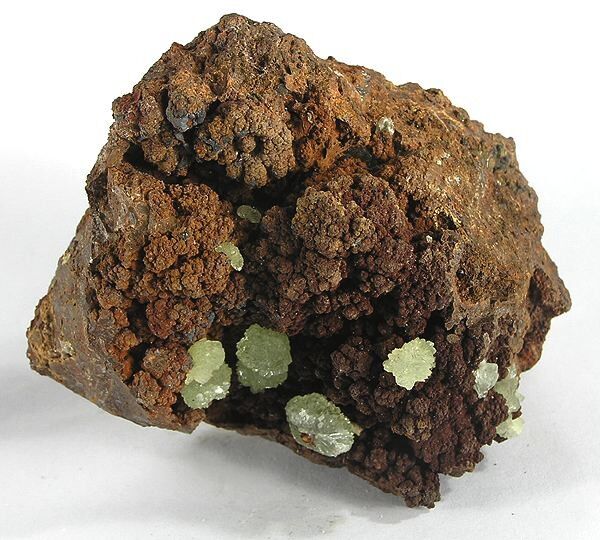 AustiniteCaZn(AsO4)(OH)Mineral—
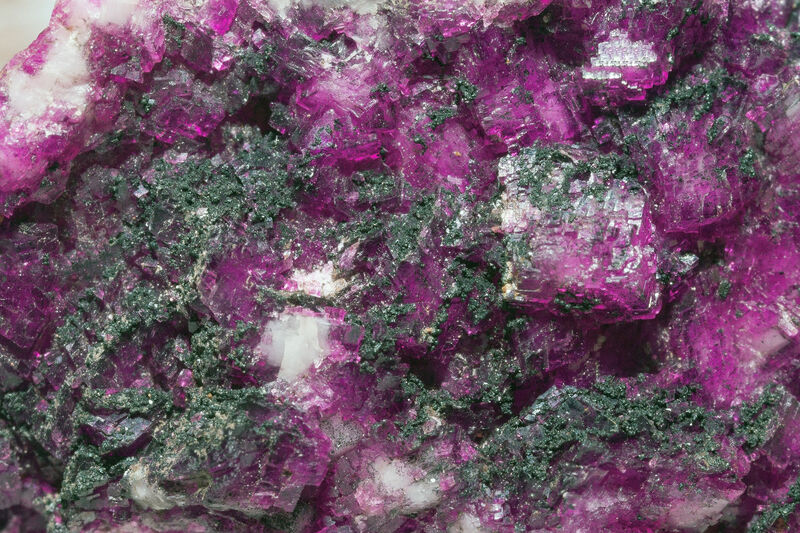
 ČechitePbFe2+(VO4)(OH)Mineral—
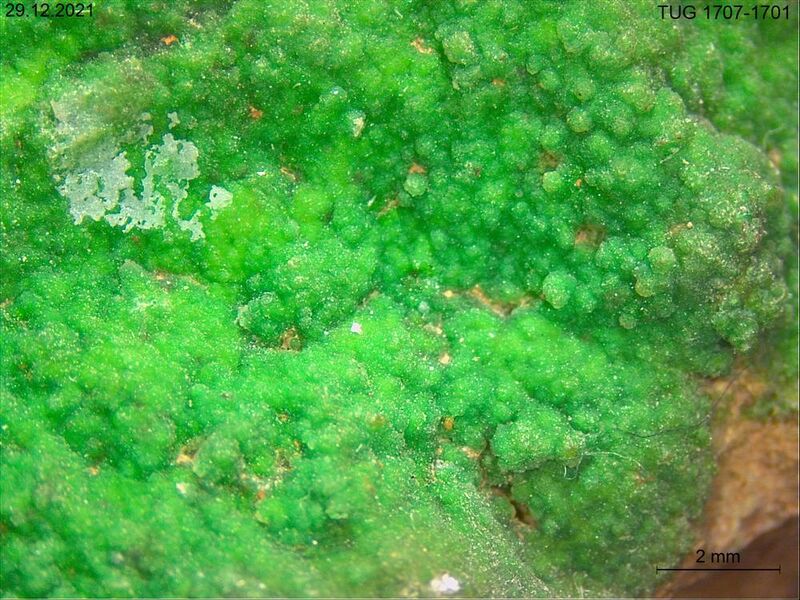
 CobaltaustiniteCaCo(AsO4)(OH)Mineral—
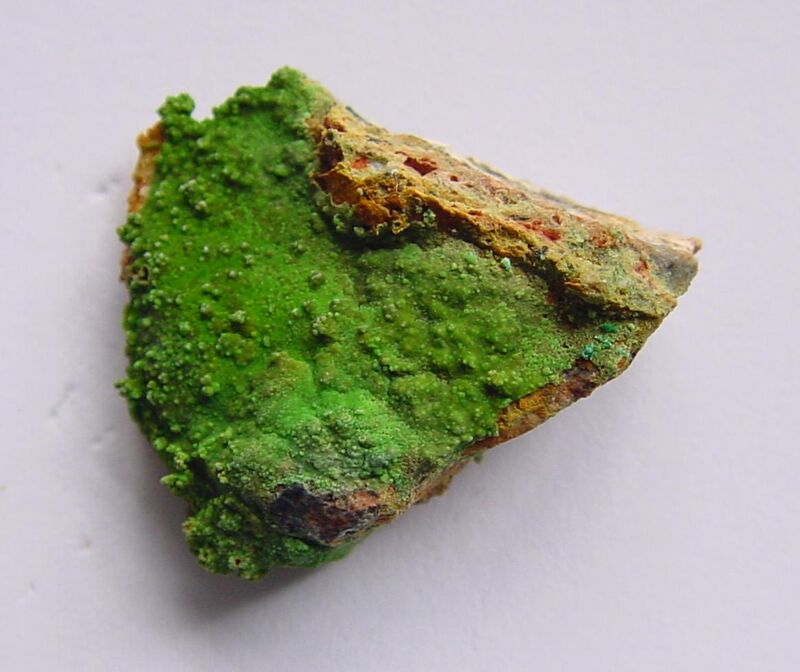
 ConichalciteCaCu(AsO4)(OH)Mineral—
 DuftitePbCu(AsO4)(OH)Mineral—
- Duftite-alphaPbCu(AsO4)(OH)Mineral—
 GottlobiteCaMg(VO4)(OH)Mineral—
- HermannroseiteCaCu(PO4)(OH)Mineral—
Literature, links & citation
- 1850Bergemann, Carl Wilhelm Sigismund (1850) Untersuchung einiger Mineralien (Dechenit, Gelbbleierz und arseniksaures Blei von Azulaques). Annalen der Physik, Halle, Leipzig: 80: 393-403 (as Dechenite - arsenatian variety).
- 1850von Kobell (1850): Über den Aräoxen, ein neues Blei-Zink-Vanadat. Journal für praktische Chemie: 50: 496.
- 1854Fischer, H. and Nessler (1854) Über ein neues Vanadinmineral, Eusynchit, aus der Nahe von Freiburg im Breisgau. Berichte über die Verhandlungen der naturforschenden Gesellschaft zu Freiburg: 1: 33 (as Eusynchite).
- 1854Descloizeaux, A. (1854) Note sur la forme cristalline d'un nouveau vanadiate de plomb. Annales de Chimie et de Physique: 41: 78-80.
- 1854Damour, A.A. (1854) Notice sur la descloizite, nouvelle espèce minérale. Annales de Chimie et de Physique: 41: 72-78.
Entry last updated
@misc{mineral2026,
  author    = {Mineral Index editorial board},
  title     = {Descloizite — Mineral Index},
  year      = {2026},
  url       = {https://mineralindex.org/minerals/descloizite-1267}
}