History
Long before anyone gave the green stone a name, Neolithic Europeans were stringing it into beads. Variscite has been worked into personal ornaments — beads above all — since Neolithic times. In burial mounds in Brittany, excavated in the 19th century, archaeologists recovered beads and pendants of it. Two of these tombs — Mané er Hroëck at Locmariaquer and the Tumiac mound at Arzon — date from between 4500 and 4000 BCE.
The mineral did not get its modern name until much later. The German mineralogist August Breithaupt described it in 1837 and named it after Variscia, the old Latin name for the Vogtland — a district of Saxony, in Germany, where the first specimens were found.
For a time it carried other names. Stone from the United States was once sold as Utahlite. Material that might be turquoise or might be variscite has sometimes been marketed under the blended label variquoise.
Industrial & practical applications
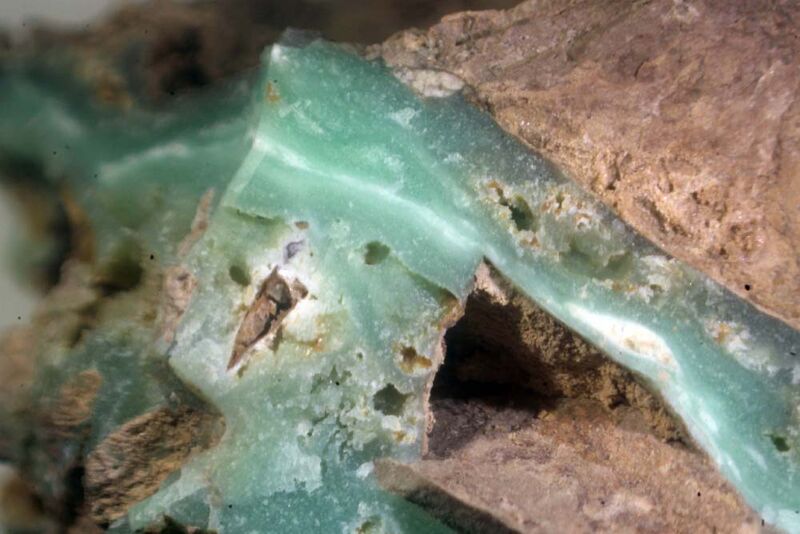
Variscite is a stone for the jeweller and the carver, not the factory. Its draw is colour: a beautiful, intense green that ranges from pale to emerald. That green earns it use as a semi-precious stone, cut into cabochons — smooth, rounded, polished gems — and worked into carvings and ornaments.
Much of its trade runs alongside turquoise. Silversmiths commonly set variscite in place of turquoise, and it can be mistaken for it. The two are easy to tell apart once you look: variscite is usually the greener of the two. It is also the rarer mineral, yet because it is less familiar to the general public, raw variscite tends to cost less than turquoise.
Where it forms, where it's found
- Geological setting
Deposited from phosphatic waters reacting with aluminous rocks at surface or near-surface conditions.
- Type locality
- Meßbach Quarry
- Meßbach
- Plauen
- Vogtlandkreis
- Saxony
- Germany
Varieties
Physical
- Hardness
- 1Talc
- 2Gypsum
- 3Calcite
- 4Fluorite
- 5Apatite
- 6Orthoclase
- 7Quartz
- 8Topaz
- 9Corundum
- 10Diamond
- Lustre
- Waxy
- Transparency
- Transparent · Translucent
- Colour
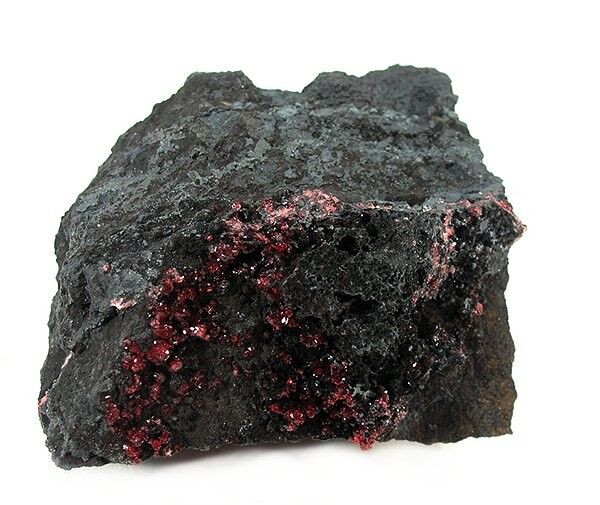
- Pale to emerald-green · bluish green · colourless to white · pale shades of brown or yellow · rarely red · Colourless to pale green in transmitted light.
- Streak
- White
- Cleavage
- Distinct/Good
Good on (010), poor on (001).
Sub-conchoidal to conchoidal when fine-grained or glassy.
- Fracture
- Irregular/Uneven · Splintery
- Density
- 2.57 g/cm³
Optical
- Optical type
- Biaxial (-) · 2V measured = 50° · 2V calc = 50°
- Refractive index
- 1.563 – 1.594
- Surface relief
- Moderate
- Principal indices
- nα 1.563 · nβ 1.588 · nγ 1.594
- Dispersion
- r < v perceptible
Crystallography
- Space group
- #61
- Cell parameters
- a = 9.822 Å · b = 8.561 Å · c = 9.63 Å
- Ratio a:b:c
- 1 : 0.872 : 0.980
- Unit cell volume
- 808.81 ų
- Z
- 8
- Morphology
Uncommon in crystals, pseudo-octahedral (111), with (001) and additional forms as modifying faces only, lathlike. Commonly fine-grained massive, nodular, stalagtitic, crustiform, veinlets; chalcedonic, opaline.
- Twinning
On (201), rare.
Chemical composition
- Impurities
- Fe
- As
Synonyms
- Alpha-variscite
- Amatrice
- Chlor-utahlite
- Chlor-utalite
- Chlorutahlite
- Lucinit
- Lucinita
- Lucinite
- Peganit
- Peganita
- Peganite
- Sphaerita
- Sphaerite
- Sphärit
- Utahlite
- Variquoise
In other languages
- French
- Alpha-variscite · Barrandite · Bolivarite · Lucinite · Peganite · Sphaérite · Utahlite · Variquoise · variscite
- German
- Variscit · Variszit
- Spanish
- utahlita · variscita
- Italian
- Variscite
- Japanese
- バリサイト
- Chinese
- 磷铝石
- Simplified Chinese
- 磷铝石
- Traditional Chinese
- 磷鋁石
- Russian
- Аматрикс · Варисцит · Юталит
- Arabic
- فارسيت · فاريسيت
Classification
8.CD.10
- 8Phosphates, Arsenates, VanadatesClass
- 8.CPhosphates without additional anions, with H2ODivision
- 8.CDWith only medium-sized cations, RO4:H2O = 1:2Group
- 8.CD.10VarisciteSpecies
40.04.01.01
- 40Hydrated Normal Phosphates, Arsenates and VanadatesClass
- 40.04(AB)5(XO4)2·xH2OType
- 40.04.01Variscite GroupGroup
- 40.04.01.01VarisciteSpecies
19.7.5
- 19PhosphatesClass
- 19.7Phosphates of Al aloneGroup
- 19.7.5VarisciteSpecies
Group, growth & confusion
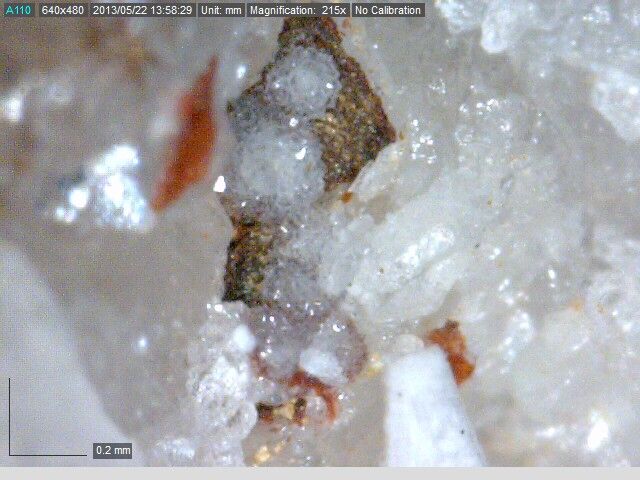
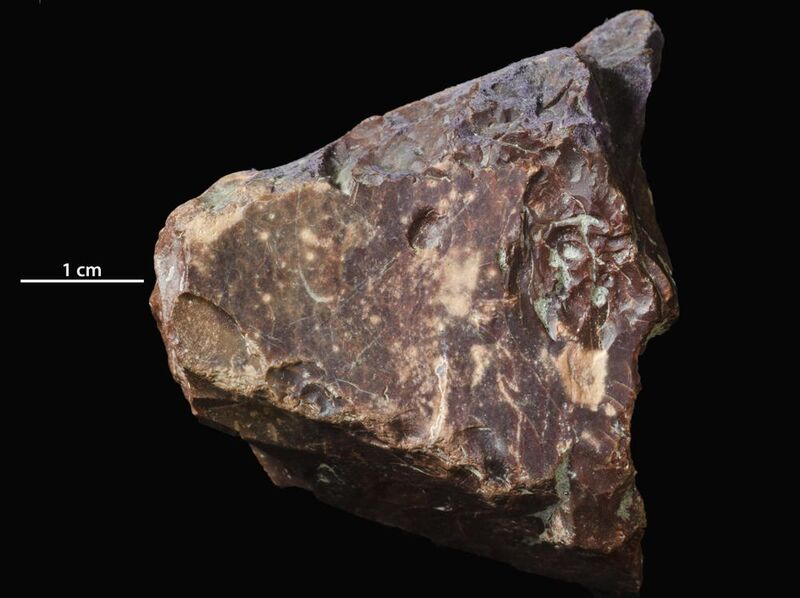 ChalcedonySiO2Variety—
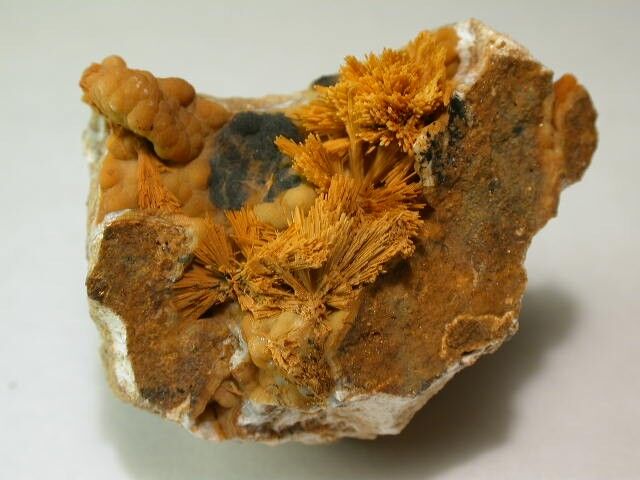 CrandalliteCaAl3(PO4)(PO3OH)(OH)6Mineral—
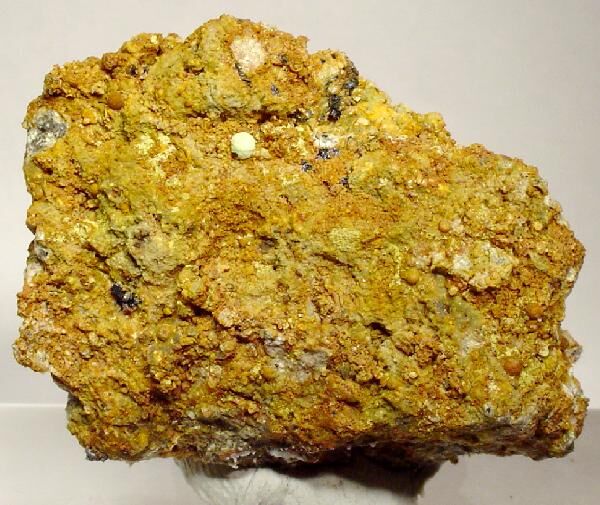 KolbeckiteSc(PO4) · 2H2OMineral—
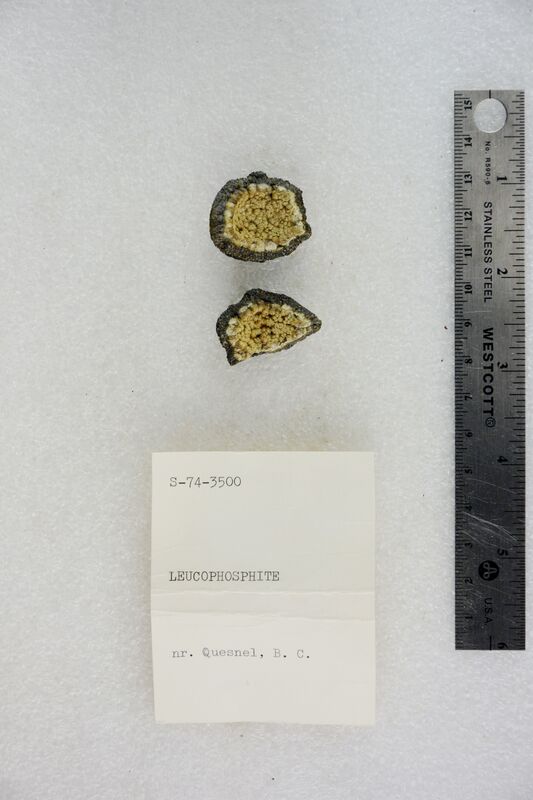 LeucophosphiteKFe3+2(PO4)2(OH) · 2H2OMineral—
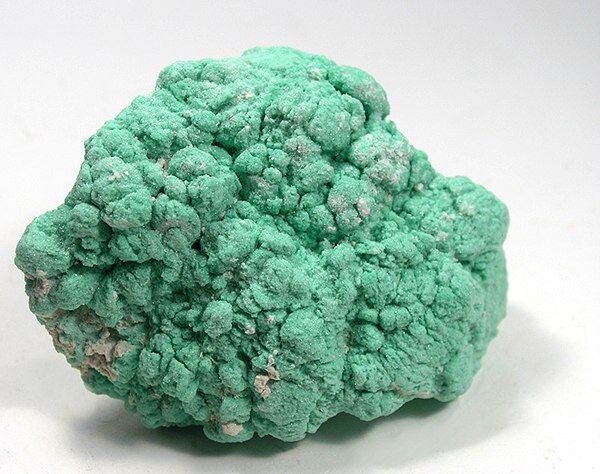 MetavarisciteAl(PO4) · 2H2OMineral—
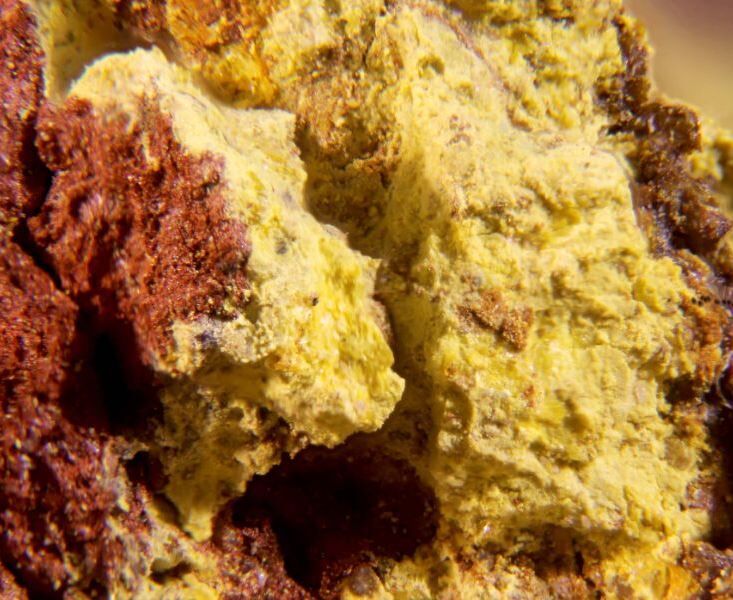 SteigeriteAl(VO4) · 3H2OMineral—
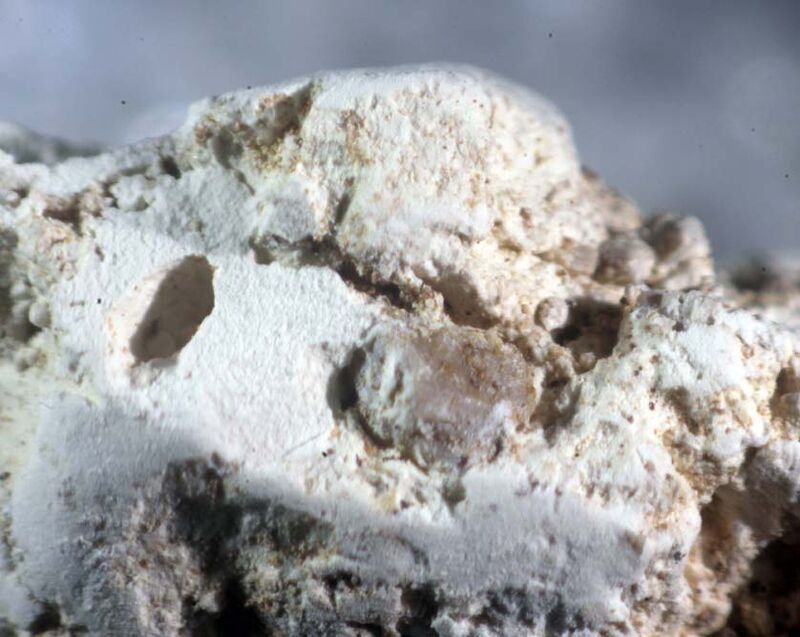 TaranakiteK3Al5(PO3OH)6(PO4)2 · 18H2OMineral—
 VashegyiteAl11(PO4)9(OH)6 · 38H2OMineral—
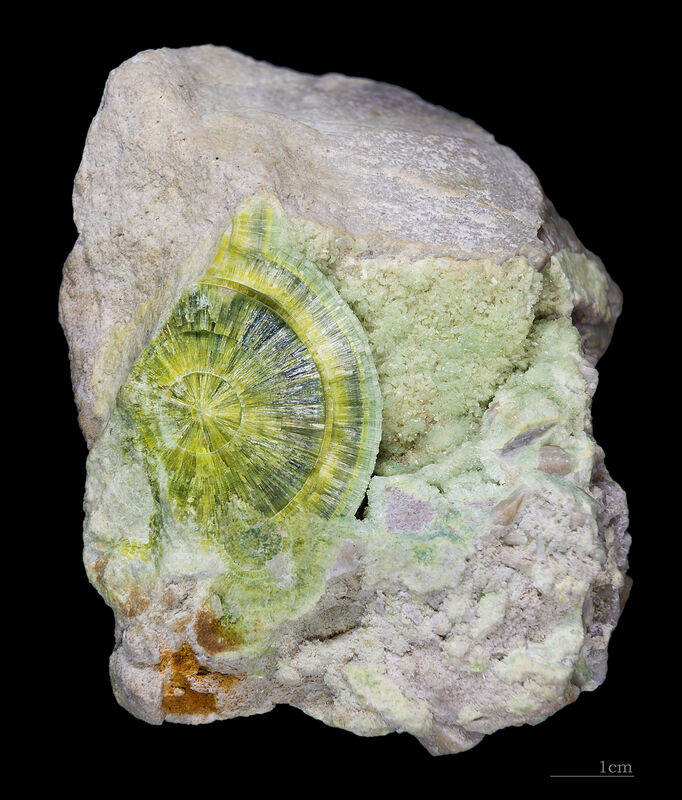 WavelliteAl3(PO4)2(OH)3 · 5H2OMineral—
Literature, links & citation
- 1830Breithaupt, [J.F.] August (1830) Bestimmung neuer mineral-specien, hedyphan. Journal für Chemie und Physik, 308-316
- 1837Breithaupt (1837) Journal für praktische Chemie, Leipzig: 10: 506.
- 1878Chester (1878) American Journal of Science: 15: 207.
- 1895Kunz (1895) USGS 16th Annual Report, part 4: 602 (as Utahlite).
- 1904Tschirwinsky (1904) Ann. géol. min. Russie: 7: 28.
Entry last updated
@misc{mineral2026,
  author    = {Mineral Index editorial board},
  title     = {Variscite — Mineral Index},
  year      = {2026},
  url       = {https://mineralindex.org/minerals/variscite-4156}
}