History
Vivianite is one of those minerals that human beings used for centuries under another name before science got around to identifying it. The pigment painters called blue ochre, the gem cutters called odontolite — both are vivianite, and both predate the mineral's formal naming in 1817 by a very long time.
European artists were using blue ochre as far back as Roman times, though oil painters made only sparing use of it. The pigment turned up in wall paintings and polychromy — the practice of painting sculpture and architecture in colour — across medieval Germany and England. It reappeared in the Baroque and Rococo decoration of Austria and Germany before falling out of fashion. The same mineral was also responsible, by entirely natural means, for the blue tint of odontolite, the fossil bone-turquoise once cut and set as a gemstone.
The mineral itself was found at Wheal Kind, part of the West Wheal Kitty group of mines at St Agnes in Cornwall. The discoverer was John Henry Vivian (1785–1855), a politician, mine owner and mineralogist of Welsh-Cornish background living in Truro. The German geologist Abraham Gottlob Werner named the mineral after him in 1817 — the year Werner died. A long-standing error in the mineralogical literature credits the name to a "J. G. Vivian"; the middle initial was a typographical mistake that has been propagated ever since.
Industrial & practical applications
Vivianite has no significant modern industrial application. Its historical career as the blue ochre pigment is long over, and it is sought today mainly as a specimen — collectors prize the deep blue, prismatic crystals that develop once a freshly mined colourless sample oxidises on contact with air.
The mineral keeps a second life as a curiosity of natural chemistry. Crystals turn up inside fossil bivalve and gastropod shells, and attached to fossil bone. They also appear on iron coffins and on the corpses they enclose, as the decomposing body reacts with the iron enclosure. The same process, working on bone in the ground, gives the gemstone odontolite its blue tint. These occurrences interest archaeologists and palaeontologists more than industry.
Where it forms, where it's found
- Geological setting
A secondary mineral found in a number of geologic environments: the oxidation zone of metal ore deposits, particularly associated with gossan; in granite pegmatites containing phosphate minerals; in clays and glauconitic sediments; and in recent alluvial deposits replacing organic material, peat, lignite, bog iron ores, and forest soils.
- Type locality
- Wheal Kine (Wheal Kind)
- St Agnes Consols (Polberro Consols)
- St Agnes
- Cornwall
- England
- UK
50.3152°, -5.2160°
Physical
- Hardness
- 1Talc
- 2Gypsum
- 3Calcite
- 4Fluorite
- 5Apatite
- 6Orthoclase
- 7Quartz
- 8Topaz
- 9Corundum
- 10Diamond
- Lustre
- Vitreous · Earthy
- Transparency
- Transparent · Translucent
- Colour
- Colourless and transparent when fresh · quickly turning pale to deep blue · greenish-blue or bluish-green.
- Streak
- Colourless to bluish white, quickly changing to dark blue or brown
- Tenacity
- sectile
- Cleavage
- Perfect
Perfect on (010), in traces on (06) and (100).
Fibrous nearly perpendicular to [001]; also flexible in thin {010} laminae.
- Fracture
- Fibrous
- Density
- 2.67 g/cm³
Optical
- Optical type
- Biaxial (+) · 2V measured = 63 – 83.5° · 2V calc = 78 – 88°
- Refractive index
- 1.579 – 1.675
- Surface relief
- Moderate
- Principal indices
- nα 1.579 – 1.616 · nβ 1.602 – 1.656 · nγ 1.629 – 1.675
- Birefringence
- 0.050
- Pleochroism
- Visible
X= blue, deep blue, indigo blue Y= pale yellowish green, pale bluish green, green-yellow Z= pale yellowish green, pale yellowish green, olive-yellow.
- Dispersion
- r < v weak
- Extinction
- X=b, Z^c = 28.5°
- UV response
- Not Fluorescent.
- Notes
The refractive indices increase with increasing oxidation, the birefringence decreases, and the pleochroism on (010) becomes stronger.
Crystallography
- Space group
- C2/m
- Cell parameters
- a = 10.1518(6) Å · b = 13.4327(7) Å · c = 4.7005(3) Å
- Cell angles
- β = 104.692(2) °
- Ratio a:b:c
- 1 : 1.323 : 0.463
- Z
- 4
- Morphology
Crystals typically prismatic parallel to [001], also flattened (010), more rarely (100) and equant; often rounded into blade-like or lanceolate shapes by vicinal development; found in stellate clusters, as reniform or globular aggregates, tabular masses or concretions, crusts with fibrous to bladed structure, and earthy to powdery.
- Twinning
Lamellar twinning on (010), corresponding to approx. (304).
- Translation gliding
- T(010) t[001]
- Comment
Cell parameters from Hongu et al. (2021).
Chemical composition
- Impurities
- Mn
- Mg
- Ca
Synonyms
- A-Matrix
- Angelardite
- Anglarite (of Berthier)
- Anglarite (of von Kobell)
- Blaueisenerde
- Bleu de Prusse natif
- Bloa Järnjord
- Blue Iron Earth
- Blue Ocher
- Cæruleum Berolinense nativum
- Calx Martis phlogisto juncta
- Earthy Phosphate of Iron
- Eisen-Phyllit
- Eisenblau
- Fer azuré
- Fer phosphaté
- Glaucosiderit
- Glaucosiderita
- Glaucosiderite
- Glaukosiderit
- Mullicit
- Mullicite
- Mullinit
- Native Prussian Blue
- Natürliches Berlinblau
- Naturligit Berlinerblätt
- Ocre martiale bleue
- Paravivianite
- Phosphate of Iron
- Phosphorsaures Eisen
In other languages
- French
- Vivianite
- German
- Blaueisenerz · Phosphoreisensinter · Vivianit
- Spanish
- Vivianita
- Italian
- Terra di Harlem · Vivianite
- Portuguese
- vivianite
- Japanese
- 藍鉄鉱
- Chinese
- 蓝铁矿 · 藍鐵礦
- Russian
- виванит · вивианит
- Arabic
- فيفيانيت
Classification
8.CE.40
- 8Phosphates, Arsenates, VanadatesClass
- 8.CPhosphates without additional anions, with H2ODivision
- 8.CEWith only medium-sized cations, RO4:H2O about 1:2.5Group
- 8.CE.40VivianiteSpecies
40.03.06.01
- 40Hydrated Normal Phosphates, Arsenates and VanadatesClass
- 40.03A3(XO4)2·xH2OType
- 40.03.06Vivianite GroupGroup
- 40.03.06.01VivianiteSpecies
19.13.11
- 19PhosphatesClass
- 19.13Phosphates of Fe aloneGroup
- 19.13.11VivianiteSpecies
Group, growth & confusion
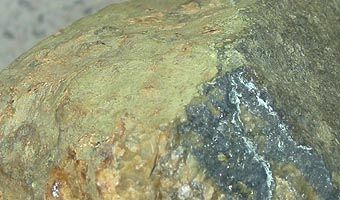 AnnabergiteNi3(AsO4)2 · 8H2OMineral—
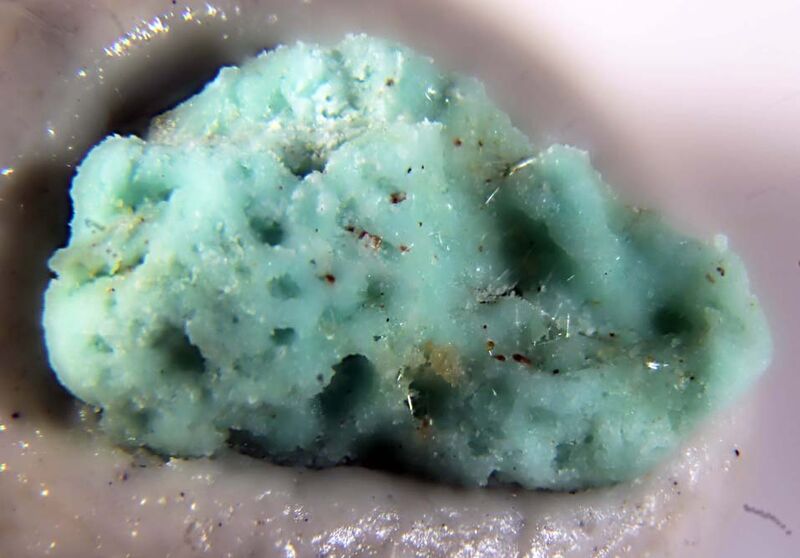 ArupiteNi3(PO4)2 · 8H2OMineral—
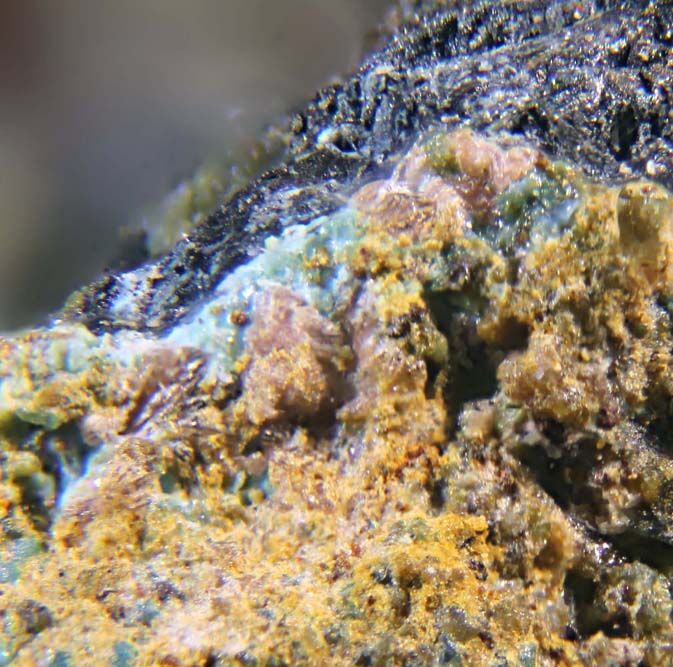 BabánekiteCu3(AsO4)2 · 8H2OMineral—
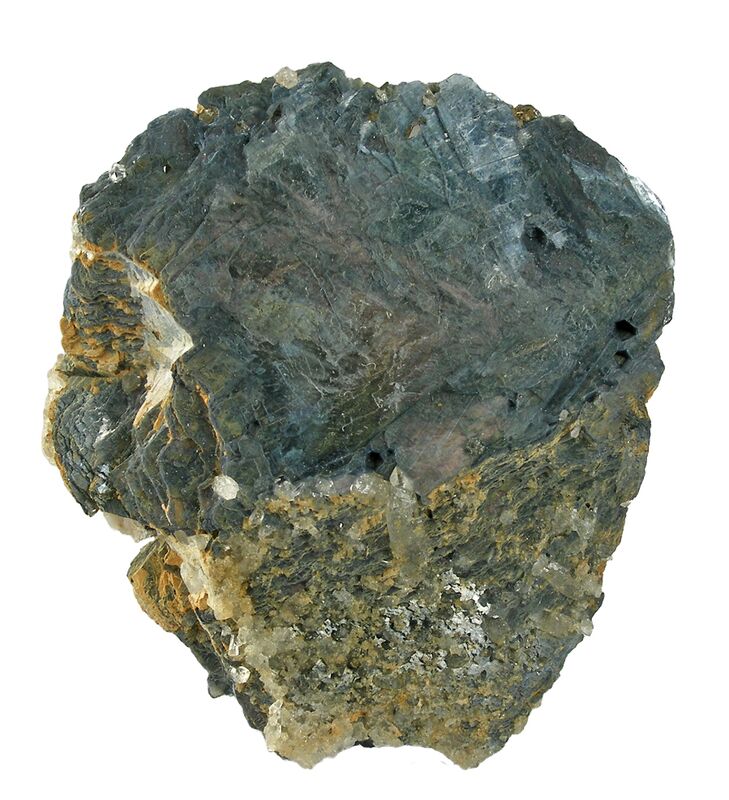 Barićite(Mg,Fe)3(PO4)2 · 8H2OMineral—
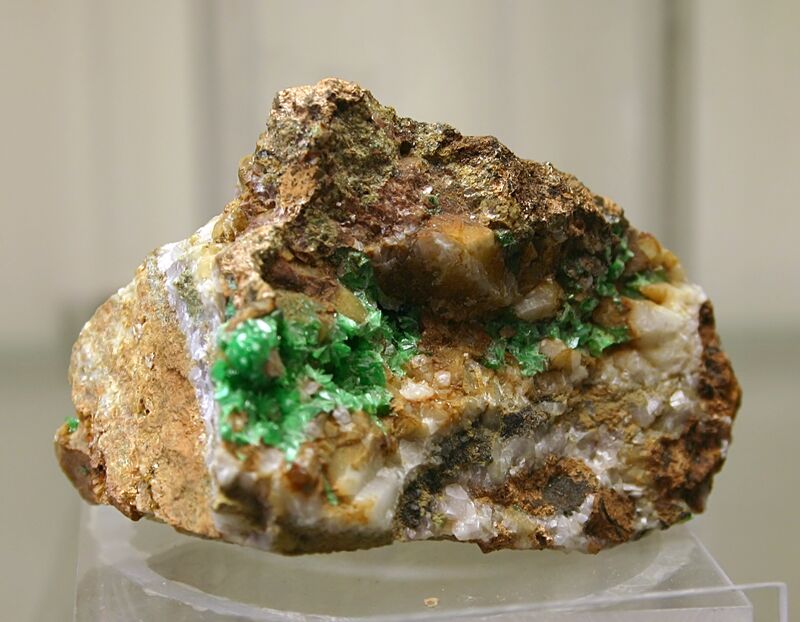 CabreriteNiMg2(AsO4)2·8H2OMineral—
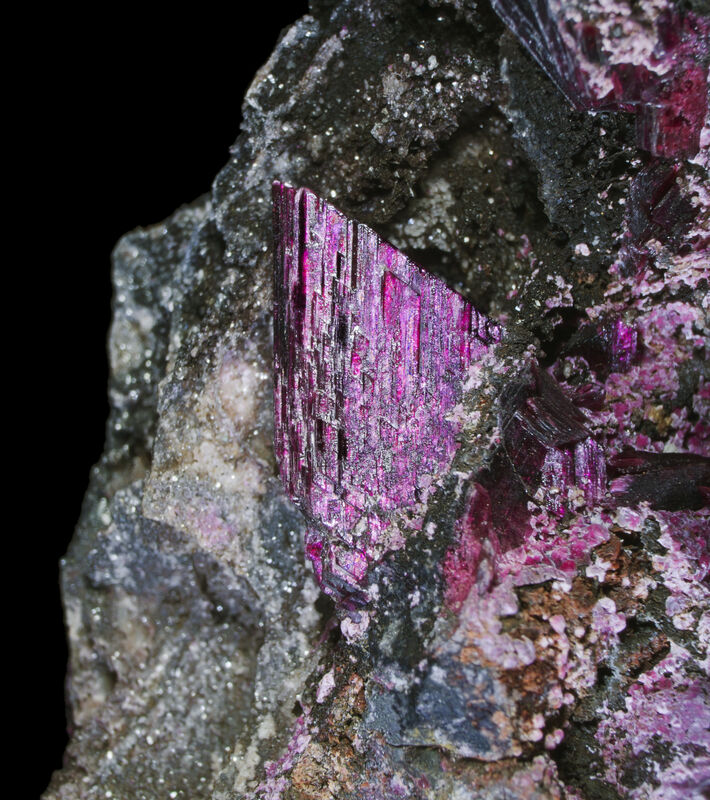 ErythriteCo3(AsO4)2 · 8H2OMineral—
- GritsenkoiteCoMg2(AsO4)2(H2O)8Mineral—
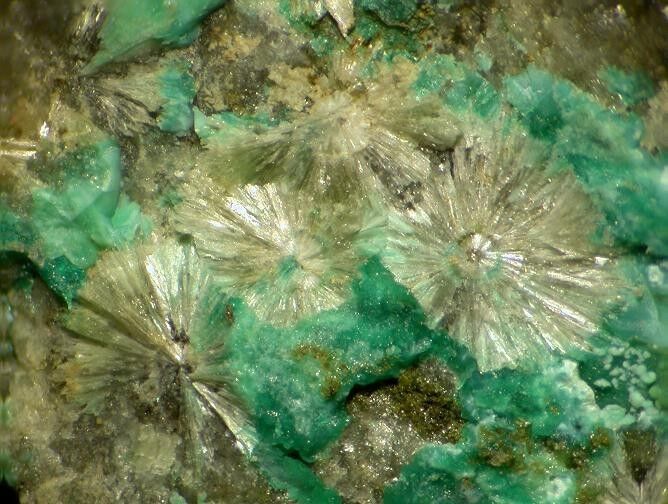 HörnesiteMg3(AsO4)2 · 8H2OMineral—
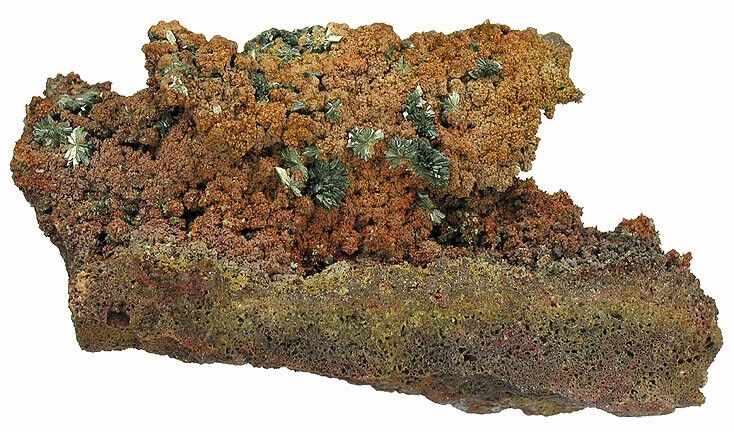 KöttigiteZn3(AsO4)2 · 8H2OMineral—
 ManganohörnesiteMn2+3(AsO4)2 · 8H2OMineral—
 AlthausiteMg4(PO4)2(OH,O)(F,◻)Mineral—
 AnapaiteCa2Fe2+(PO4)2 · 4H2OMineral—
 BerauniteFe3+6(PO4)4O(OH)4 · 6H2OMineral—
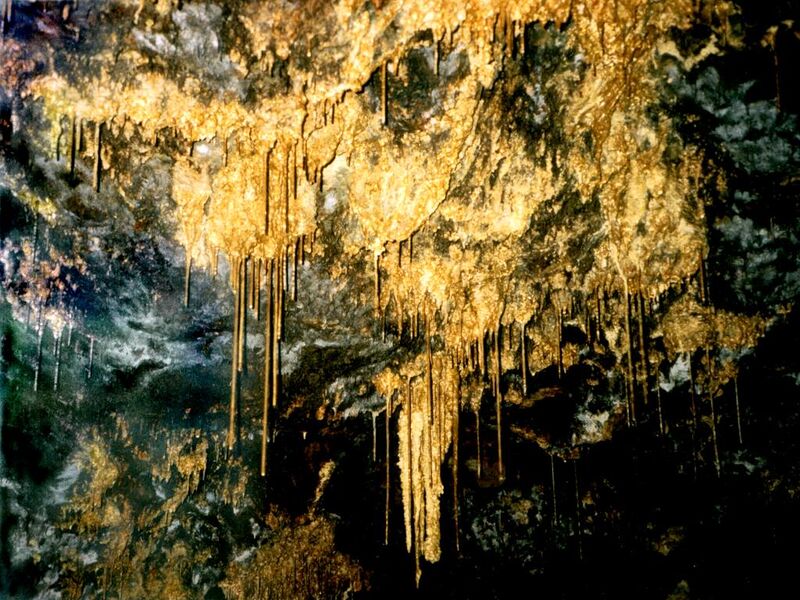 DiadochiteFe3+2(PO4)(SO4)(OH) · 6H2OMineral—
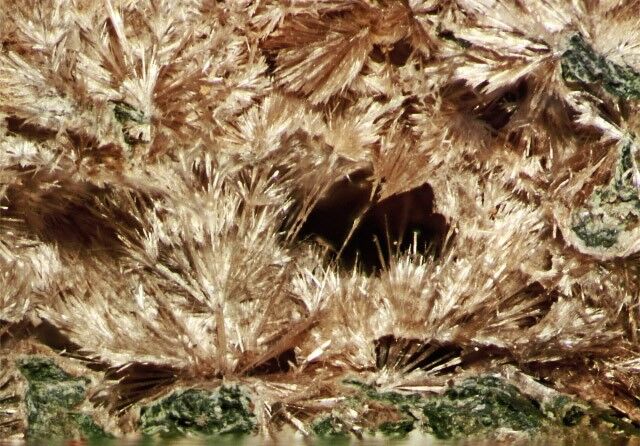 FerrostrunziteFe2+Fe3+2(PO4)2(OH)2 · 6H2OMineral—
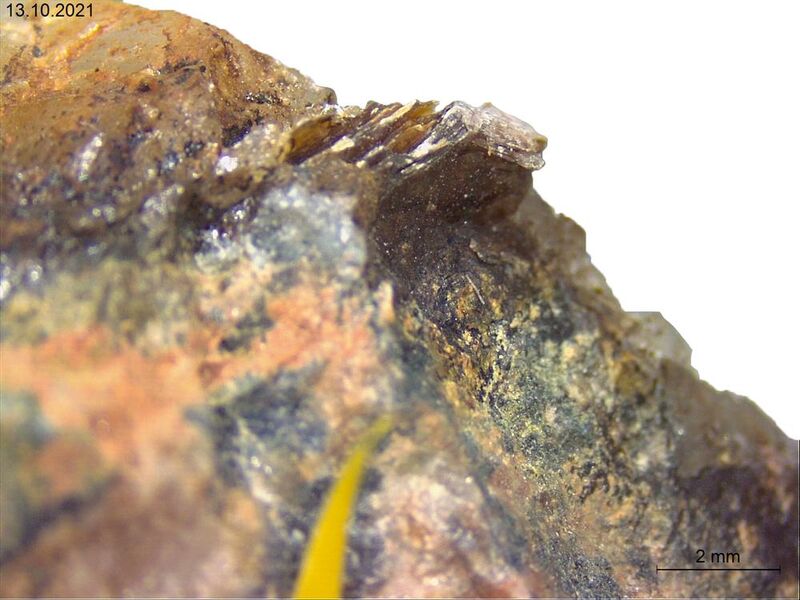 HureauliteMn2+5(PO3OH)2(PO4)2 · 4H2OMineral—
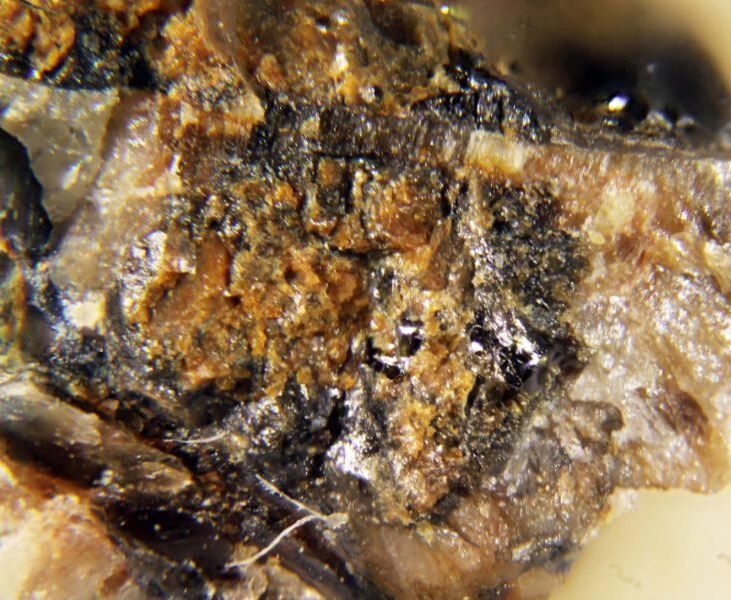 JohnsomervilleiteNa3CaFe2+11(PO4)9Mineral—
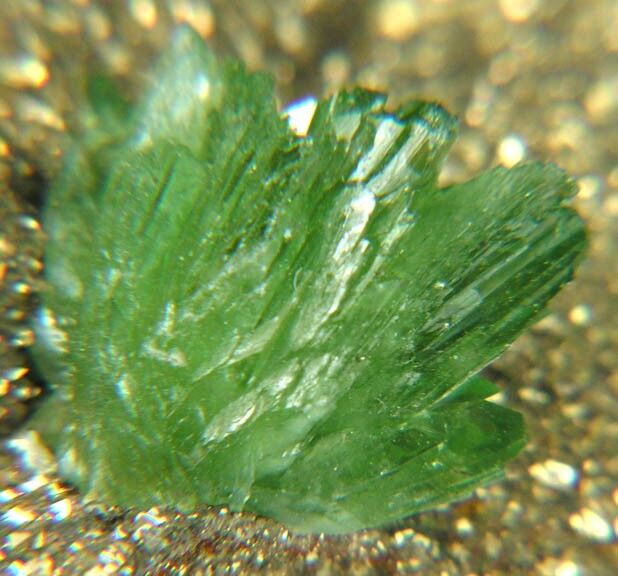 LudlamiteFe2+3(PO4)2 · 4H2OMineral—
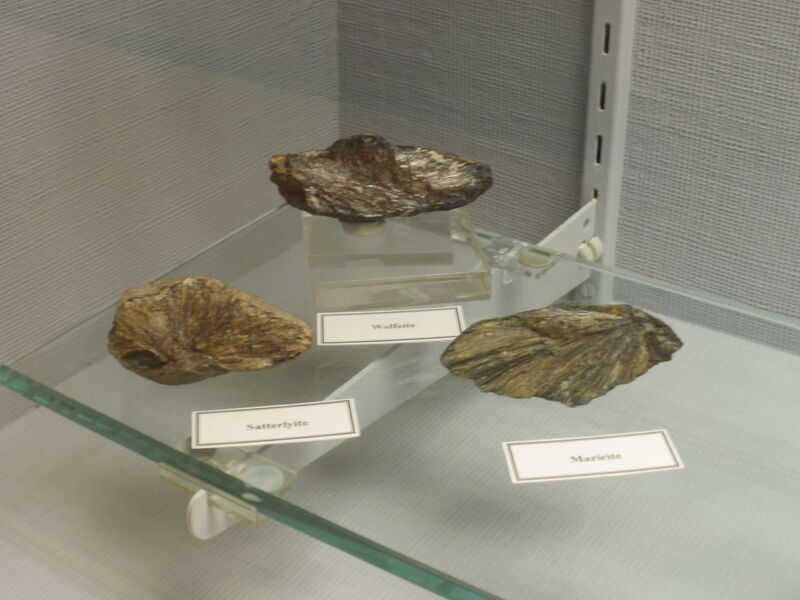 MarićiteNaFe2+(PO4)Mineral—
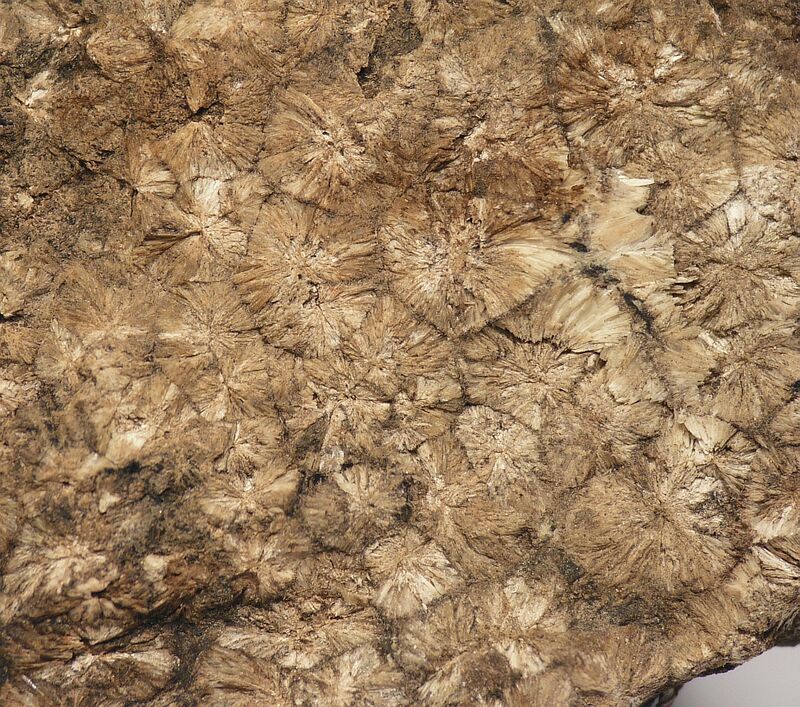 MesseliteCa2Fe2+(PO4)2 · 2H2OMineral—
Literature, links & citation
- 1751Springsfeld, G.C. (1751) De Terra quadam cærulea, in fodina, prope Eccardsbergam in Thuringia, reperta.- Acta Physico-Medica Academiæ Caesareæ Leopoldino-Carolinæ Naturæ Curiosorum exhibentia Ephemerides, sive, Observationes Historias et Experimenta a Celeberrimis Germaniæ et Exterarum Regionum Viris Habita et Communicata, Singulari Studio Collecta, Vol. X, p. 76-90 (from Eckartsberga near Naumburg, Saxony-Anhalt, Germany, as Terra cærulea, with description and chemical investigation, identification as an iron mineral).
- 1758Cronstedt, Axel Fredrik (1758) Försök till en Mineralogie eller Mineral Rikets Upställning. J. A. Carlbohm, Stockholm.
- 1772Born, I. von (1772) Lythophylacium Bornianum; Index fossiliumquae colligit, etc., Prague. part 1: 136 (as Cæruleum Berolinense nativum).
- 1783Lisle, Jean-Baptiste-Louis Romé de, Romé de L'Isle, Jean-Baptiste Louis de (1783) Cristallographie, ou Description des formes propres à tous les corps du règne minéral dans l'état de combinaison saline, pierreuse ou métallique [Crystallography, or Description of the forms specific to all bodies of the mineral kingdom in the state of saline, stony or metallic combination] (2nd ed.). L'Imprimerie de Monsieur.
- 1784Klaproth M.H. (1784) Crell’s Chemical Journal, London: 1: 390 (as Natürliches Berlinblau & Phosphorsaurer Eisen).
Entry last updated
@misc{mineral2026,
  author    = {Mineral Index editorial board},
  title     = {Vivianite — Mineral Index},
  year      = {2026},
  url       = {https://mineralindex.org/minerals/vivianite-4194}
}