History
The name beryl travelled a long way before it reached us. It came into Middle English as beril, through Old French and Latin beryllus, from the Ancient Greek bḗryllos — a word the Greeks used loosely for a range of blue-green stones. Further back the trail leads east, possibly to the Prakrit veruḷiya or veḷuriya — meaning "beryl" — and from there, by one well-supported guess, to the name of Belur, a town in Karnataka in southern India.
In antiquity the stone was prized as a gem rather than studied as a mineral. The deep green variety we now call emerald was mined in Egypt from around 1500 BCE at a place the Romans named Mount Smaragdus, in the eastern desert. The Egyptian workings were later run on an industrial scale by the Roman and Byzantine Empires, and again by Islamic conquerors after them; mining there ceased only when Spanish ships brought back the much richer Colombian deposits. Pliny the Elder described these green stones in his Natural History, finished in 77 CE — the date the page header records for beryl's earliest written notice.
For nearly two more millennia, emerald, aquamarine, and the colourless and yellow stones we now group together were treated as separate gems. They were sorted by colour, not by chemistry.
Beryllium found inside beryl
The unification came in 1798, in Paris. The French crystallographer René Just Haüy had noticed that emerald and beryl crystals were geometrically identical, and asked the chemist Louis-Nicolas Vauquelin to analyse them. In a paper read that year before the Institut de France, Vauquelin reported a new "earth" extracted from emerald and beryl. The earth was the oxide of a previously unknown element — the metal we now call beryllium, named for the mineral that gave it up. Vauquelin's element stayed an oxide for another thirty years. Friedrich Wöhler and Antoine Bussy independently isolated metallic beryllium in 1828, by reacting potassium with beryllium chloride.
The named varieties
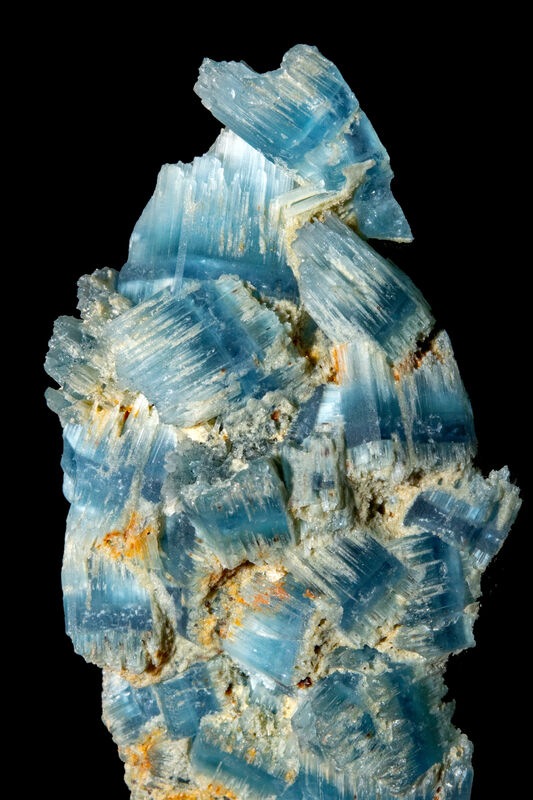
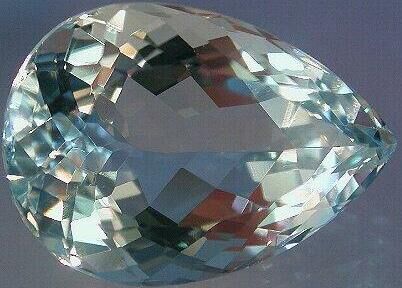
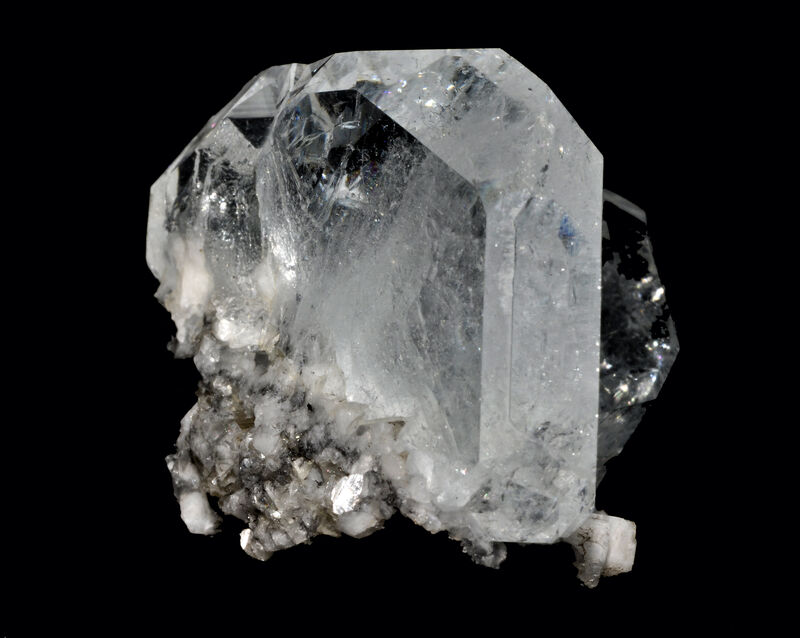
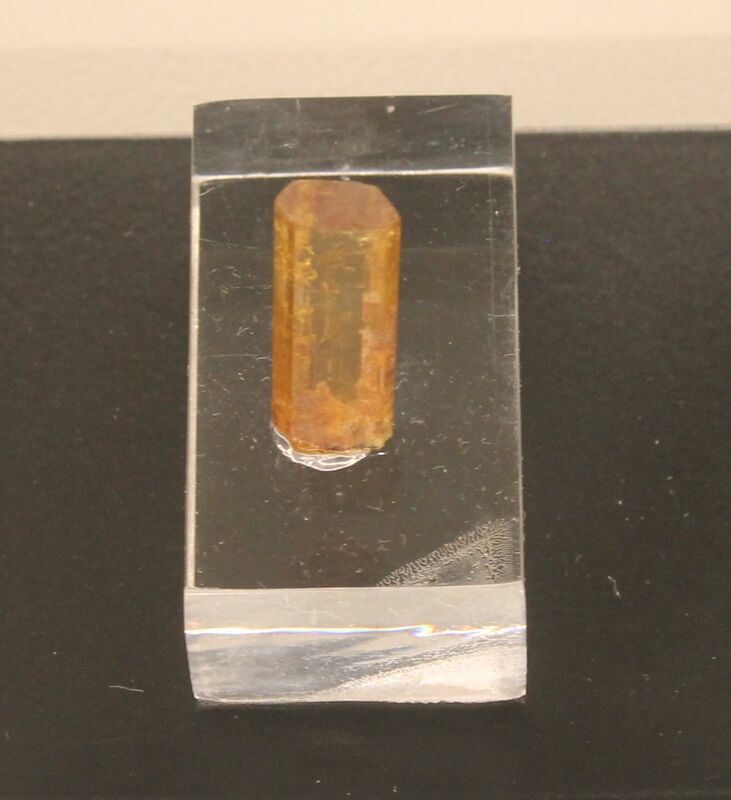
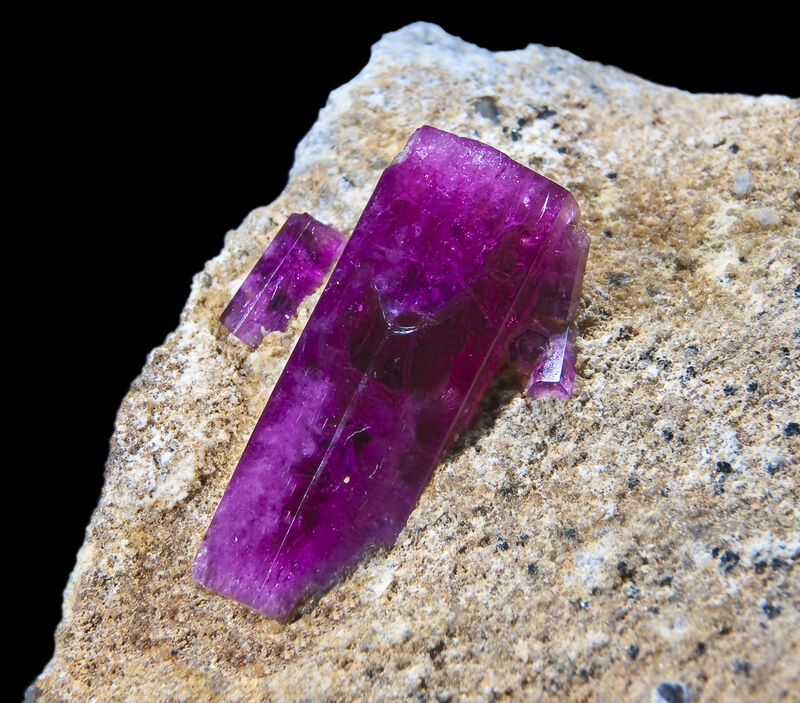
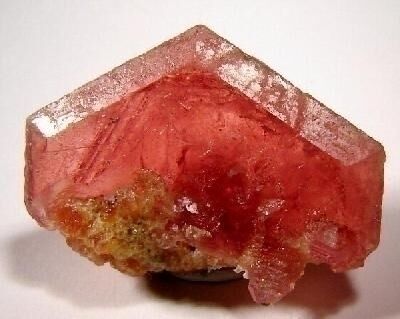
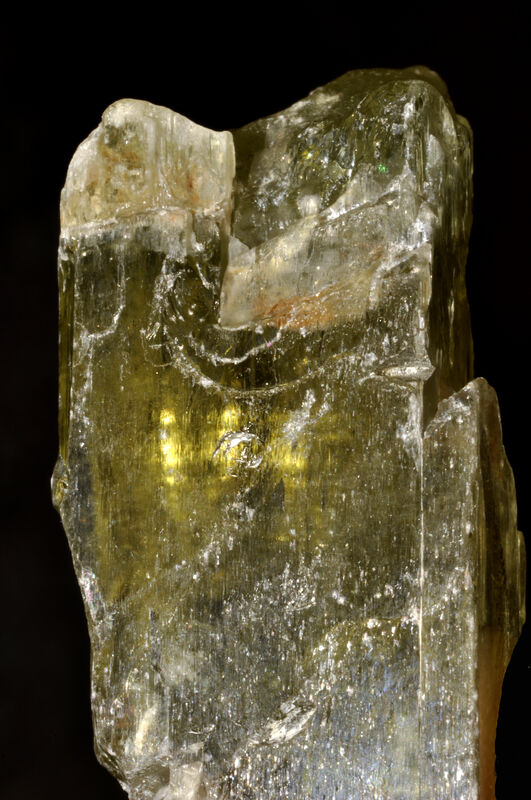
The 19th and early 20th centuries filled in the rest of the family. Aquamarine — the pale blue-green variety coloured by iron — kept its old Latin name (aqua marina, sea water). Heliodor, golden yellow, and goshenite, colourless, joined the list as colour-distinct varieties of the same species. Red beryl, the rarest of all, was first described in 1904 from Maynard's Claim in the Thomas Range of Juab County, Utah. The pink variety was named six years later, and named precisely. On 5 December 1910 the American gemmologist George F. Kunz proposed the name morganite at a meeting of the New York Academy of Sciences. The choice honoured the financier J. Pierpont Morgan for his support of the arts and sciences. Morgan had given important gem collections to the American Museum of Natural History in New York and to the Museum of Natural History in Paris; the pink colour itself comes from manganese.
Industrial & practical applications
Beryl is the world's principal ore of beryllium — a light, stiff, structural metal whose properties are so unusual that the small global supply finds its way into satellites, particle detectors, and the springs inside connector pins. Industrial use of beryl divides cleanly along that line: the mineral is mined either as a gemstone, where it stays beryl, or as feed for the beryllium industry, where it is broken down into the element and its compounds.
As an ore of beryllium
The most common alloy is beryllium copper, made by mixing about 2% beryllium into copper. The result is around six times stronger than copper alone, and — because it does not produce sparks when struck — it is shaped into hand tools used near flammable gases in refineries and on offshore rigs. The same alloy makes precision springs in electrical connectors and the strike-plates of percussion instruments.
Pure beryllium metal is far more specialised. Its low atomic number makes it almost transparent to X-rays. That property has driven the oldest and still one of the largest uses of the metal: the thin windows of X-ray tubes are routinely made of beryllium. In nuclear reactors the same element serves as a neutron reflector and neutron moderator — a material that bounces and slows neutrons so the chain reaction stays going.
Beryllium is also a structural material for precision optics. Its high elastic stiffness means a mirror or gyroscope made of beryllium flexes less under load than one made of any common alternative. The metal is now standard in inertial guidance systems and in the support mechanisms for optical instruments. The eighteen hexagonal mirror segments of the James Webb Space Telescope are machined from beryllium and plated with a thin layer of gold. Beryllium was chosen because it contracts and deforms less than glass at the telescope's 33 K operating temperature. The United States is one of only three countries that process beryllium ores and concentrates into beryllium products, and it supplies most of the rest of the world.
The use comes with a hazard. Beryllium-containing dust, inhaled, can cause berylliosis — a chronic, sometimes fatal allergic lung disease. The lung tissue scars with granulomas; in severe cases the disease leads to right-sided heart failure. Commercial production therefore runs under tight dust-control and industrial-hygiene regulation at every step from ore to finished part.
As a gemstone
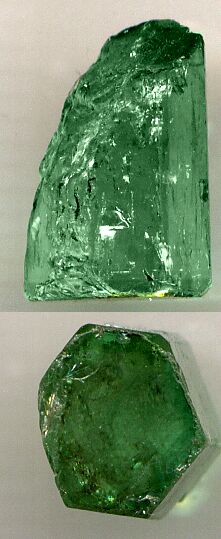
Beryl's other industry is gem cutting. The species is the host of several of the most valuable coloured stones on Earth: emerald, green from traces of chromium and vanadium; aquamarine, blue-green from iron; morganite, pink from manganese; heliodor, golden yellow; and goshenite, colourless. Each is mined, cut and traded as its own gem variety rather than as "beryl", but the underlying crystal is the same beryllium-aluminium ring silicate in every case.
Where it forms, where it's found
- Geological setting
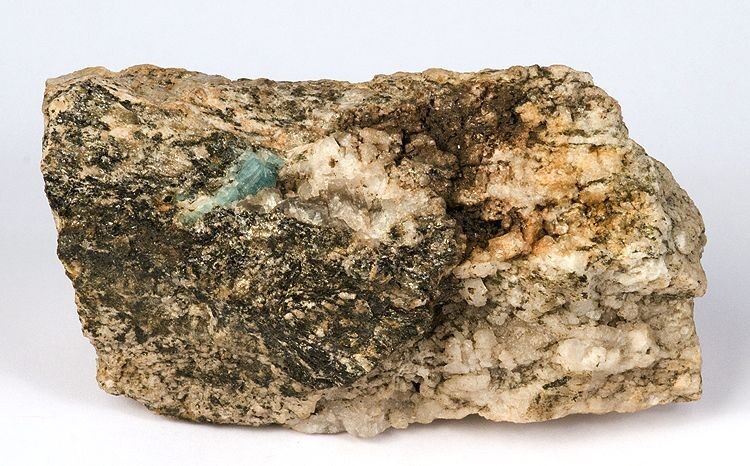
Commonly found in pegmatites. Red beryl is found in topaz rhyolites.
Varieties
Safety & handling
Physical
- Hardness
- 1Talc
- 2Gypsum
- 3Calcite
- 4Fluorite
- 5Apatite
- 6Orthoclase
- 7Quartz
- 8Topaz
- 9Corundum
- 10Diamond
- Lustre
- Vitreous
- Colour
- Colorless · green · blue · yellow · white · pink · etc.
green (Cr3+, ±V3+; emerald) to yellow (Fe2+; heliodor), light blue (Fe3+; aquamarine), sea-green (Fe2+ and Fe3+; beryl), pink (Mn2+; morganite), red (Mn3+; red beryl), colorless (goshenite), and white.<br> [[1]]The d–d transition of Fe3+ with six-fold coordination, the O2−→Fe3+ charge transfer, and the charge transition of binuclear metal M–M complexes formed by [Fe2(OH)4]2+ in the channel caused a yellow tone, whereas the charge transfer of Fe2+/Fe3+ with six-fold coordination caused a blue-green tone. The chroma of blue-green beryl was negatively correlated with the ratio of Cs+Mn to Fe contents. The lightness of blue-green beryl was negatively correlated with the total content of transition metal ions. The experimental results indicate that heat treatment under both atmospheres can lead to the transformation of yellow-green beryl into blue, with 500–600 °C under a reducing atmosphere identified as the optimal treatment condition. With increasing temperature, beryl gradually dehydrates, resulting in a faded blue color and reduced transparency. Even after treatment at 700 °C, no significant changes in unit cell parameters were observed, and both type I and type II water were retained, indicating that the color change is not attributed to crystal structure transformation or phase transitions. The study reveals that the essential mechanism of color modification through heat treatment lies in the valence change between Fe2+ and Fe3+ occupying channel and octahedral sites. The observed color variation is attributed to changes in absorption band intensity resulting from charge transfers of O2− → Fe3+ and Fe2+ → Fe3+. [[2]]
- Streak
- White
- Tenacity
- brittle
- Cleavage
- Imperfect/Fair
(0001)
- Fracture
- Conchoidal
- Density
- 2.63 g/cm³
Optical
- Optical type
- Uniaxial (-)
- Refractive index
- 1.564 – 1.602
- Surface relief
- Moderate
- Principal indices
- nω 1.568 – 1.602 · nε 1.564 – 1.595
Crystallography
- Space group
- #123
- Cell parameters
- a = 9.21 Å · c = 9.19 Å
- Z
- 2
- Comment
Observed ranges: a = 9.205-9.274, c = 9.187-9.249 Å.
Chemical composition
- Impurities
- Fe
- Mn
- Mg
- Ca
- Cr
- Na
- Li
- Cs
- O
- H
- OH
- H2O
- K
- Rb
Synonyms
- Berylit
- Berylita
- Berylite
- Berylle
- Berylls
In other languages
- French
- Béril · béryl
- German
- Beryll
- Spanish
- berilo
- Italian
- Acquamarina · berillo · Smeraldo
- Portuguese
- berilo
- Japanese
- ゴーシェナイト · ゴシェナイト · ヘリオドール · ベリル · 緑柱石
- Chinese
- 綠柱石 · 绿玉
- Simplified Chinese
- 绿柱石
- Traditional Chinese
- 綠柱石
- Russian
- Августит · Баццит · берилл · Воробьевит · Гошенит · Педзоттаит · Пеццоттаит · Ростерит
- Arabic
- بريل · بيريل
- Hindi
- बेरिल
Classification
9.CJ.05
- 9SilicatesClass
- 9.CCyclosilicatesDivision
- 9.CJ[Si6O18]12- 6-membered single rings (sechser-Einfachringe), without insular complex anionsGroup
- 9.CJ.05BerylSpecies
61.01.01.01
- 61Cyclosilicates Six-membered RingsClass
- 61.01Six-Membered Rings with [Si6O18] rings; possible (OH) and Al substitutionType
- 61.01.01Beryl groupGroup
- 61.01.01.01BerylSpecies
16.6.1
- 16Silicates Containing Aluminum and other MetalsClass
- 16.6Aluminosilicates of BeGroup
- 16.6.1BerylSpecies
Group, growth & confusion
Literature, links & citation
- 1565Gesner, C. (1565) Gemmis, quae erant in veste Aaronis, Liber Graecus, & e regione Latinus, Iola Hierotarantino interprete: cum Corollario Conradi Gesneri. in Sancti Patris Epiphanii Episcopi Cypri ad Diodorum Tyri episcopum, De XII, 1-29.
- 1798Vauquelin, L.N. (1798) Sur une nouvelle terre tirée de l'aigue marine, ou beril. Observations sur la Physique, sur l’Histoire Naturelle et sur les Arts: 46: 158-158.
- 1907Ford, W.E. (1907) Einige interessante Beryllkrystalle und deren Begleiter. Zeitschrift für Kristallographie, 43 (1-6). 12-17 doi:10.1524/zkri.1907.43.1.12DOI: 10.1524/zkri.1907.43.1.12
- 1967Wood, D. L., Nassau, K. (1967) Infrared Spectra of Foreign Molecules in Beryl. The Journal of Chemical Physics, 47 (7) 2220-2228 doi:10.1063/1.1703295DOI: 10.1063/1.1703295
- 1967MUNSON, RONALD A. (1967) High-Temperature Behavior of Beryl and Beryl Melts at High Pressure. Journal of the American Ceramic Society, 50 (12). 669-670 doi:10.1111/j.1151-2916.1967.tb15026.xDOI: 10.1111/j.1151-2916.1967.tb15026.x
Entry last updated
@misc{mineral2026,
  author    = {Mineral Index editorial board},
  title     = {Beryl — Mineral Index},
  year      = {2026},
  url       = {https://mineralindex.org/minerals/beryl-819}
}