History
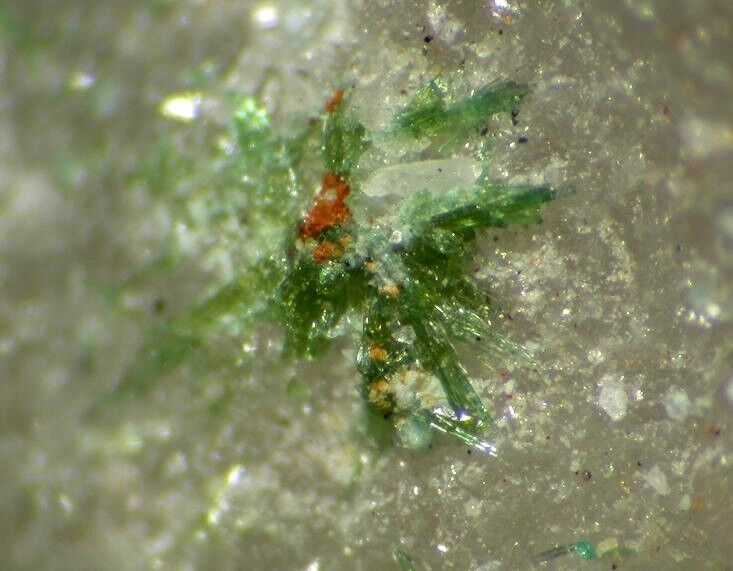
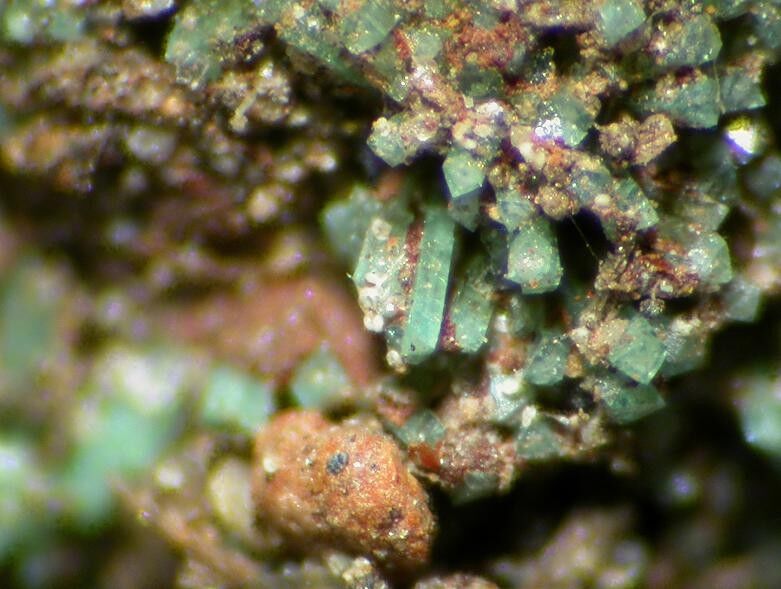
The name olivenite is, almost literally, olive ore — a small, sharp piece of German mineralogy that crossed into English in the nineteenth century. The mineral is a copper arsenate that crystallises in shades from grass-green to brownish-olive, and that colour is the whole story of how it came to be called what it is.
The earliest formal name was a chemist's label. In 1786 the German chemist Martin Klaproth described the species as arseniksaures kupfererz — arsenic-acid copper ore — a description of its composition rather than its appearance. Three years later Abraham Gottlob Werner renamed it Olivenerz, alluding directly to the olive-green colour of the typical specimens. Other early labels followed: Holzkupfererz — wood-copper ore — for the fibrous, wood-like variety, recorded by Bournon in 1801, and pharmacochalzite, proposed by Hausmann in 1813.
The modern English form arrived in 1820, when Robert Jameson exchanged the German suffix -erz for the Latinate -ite then becoming standard for mineral names. Olivenerz became olivenite, and the older labels gradually fell out of use.
The type locality — the place where the mineral was first identified — is Carharrack mine in the parish of Gwennap, in the copper country of Cornwall. Through the nineteenth century the species was found in some abundance in the upper workings of the St Day mines and near Redruth, associated with limonite — a soft, earthy iron oxide — and quartz.
Industrial & practical applications
Olivenite has no industrial role. The mineral is too scarce, too softly bonded, and too rich in arsenic for any commercial use as an ore — the copper it carries is more cheaply won from sulfide deposits, and the arsenate framework that gives it its olive colour makes it a hazard rather than a resource.
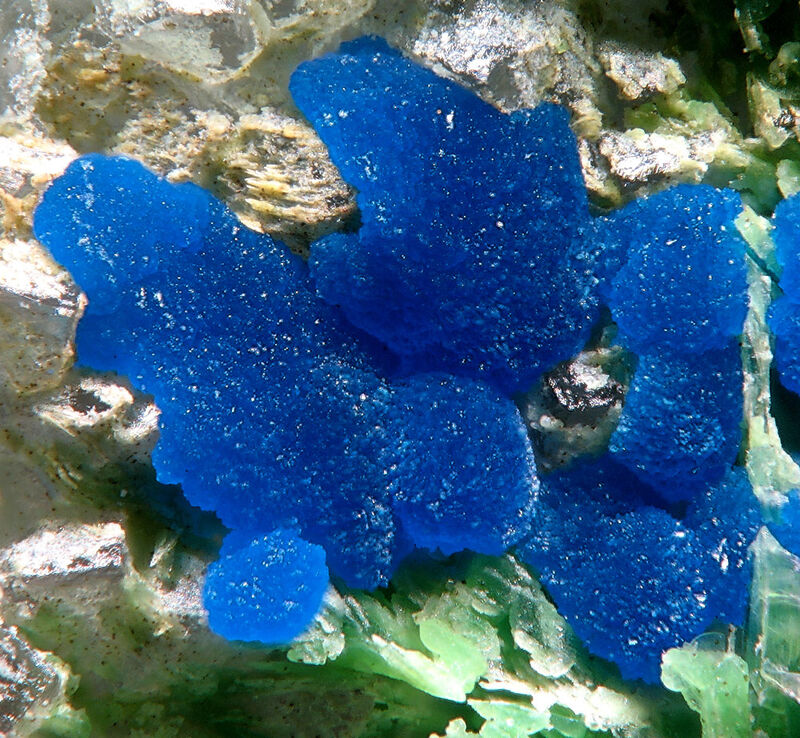
Its interest is mineralogical and scientific. Olivenite is the copper end-member of a substitution series with adamite, the zinc analogue Zn₂(AsO₄)(OH), in which copper and zinc replace one another freely in the same crystal structure. The intermediate term, zincolivenite, was approved as a distinct species by the International Mineralogical Association in 2006. Beyond that research interest, the mineral reaches the public mainly through collectors and mineral museums, where well-formed crystals from the classic Cornish workings and from oxidised copper-arsenic deposits elsewhere are prized for their colour and crystal habit.
Where it forms, where it's found
- Geological setting
Oxidized zone of a copper deposit
Commonly found in the oxidized zone of arsenic-bearing copper deposits.
- Type locality
- Carharrack Mine
- Gwennap
- Cornwall
- England
- UK
50.2345°, -5.1741°
Varieties
Safety & handling
Physical
- Hardness
- 1Talc
- 2Gypsum
- 3Calcite
- 4Fluorite
- 5Apatite
- 6Orthoclase
- 7Quartz
- 8Topaz
- 9Corundum
- 10Diamond
- Transparency
- Translucent · Opaque
- Colour
- Olive green to yellow or brown · gray-green · grayish white · light green in transmitted light.
Straw yellow if fibrous.
- Streak
- Olive green to brown
- Tenacity
- brittle
- Cleavage
- Poor/Indistinct
Indistinct on (101) and (110)
- Fracture
- Irregular/Uneven · Conchoidal
- Density
- 4.46 g/cm³
Optical
- Optical type
- Biaxial (+/-) · 2V measured = 80 – 90° · 2V calc = 46 – 84°
- Refractive index
- 1.747 – 1.865
- Surface relief
- Very high
- Principal indices
- nα 1.747 – 1.780 · nβ 1.788 – 1.820 · nγ 1.829 – 1.865
- Birefringence
- 0.084
- Pleochroism
- Weak
In green and yellow. Absorption Y > X, Z.
- Dispersion
- strong r > v or r < v moderate
- Extinction
- Y=c
- UV response
- Not fluorescent in UV
Crystallography
- Space group
- #15
- Cell parameters
- a = 8.5844(3) Å · b = 8.2084(3) Å · c = 5.9258(2) Å
- Cell angles
- β = 90.130(3) °
- Ratio a:b:c
- 1 : 0.956 : 0.690
- Unit cell volume
- 417.56 ų
- Z
- 4
- Morphology
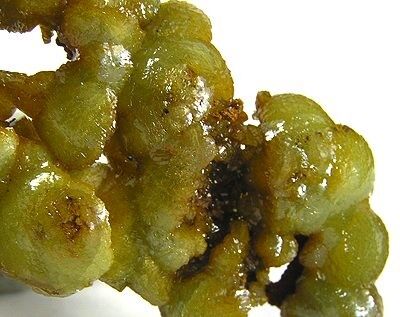
Crystals elongated [100]; also short prismatic to acicular [001]; tabular on (011), (100), or (001), less common. Occurs as globular or reniform masses with a fibrous structure with the fibers straight and divergent, rarely irregular; curved lamellar; massive, granular to earthy; nodular.
- Twinning
On (010)
Chemical composition
- Impurities
- Fe
- P
Synonyms
- Acicular arseniate of copper
- Arseniksaures Kupfererz
- Cuivre Arseniaté (of Bournon)
- Cuivre arseniaté en octaèdre aigus
- Holzkupfererz
- Laurochalcit
- Laurochalcita
- Laurochalcite
- Olive Copper Ore
- Olive-green Copper Ore
- Olivenkupfer
- Pharmacholzit
- Pharmacholzite
- Pharmacochalcit
- Pharmacochalcite
- Pharmacochalzit
- Pharmacochalzite
- Pharmacolzit
- Pharmakochalcit
- Pharmakochalcite
- Pharmakochalzit
- Prismatischer Olivenmalachit
- Right Prismatic Arsenate of Copper
- Wood-Arsenate
- Wood-Copper
In other languages
- French
- Cu2AsO4(OH) · olivénite
- German
- Olivenit
- Spanish
- Olivenita
- Italian
- olivenite
- Japanese
- オリーブ銅鉱
- Chinese
- 橄榄铜矿 · 橄欖銅礦
- Russian
- оливенит · оливинит
Classification
8.BB.30
- 8Phosphates, Arsenates, VanadatesClass
- 8.BPhosphates, etc., with additional anions, without H2ODivision
- 8.BBWith only medium-sized cations, (OH, etc.):RO4 about 1:1Group
- 8.BB.30OliveniteSpecies
41.06.06.01
- 41Anhydrous Phosphates, Etc.containing Hydroxyl or HalogenClass
- 41.06A2(XO4)ZqType
- 41.06.06Olivenite GroupGroup
- 41.06.06.01OliveniteSpecies
20.1.2
- 20Arsenates (also arsenates with phosphate, but without other anions)Class
- 20.1Arsenates of CuGroup
- 20.1.2OliveniteSpecies
Group, growth & confusion
 AdamiteZn2(AsO4)(OH)Mineral—
 ArhbariteCu2Mg(AsO4)(OH)3Mineral—
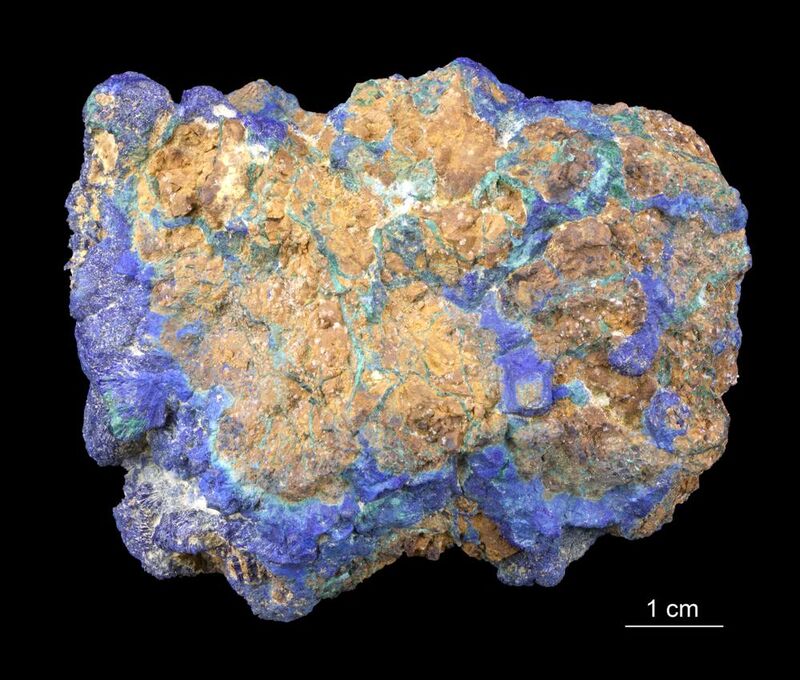 AzuriteCu3(CO3)2(OH)2Mineral—
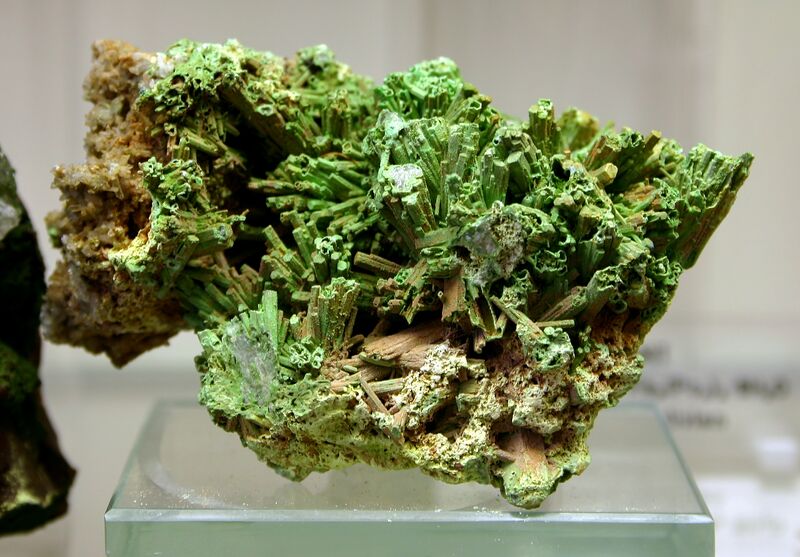 BayldoniteCu3PbO(AsO3OH)2(OH)2Mineral—
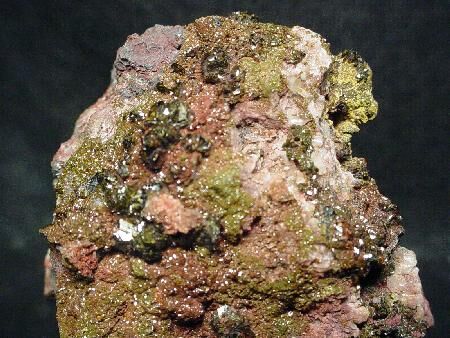 BeudantitePbFe3+3(AsO4)(SO4)(OH)6Mineral—
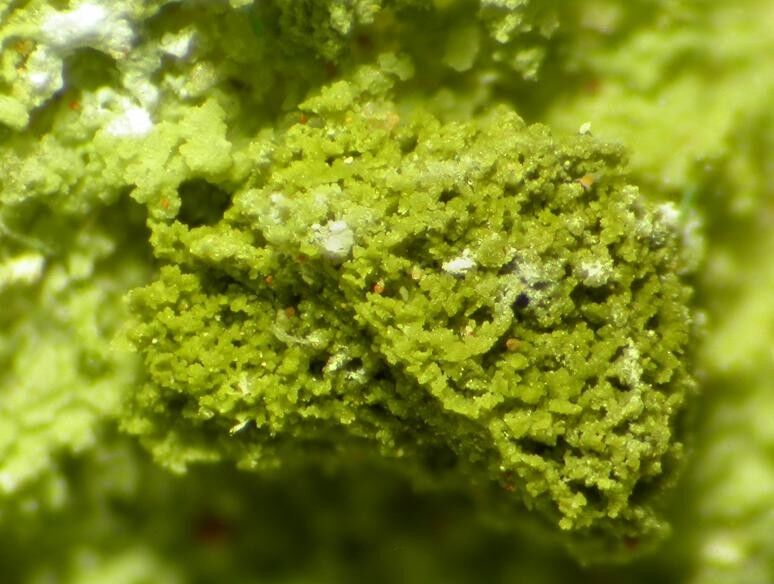 ChenevixiteCuFe3+(AsO4)(OH)2Mineral—
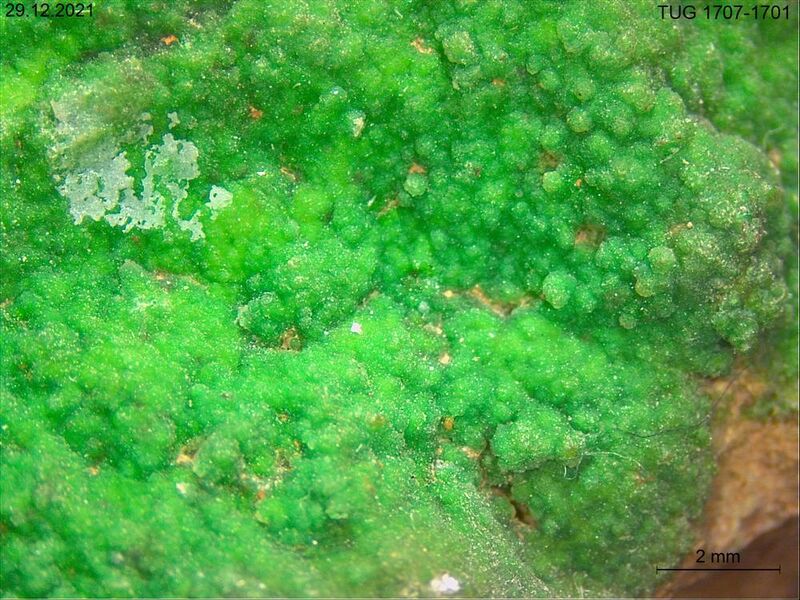 ConichalciteCaCu(AsO4)(OH)Mineral—
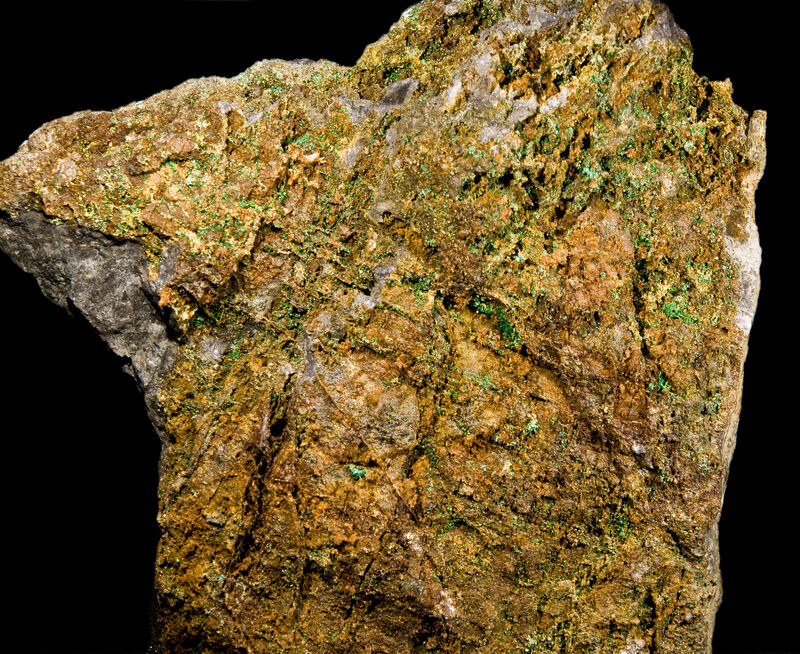 CornubiteCu5(AsO4)2(OH)4Mineral—
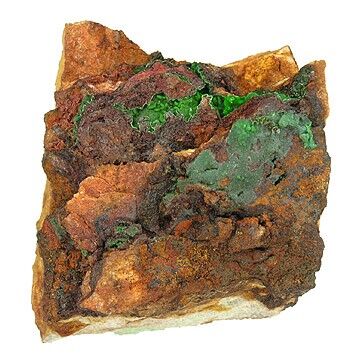 CornwalliteCu5(AsO4)2(OH)4Mineral—
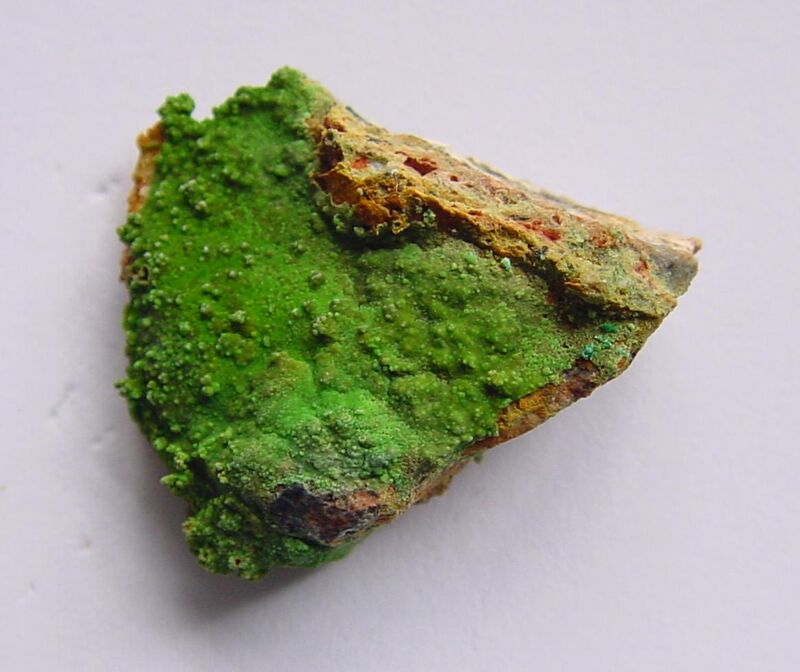 DuftitePbCu(AsO4)(OH)Mineral—
Literature, links & citation
- —vol. 2, in two parts: 1025 (as Pharmacolzit).
- 1786Klaproth (1786) Schriften der Gesellschaft naturforschender Freunde in Berlin: 7: 160 (as Arseniksaures Kupfererz).
- 1789Werner (1789) Bergmaennusches Journal, Freiberg (Neues Bergmannische Journal): 382, 385 (as Olivenerz).
- 1794Richard Kirwan (1794) Elements of Mineralogy - second edition Vol. 1. P. Elmsly, The Strand.
- 1797Rashleigh, P. (1797) Specimens of British Minerals Selected from the Cabinet of Phillip Rashleigh. London. Part 1: pl. 11, figure 2; part 2 (1802): pl. 6 (as Olive-green Copper Ore).
Entry last updated
@misc{mineral2026,
  author    = {Mineral Index editorial board},
  title     = {Olivenite — Mineral Index},
  year      = {2026},
  url       = {https://mineralindex.org/minerals/olivenite-2981}
}