History
The mineral takes its name from a Slovak copper town, and the town's story begins long before mineralogy had a vocabulary. Copper was already being mined at Ľubietová in the Bronze Age, and by the Middle Ages the deposit had grown into one of the most important copper sources in central Europe.
In 1379, the settlement was granted the status of a royal town by Louis the Great, and German miners were brought in to work the ore. The German colonists called the town Libethen — the name later anchored both the locality and the mineral. Hungarian usage knew the place as Libetbánya; the Slovak form is Ľubietová. Until 1919, the town sat inside the Kingdom of Hungary.
Ľubietová joined the League of Seven Mining Towns alongside Banská Belá, Banská Bystrica, Banská Štiavnica, Kremnica, Nová Baňa, and Pukanec — a Protestant alliance built on the wealth of central Slovak ore. In 1692, the first modern blast furnace in the Kingdom of Hungary was built in the town. Mining declined through the 18th century, and the settlement lost its urban character and became a village.
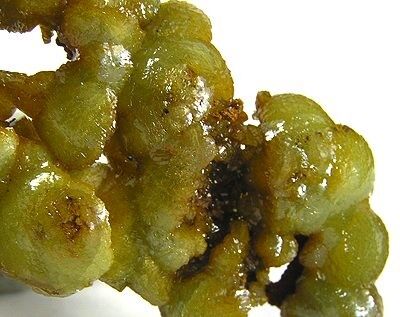
The mineral itself was described in 1823 by the German mineralogist August Breithaupt, who named it after the German name of the type locality. Olive-green to dark green orthorhombic crystals of libethenite form in the oxidised zone — the weathered upper layer where copper ore reacts with air and water — of copper deposits like the one beneath Ľubietová.
Outside its type locality, libethenite is best known to collectors from the copper mines of the Katanga Copper Crescent in the Democratic Republic of the Congo, where deposits such as the M'sesa mine near Kambove have yielded sought-after specimens.
Industrial & practical applications
Libethenite has no industrial use. It is too rare to mine for copper — the great copper producers run on chalcopyrite, bornite, chalcocite, and malachite, not on a scarce secondary phosphate of the oxidised zone, the weathered upper layer where copper ore reacts with air and water.
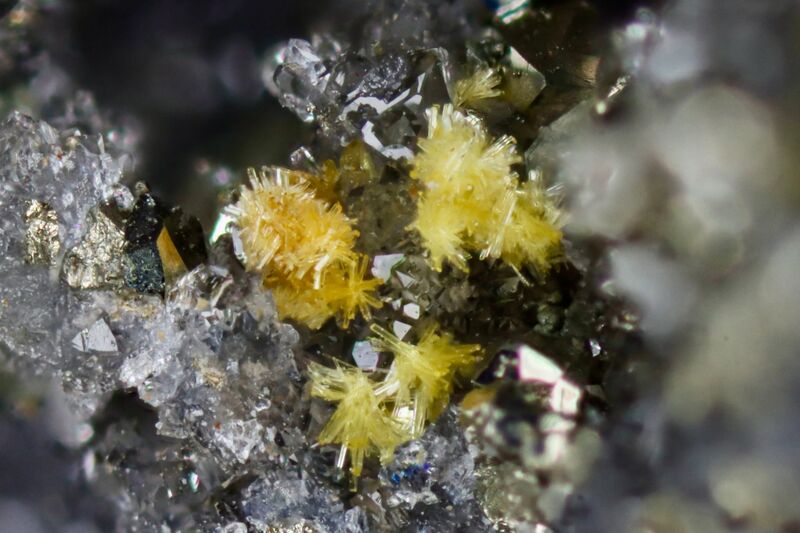
What demand exists is from mineral collectors. The olive-green to dark-green orthorhombic crystals, often arranged in clusters on a host of malachite or limonite, are valued for their colour and crystal form rather than for any extractive purpose. Specimens from the type locality at Ľubietová in Slovakia, and from the M'sesa mine in the Kambove district of the Democratic Republic of the Congo, circulate among collectors and museums as representatives of the species.
Where it forms, where it's found
- Geological setting
Polymetallic hydrothermal or deposit
Oxidized zones of copper deposits.
- Type locality
- Podlipa deposit
- Ľubietová
- Banská Bystrica District
- Banská Bystrica Region
- Slovakia
48.7472°, 19.3850°
Physical
- Hardness
- 1Talc
- 2Gypsum
- 3Calcite
- 4Fluorite
- 5Apatite
- 6Orthoclase
- 7Quartz
- 8Topaz
- 9Corundum
- 10Diamond
- Lustre
- Vitreous
- Transparency
- Transparent · Translucent
- Colour
- Light to dark green · blackish green · olive-green · bluish green to light green in transmitted light.
- Streak
- Light green
- Tenacity
- brittle
- Cleavage
- Poor/Indistinct
Very indistinct on (100) and (010).
- Fracture
- Irregular/Uneven · Conchoidal
- Density
- 3.97 g/cm³
Optical
- Optical type
- Biaxial (-) · 2V measured = 80 – 90° · 2V calc = 88°
- Refractive index
- 1.701 – 1.79
- Surface relief
- High
- Principal indices
- nα 1.701 – 1.704 · nβ 1.743 – 1.747 · nγ 1.787 – 1.79
- Birefringence
- 0.080
- Pleochroism
- Weak
X= Pale yellowish blue Z= Pale greenish blue
- Dispersion
- strong r > v
- Extinction
- XYZ = bca
- UV response
- Not fluorescent in UV
Crystallography
- Space group
- #73
- Cell parameters
- a = 8.062(5) Å · b = 8.384(4) Å · c = 5.881(2) Å
- Cell angles
- β = 90 °
- Ratio a:b:c
- 1 : 1.040 : 0.729
- Unit cell volume
- 404.27 ų
- Z
- 4
- Morphology
Crystals short prismatic or slightly elongated [100] with wedge-shaped terminations; also equant. (110) vertically grooved or striated, and (011) striated parallel to the edge with (111).
- Twinning
None observed.
Chemical composition
Synonyms
- Aferesa
- Aphérèse (of Beudant)
- Blättricher Olivenmalachit
- Blättricher Olivenmalachite
- Blättriger Olivenmalachit
- Chinoite
- Cuivre Phosphaté (of Haüy)
- Diprismatischer Oliven-Malachit
- Diprismatischer Olivenmalachit
- Libetenite
- Libethkupfererz
- Octaedrisches Phosphorkupfer
- Oktaedrisches Phosphorkupfer
- Oktaedrisches phosphorsaures Kupfer
- Pseudolibethenite
- Rhombisches Phosphorkupfer
In other languages
- French
- Libéthénite
- German
- Libethenit
- Spanish
- Libethenita
- Italian
- libethenite
- Japanese
- リベセナイト
- Chinese
- 磷銅礦
- Russian
- Либетенит
Classification
8.BB.30
- 8Phosphates, Arsenates, VanadatesClass
- 8.BPhosphates, etc., with additional anions, without H2ODivision
- 8.BBWith only medium-sized cations, (OH, etc.):RO4 about 1:1Group
- 8.BB.30LibetheniteSpecies
41.06.06.02
- 41Anhydrous Phosphates, Etc.containing Hydroxyl or HalogenClass
- 41.06A2(XO4)ZqType
- 41.06.06Olivenite GroupGroup
- 41.06.06.02LibetheniteSpecies
19.2.1
- 19PhosphatesClass
- 19.2Phosphates of CuGroup
- 19.2.1LibetheniteSpecies
Group, growth & confusion
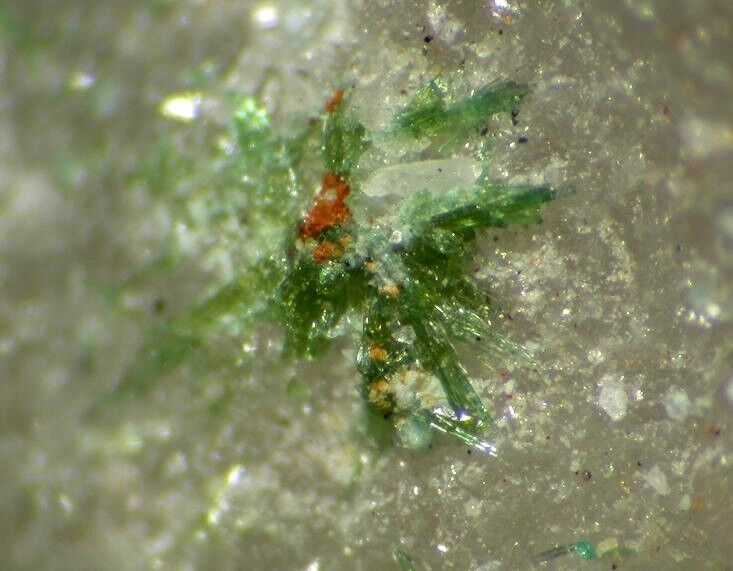
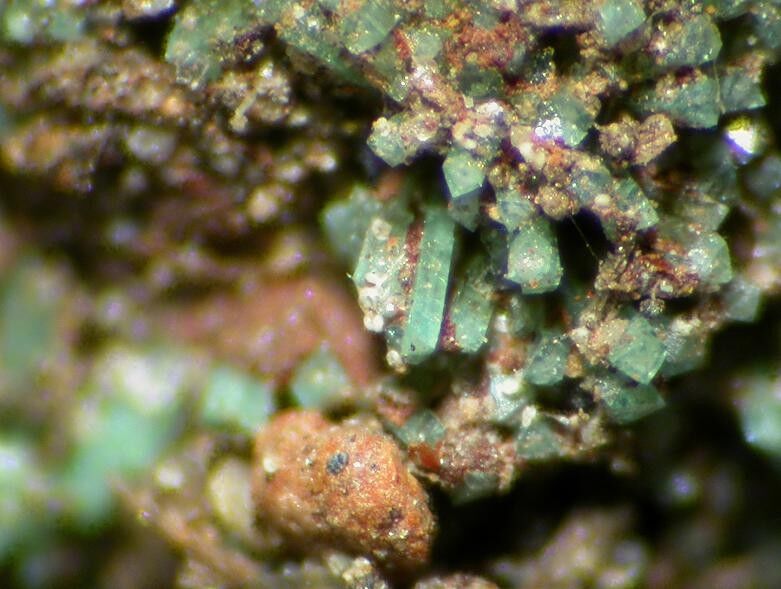
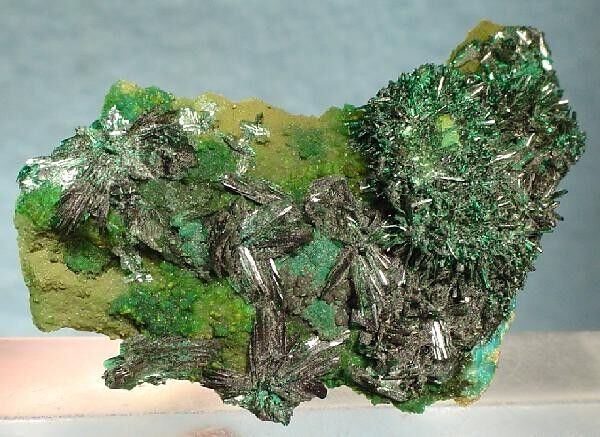 AtacamiteCu2Cl(OH)3Mineral—
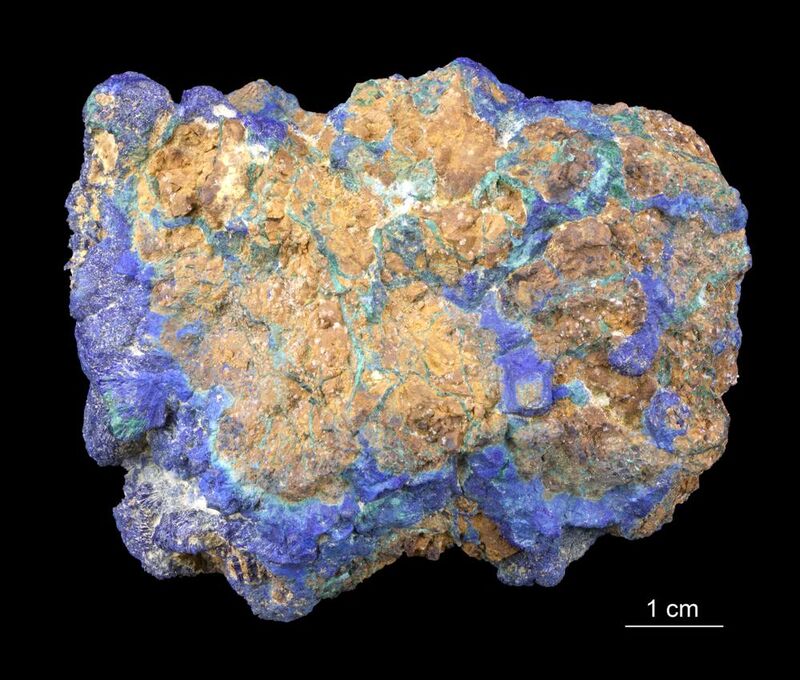 AzuriteCu3(CO3)2(OH)2Mineral—
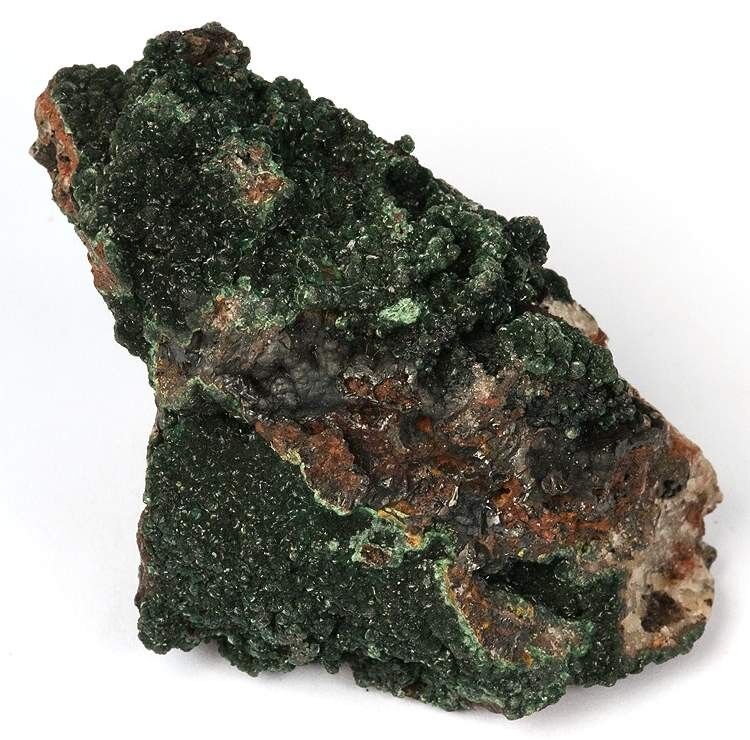 ChalcosideriteCuFe3+6(PO4)4(OH)8 · 4H2OMineral—
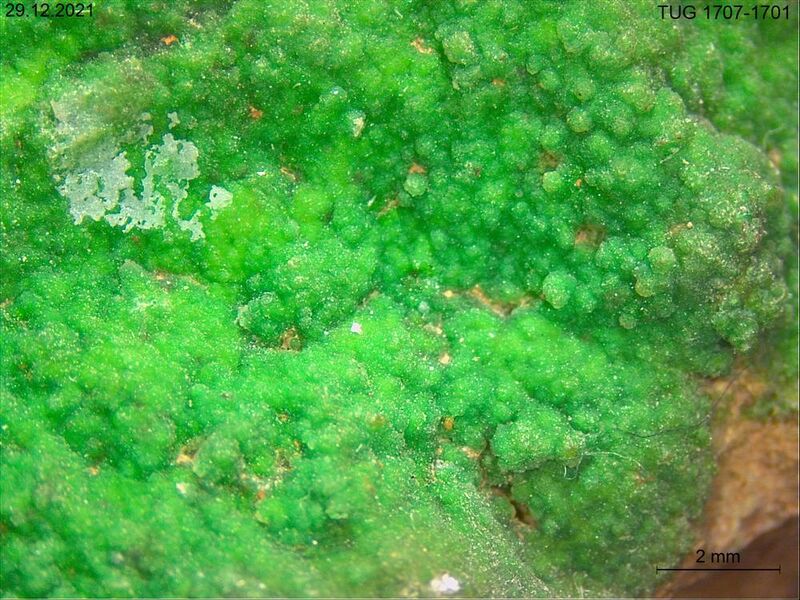 ConichalciteCaCu(AsO4)(OH)Mineral—
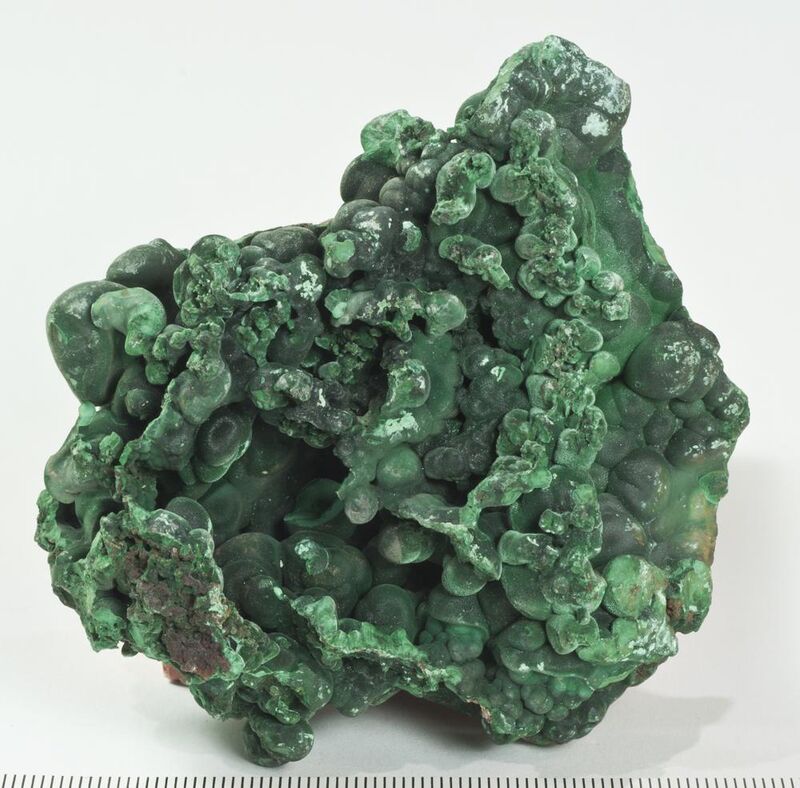 MalachiteCu2(CO3)(OH)2Mineral—
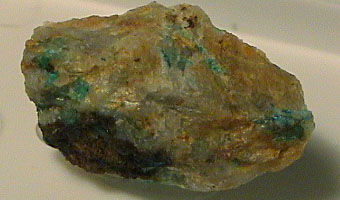 MrázekiteBi2Cu3(PO4)2O2(OH)2 · 2H2OMineral—
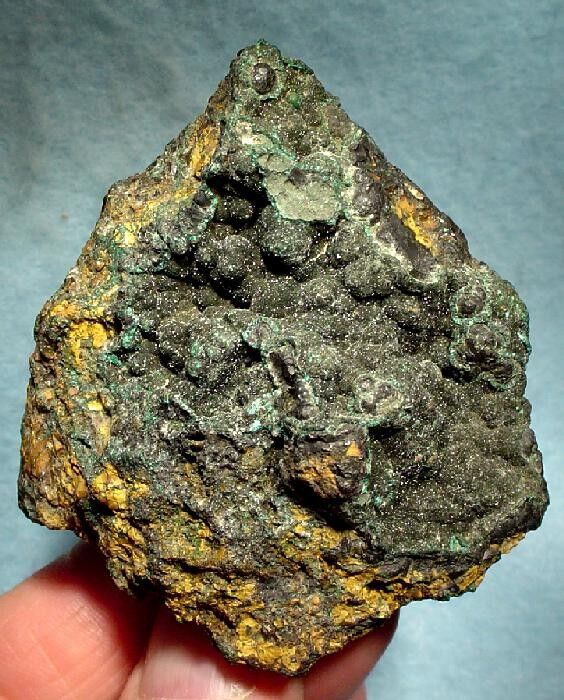 PseudomalachiteCu5(PO4)2(OH)4Mineral—
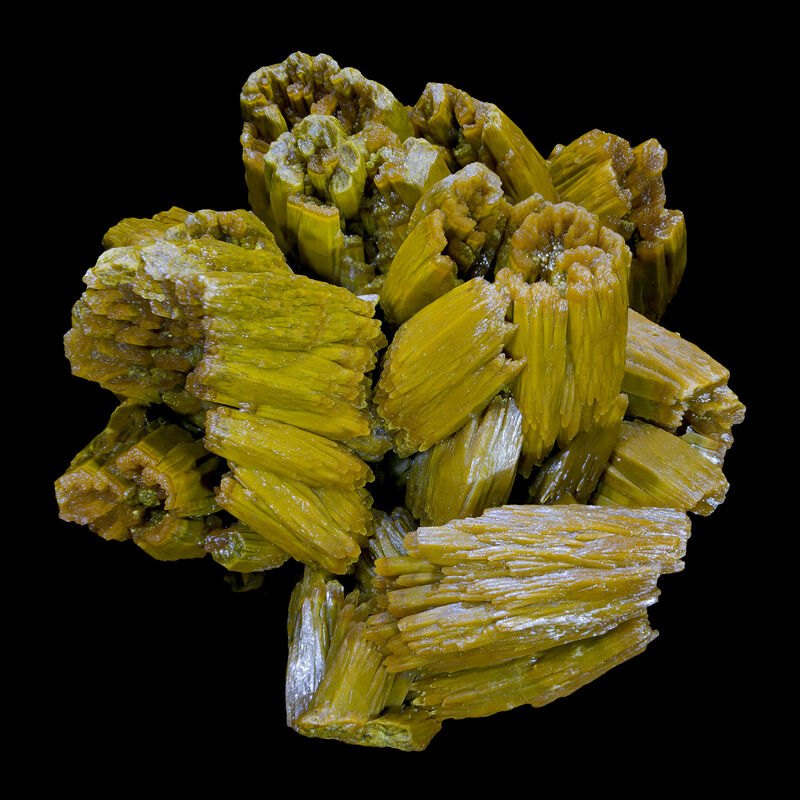 PyromorphitePb5(PO4)3ClMineral—
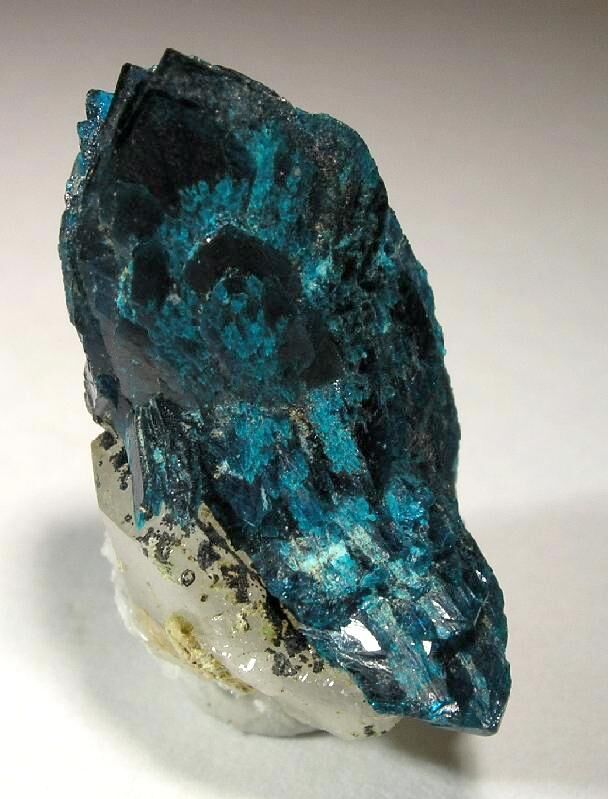 Veszelyite(Cu,Zn)2Zn(PO4)(OH)3 · 2H2OMineral—
Literature, links & citation
- 1789Werner (1789) Bergmaennusches Journal, Freiberg (Neues Bergmannische Journal): 382, 385 (as Olivenerz).
- 1813Hausmann, Johann Friedrich Ludwig (1813) Handbuch der Mineralogie (1st ed.). Vandenhoeck und Ruprecht.
- 1821Leonhard, K.C. (1821) Handbuch der Oryktognosie. First edition, Heidelberg: 143 (as Octaedrisches Phosphorkupfer).
- 1823Breithaupt, August (1823) Vollständige Charakteristik des Mineral-Systems (1st ed.). Arnoldischen Buchhandlung.
- 1832Beudant, François-Sulpice (1832) Traité élémentaire de minéralogie. Deuxiéme Edition [Elementary Treatise on Mineralogy. Second Edition] (2nd ed.) Vol. 2 - Tome II [Volume II]. Chez Verdière.
Entry last updated
@misc{mineral2026,
  author    = {Mineral Index editorial board},
  title     = {Libethenite — Mineral Index},
  year      = {2026},
  url       = {https://mineralindex.org/minerals/libethenite-2394}
}