History
The name magnesite traces back to a single corner of the map. It comes from Magnesia, a district in Thessaly, in Greece, where the pale magnesium-rich minerals first lent their region's name to the substance.
That place name spread further than almost any other in chemistry. The ancient Greeks called the lodestone — a naturally magnetic rock — the Magnesian stone, and from it we get the word magnet. By a separate twist of the same root, the ore that became manganese carried the name too. Magnesite, the carbonate of magnesium, belongs to the same crowded family of words.
The mineral was formally pinned to its type locality, Magnesia, in 1808. That was the same year the British chemist Humphry Davy first isolated the metal magnesium. He drew it from a white powder once sold in Rome as magnesia alba.
Industrial & practical applications
Most magnesite never reaches a buyer as magnesite. It is roasted first. Heating the mineral drives off carbon dioxide and leaves behind magnesium oxide, a white solid also called magnesia. Magnesia resists heat better than almost anything cheap. That single transformation is what makes magnesite a commodity rather than a curiosity.
In industry
The roasting can be gentle or fierce, and the temperature decides the product. A light burnt roast, starting around 450 °C and stopping below 900 °C, leaves the magnesia reactive and chemically eager. Push past 900 °C and the crystal structure collapses into a dense, chemically inert form called dead-burnt magnesia.
Dead-burnt magnesia is the workhorse. It is shaped into refractory products — heat-resistant linings — for the furnaces that make iron and steel, nonferrous metals, glass, and cement. These furnaces run hot enough to melt most materials; a magnesia lining is one of the few things that holds.
The light, reactive grade goes almost everywhere else. Sold as caustic-calcined magnesia, it feeds environmental, chemical, and agricultural uses, along with road deicing. In the United States these reactive compounds — caustic-calcined magnesia plus magnesium chloride, hydroxide, and sulfates — take about 78 percent of demand. The refractory grades are the smaller share.
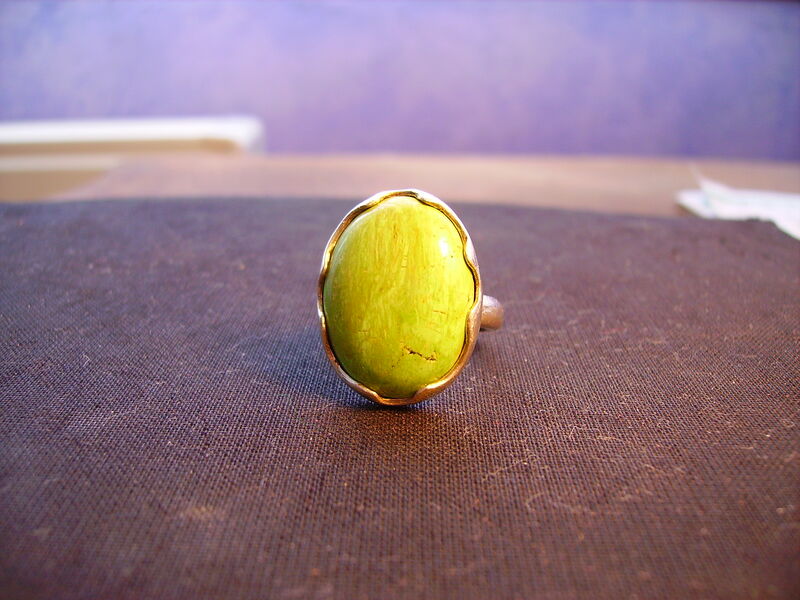
Magnesite also supplies the wider world of magnesium chemistry. It serves as a starting material for magnesium chemicals and fertilizers, and as a catalyst and filler in making synthetic rubber. Ground and bound with a setting agent, it forms the hard surface of magnesite-screed flooring. Cut and polished, the raw mineral even turns up as beads in costume jewelry.
Supply and outlook
World magnesite mining runs to roughly 22 million tons a year, measured by gross weight. One country dominates: China alone accounts for about 13 of those million tons. Identified world resources of magnesite and brucite together reach some 13 billion tons, so scarcity is not the constraint — processing capacity and geography are. Where magnesia is too costly, alumina, chromite, and silica can stand in for it in some refractory linings.
Where it forms, where it's found
- Geological setting
Primary mineral in igneous and sedimentary rocks. Rarely as a gangue mineral in hydrothermal ore veins, and in oceanic salt deposits. Metamorphism of serpentinites and peridotites.
- Type locality
- Magnesia
- Thessaly
- Greece
Varieties
Physical
- Hardness
- 1Talc
- 2Gypsum
- 3Calcite
- 4Fluorite
- 5Apatite
- 6Orthoclase
- 7Quartz
- 8Topaz
- 9Corundum
- 10Diamond
- Lustre
- Vitreous
- Transparency
- Transparent · Translucent
- Colour
- Colourless · white · greyish-white · yellowish · brown · faintly pink · lilac-rose · colourless in transmitted light.
- Streak
- White
- Tenacity
- brittle
- Cleavage
- Perfect
On (101).
- Fracture
- Conchoidal
- Density
- 2.98 g/cm³
Optical
- Optical type
- Uniaxial (-)
- Refractive index
- 1.509 – 1.7
- Surface relief
- Moderate
- Principal indices
- nω 1.7 · nε 1.509
- Pleochroism
- Visible
Cobaltian material dichroic: E = Violet-red O = Flesh-red
- Dispersion
- Very strong
- UV response
- May exhibit pale green to pale blue fluorescence and phosphorescence.
Crystallography
- Space group
- #98
- Cell parameters
- a = 4.6632 Å · c = 15.015 Å
- Z
- 6
- Morphology
Crystals usually rhombohedral (101), also (012); prismatic rare [0001] with (110) and (0001), or tabular (0001). Scalenohedral rare. Massive, coarse- to fine-granular, very compact and porcelainous; earthy to rather chalky; lamellar; coarsely fibrous.
- Twinning
Unproven.
- Comment
Cell parameters are similar to those of smithsonite.
Chemical composition
- Impurities
- Fe
- Mn
- Ca
- Co
- Ni
- ORG
Synonyms
- Baldissérit
- Baldissérita
- Baldissérite
- Bandisserit
- Bandisserita
- Bandisserite
- Baudisserit
- Baudisserita
- Baudisserite
- Bitterspat
- Carbonate of Magnesia
- Giobertit
- Giobertita
- Giobertite
- Kohlensaure Bittererde
- Kohlensaurer Talkerde
- Magnesianit
- Magnesianita
- Magnesianite
- Magnésie carbonatée
- Magnesite (of Karsten)
- Magnesiumcarbonat
- Mesitit
- Mesitita
- Reine Talkerde
- Roubschit
- Roubschita
- Roubschite
- Talcum carbonatum
- Talkspat
In other languages
- French
- 13717-00-5 · Baldissérite · Breinnerite · E504 · E504(i) · Ferroan magnesite · Hallite · Hoshiite · Magnésianite · magnésite · Magnésium carbonate de · Mésitine · Mesitite · Nickel-magnésite
- German
- Breunnerit · Magnesit · Mesitinspat · Pinolenstein · Pinolitmagnesit
- Spanish
- giobertita · magnesita
- Italian
- magnesite
- Portuguese
- magnesita · Magnesite
- Japanese
- マグネサイト · 菱苦土石 · 菱苦土鉱
- Chinese
- 菱鎂礦
- Simplified Chinese
- 菱镁矿
- Traditional Chinese
- 菱鎂礦
- Russian
- Магнезит
- Arabic
- مغنيسيت
- Hindi
- मैग्नेसाइट
Classification
5.AB.05
- 5CarbonatesClass
- 5.ACarbonates without additional anions, without H2ODivision
- 5.ABAlkali-earth (and other M2+) carbonatesGroup
- 5.AB.05MagnesiteSpecies
14.01.01.02
- 14Anhydrous Normal CarbonatesClass
- 14.01A(XO3)Type
- 14.01.01Calcite Group (Trigonal: R-3c)Group
- 14.01.01.02MagnesiteSpecies
11.3.1
- 11CarbonatesClass
- 11.3Carbonates of MgGroup
- 11.3.1MagnesiteSpecies
Group, growth & confusion
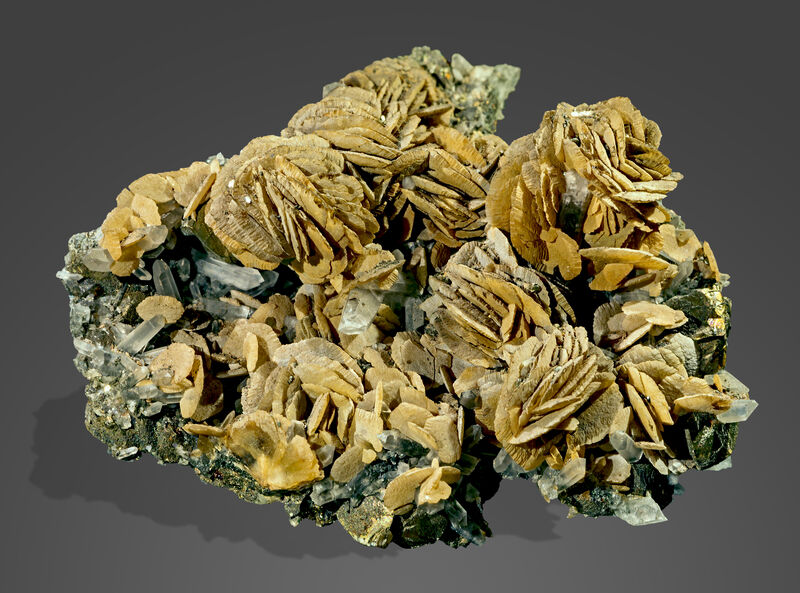
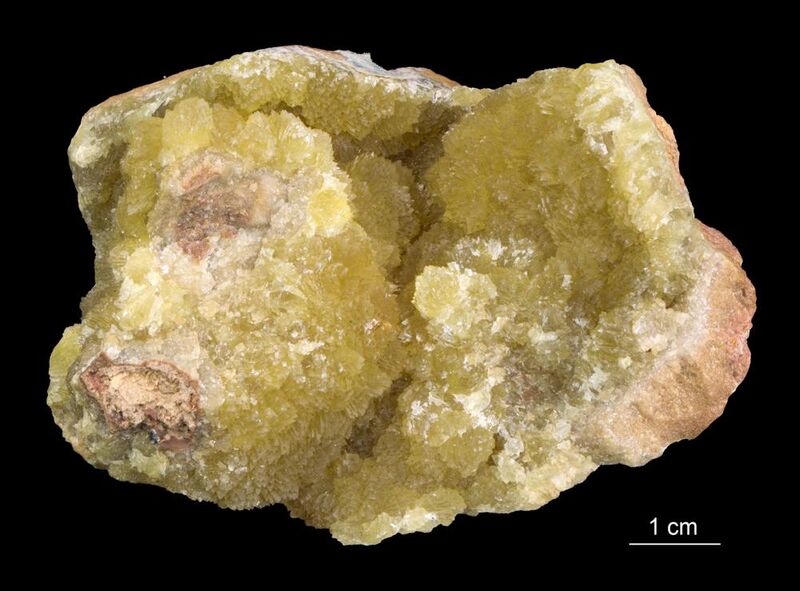
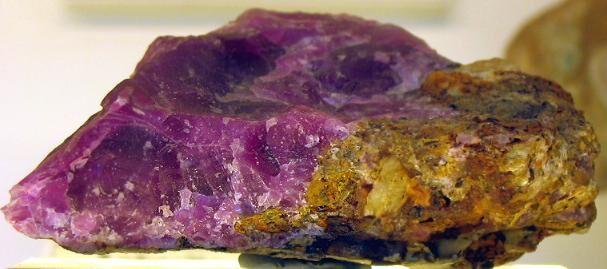
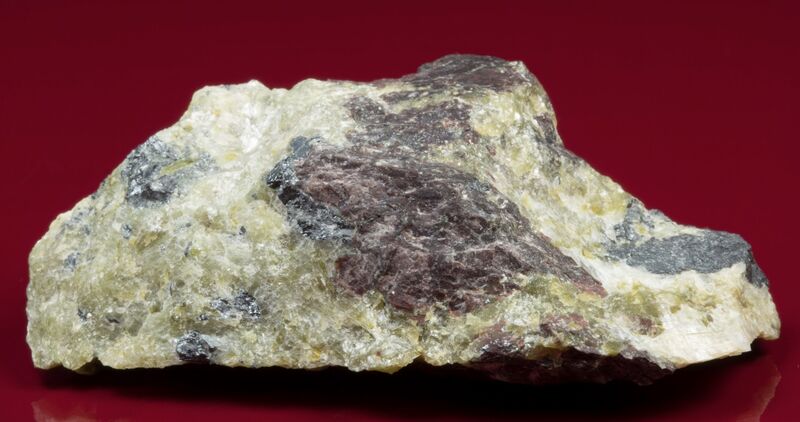 AlthausiteMg4(PO4)2(OH,O)(F,◻)Mineral—
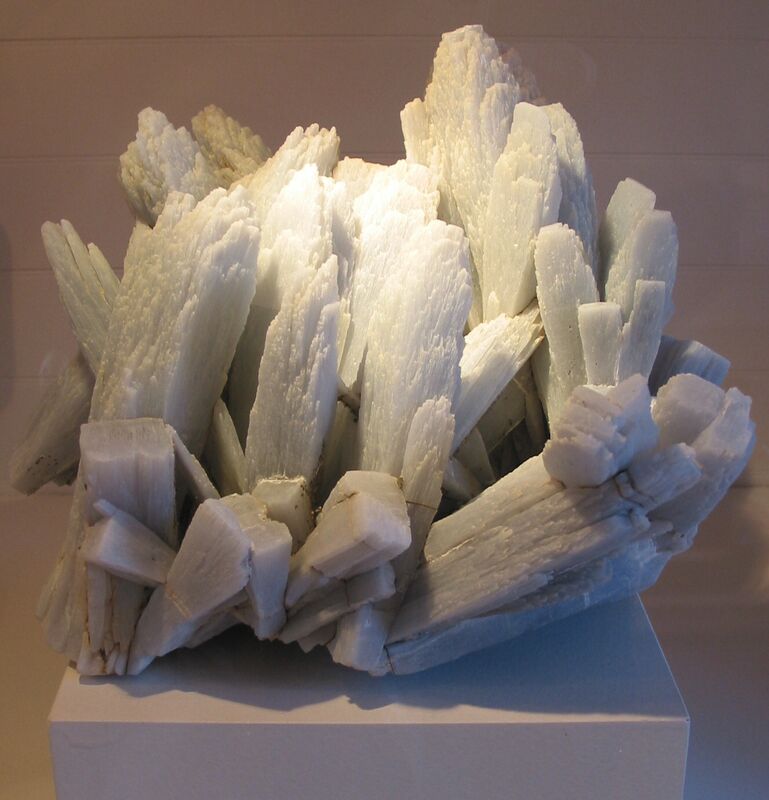 AnhydriteCa(SO4)Mineral—
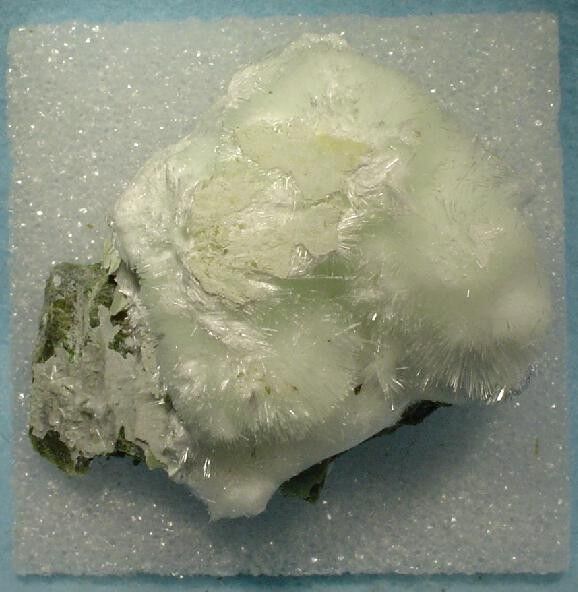 ArtiniteMg2(CO3)(OH)2 · 3H2OMineral—
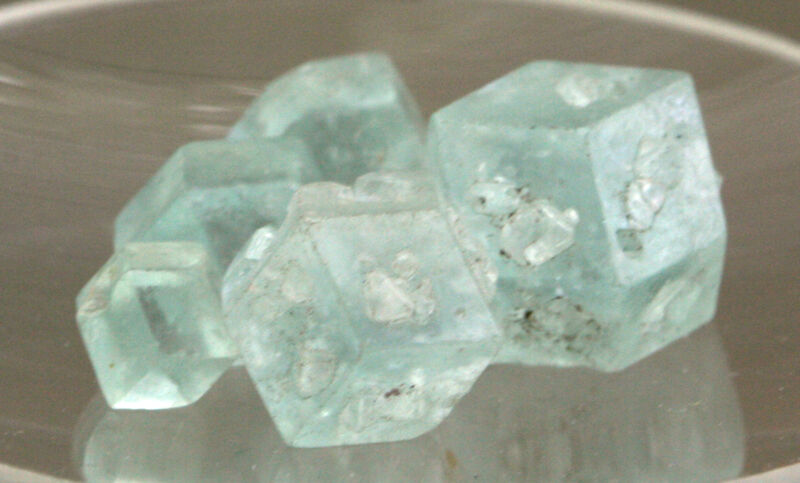 BoraciteMg3B7O13ClMineral—
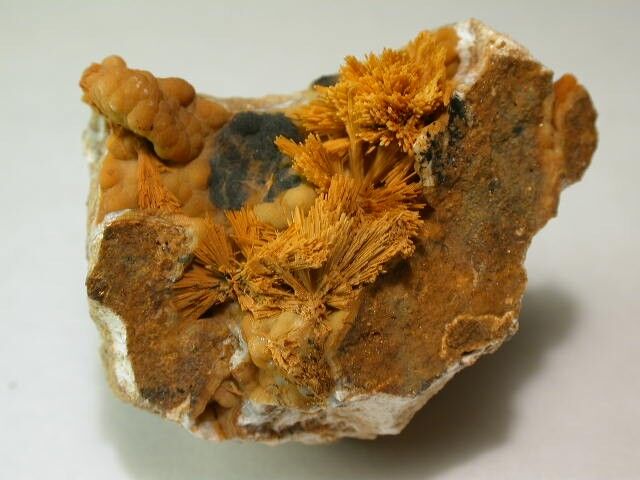 CrandalliteCaAl3(PO4)(PO3OH)(OH)6Mineral—
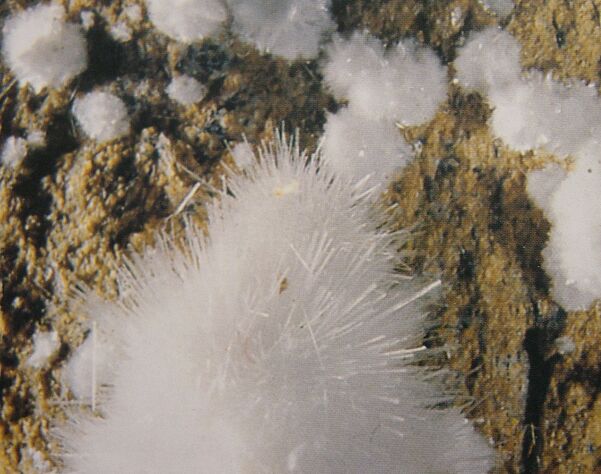 HydromagnesiteMg5(CO3)4(OH)2 · 4H2OMineral—
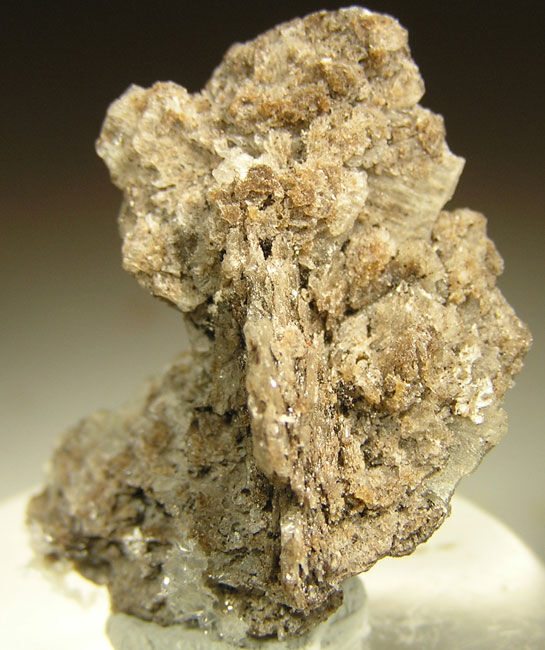 NewberyiteMg(PO3OH) · 3H2OMineral—
- NovgorodovaiteCa2(C2O4)Cl2 · 2H2OMineral—
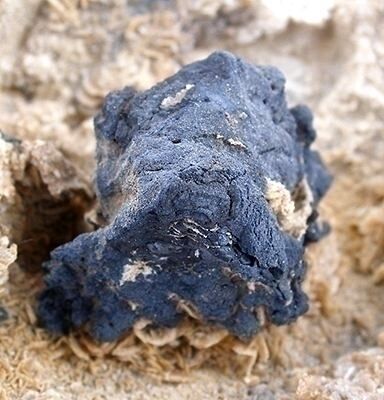 Todorokite(Na,Ca,K,Ba,Sr)1-x(Mn,Mg,Al)6O12 · 3-4H2OMineral—
Literature, links & citation
- 1795Klaproth, M. H. (1795) XXI. Untersuchung des Bitterspath. In Beiträge zur chemischen Kenntniss der Mineralkörper Vol. 1. Rottmann. p.300-306.
- 1800Mitchell and Lampadius (1800) 3: 241 (as Kohlensaure Talkerde).
- 1803Werner: Ludwig, C.F. (1803-1804) Handbuch der Mineralogie nach A.G. Werner. 2 volumes, Leipzig: 2: 154 (as Reine Talkerde, Talcum carbonatum).
- 1810Klaproth, M. H. (1810) CLXXXV. Untersuchung des Magnesits aus Steiermark. In Beiträge zur chemischen Kenntniss der Mineralkörper Vol. 5. Rottmann. p.97-104.
- 1873Koksharov, Nikolai (1873) Materialien zur Mineralogie Russlands Vol. 7. Carl Kray.
Entry last updated
@misc{mineral2026,
  author    = {Mineral Index editorial board},
  title     = {Magnesite — Mineral Index},
  year      = {2026},
  url       = {https://mineralindex.org/minerals/magnesite-2482}
}