History
The name phlogopite comes from the Greek phlogopós — "fire-like" or "of flaming appearance" — and points at the coppery, amber sheen of the cleavage flakes when light catches them edge-on. The early specimens were noticeably red-tinted, and that reddish cast is what the namers had in mind.
The name was coined in 1841 by the German mineralogist Johann Friedrich August Breithaupt, who singled out the magnesium-rich, iron-poor end of the dark-mica spectrum as a species in its own right. Until then, the brown and black sheet-silicates of the mica family had been lumped together under the older name biotite. Phlogopite was the pale, magnesian sibling — different enough in chemistry and origin to deserve its own label.
The boundary between phlogopite and biotite stayed fuzzy for the next century and a half. In 1998 the International Mineralogical Association settled it. Biotite, until then treated as a mineral species, was reclassified as a series name covering several end-members. Phlogopite was kept on as the magnesium end of that series. Below that line the dark micas are properly biotite-series; the name phlogopite is reserved for the magnesium pole.
Industrial & practical applications
Phlogopite is the heat-tolerant member of the mica family, and most of what industry does with it follows from that one property. The sheets stay stable to around 900 °C — well above the limit of muscovite, the more familiar transparent mica — and that ceiling defines the markets.
The largest current use is as an insulator in high-temperature electrical equipment. In the commutator of a direct-current motor or generator — the ring of copper segments that the brushes ride against to deliver current — phlogopite separates one segment from the next. It is chosen there because it wears at the same rate as the copper. A worn brush meets a flat surface rather than a stepped one. The same sheets back the resistance wire — Kanthal or Nichrome — in industrial heating elements.
Above the rolled-sheet market sits a second product: mica paper, made by pulping mica flakes and re-felting them into rolls. Phlogopite paper is rated to roughly 750–850 °C and is wrapped around the conductors of high-voltage motors, generators and transformers as their primary insulation.
Ground phlogopite is sold as a functional filler in plastics, rubber and paint. It adds heat resistance and dimensional stability to the matrix. A single mica flake is also wide enough to interrupt sound and vibration, which is why automotive interior parts often carry mica as a light-weight insulator. The same flakes turn up as extenders in coatings, where the platy shape improves barrier behaviour.
Transparent sheets of phlogopite are still cut for sight-glasses in furnaces, boilers and kerosene heaters. The mica shatters less readily than glass under steep temperature gradients.
In diamond exploration, phlogopite is one of the indicator minerals geologists sample to trace kimberlite and lamproite intrusions — the rare volcanic pipes that bring diamonds up from the deep mantle. It travels in those magmas alongside pyrope garnet, chrome diopside and ilmenite. It is a more reliable indicator in kimberlites than in lamproites, where the traditional markers thin out and phlogopite is one of the few that remain.
Where it forms, where it's found
- Geological setting
Contact and regional metamorphic limestones and dolomites, ultramafic rocks.
Varieties
Physical
Optical
- Optical type
- Biaxial (-) · 2V measured = 12° · 2V calc = 16 – 20°
- Refractive index
- 1.53 – 1.618
- Surface relief
- Moderate
- Principal indices
- nα 1.53 – 1.573 · nβ 1.557 – 1.617 · nγ 1.558 – 1.618
- Pleochroism
- Visible
X= yellow Y=Z= brownish red, green, yellow
- Dispersion
- r < v distinct
- Luminescence
- None
Crystallography
- Space group
- #11
- Cell parameters
- a = 5.3 Å · b = 9.19 Å · c = 10.15 Å
- Cell angles
- β = 100.08 °
- Ratio a:b:c
- 1 : 1.734 : 1.915
- Morphology
Six sided crystals, thick tabular to prismatic, commonly tapered.
- Twinning
Composition plane (001), twin axis [310]
Chemical composition
- Impurities
- Mn
- Ba
- Cr
- Na
- Ti
- Ni
- Zn
- Ca
- Li
- Rb
- H2O
Synonyms
- Bronze Mica
- Brown Mica
- Hydroxyl-Phlogopite
- Magnesia Mica
- Magnesiaglimmer
- Magnesian Biotite
- Rhombic Mica
In other languages
- French
- Mica bronzé · phlogopite
- German
- Phlogopit
- Spanish
- flogopita
- Italian
- Flogopite
- Portuguese
- flogopita · Flogopite
- Japanese
- 金雲母
- Chinese
- 金云母
- Traditional Chinese
- 金雲母
- Russian
- флогопит
- Arabic
- فلوغوبيت
Classification
9.EC.20
- 9SilicatesClass
- 9.EPhyllosilicatesDivision
- 9.ECPhyllosilicates with mica sheets, composed of tetrahedral and octahedral netsGroup
- 9.EC.20PhlogopiteSpecies
71.02.2b.01
- 71Phyllosilicates Sheets of Six-membered RingsClass
- 71.02Sheets of 6-membered rings with 2:1 layersType
- 71.02.2b— unnamed intermediate level —Group
- 71.02.2b.01PhlogopiteSpecies
16.8.6
- 16Silicates Containing Aluminum and other MetalsClass
- 16.8Aluminosilicates of Mg and alkalisGroup
- 16.8.6PhlogopiteSpecies
Group, growth & confusion
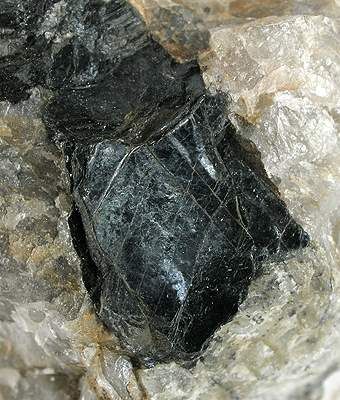 AnniteKFe2+3(AlSi3O10)(OH)2Mineral—
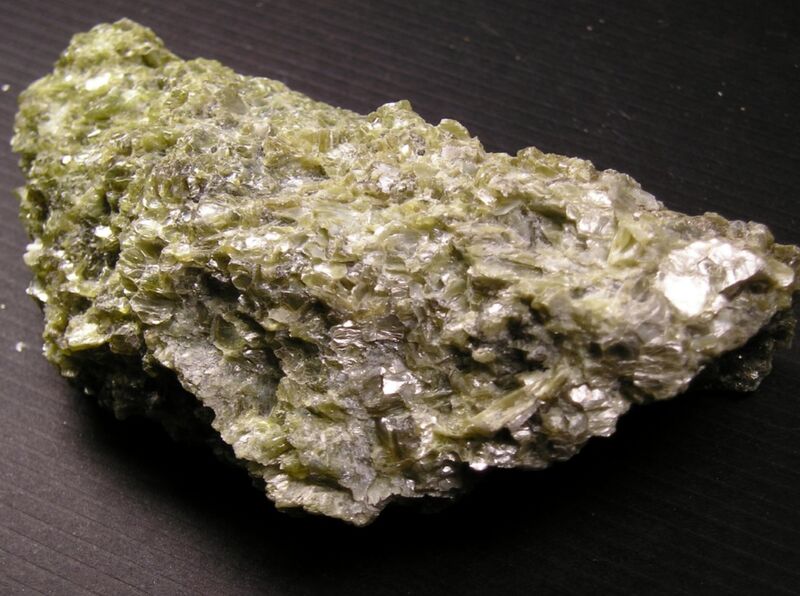 EastoniteKAlMg2(Si2Al2)O10(OH)2Mineral—
- FluoranniteKFe2+3(Si3Al)O10F2Mineral—
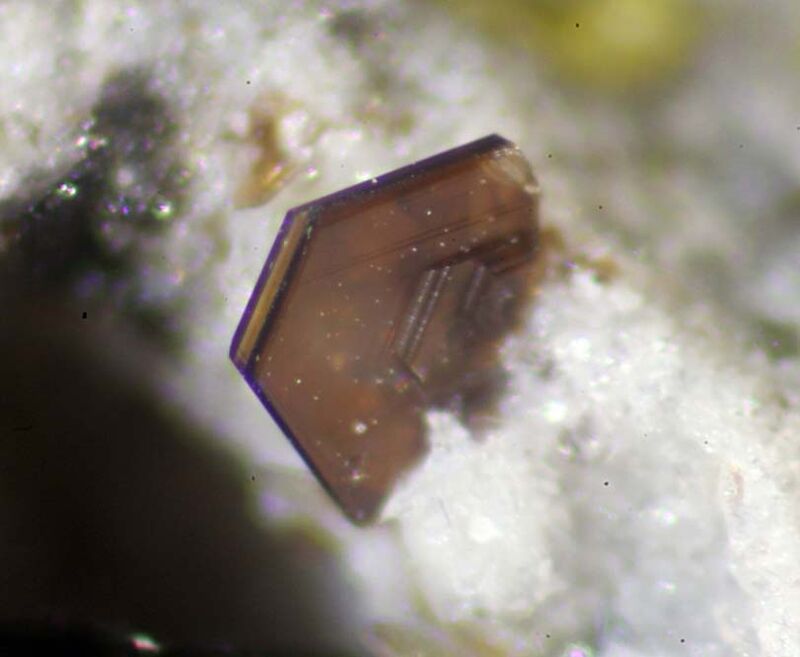 FluorophlogopiteKMg3(Si3Al)O10F2Mineral—
- FluorotetraferriphlogopiteKMg3Fe3+Si3O10F2Mineral—
- OxyphlogopiteK(Mg,Ti,Fe)3[(Si,Al)4O10](O,F)2Mineral—
- SiderophylliteKFe2+2Al(Si2Al2)O10(OH)2Mineral—
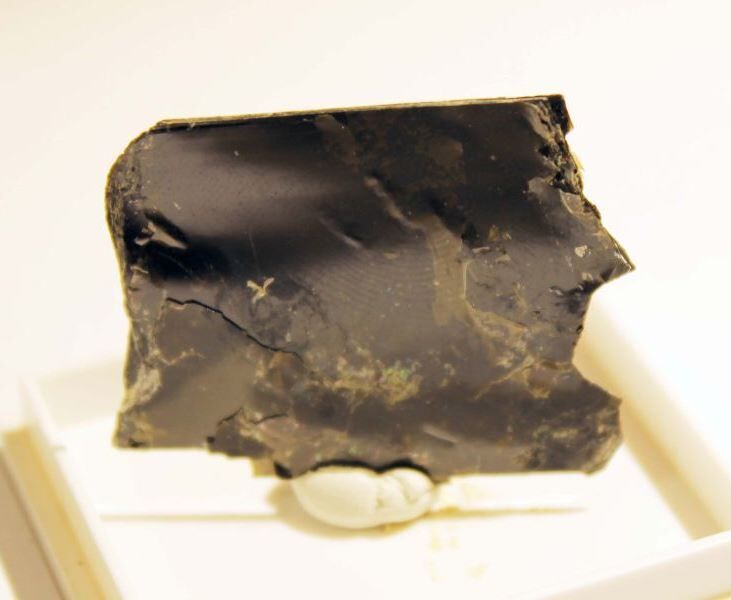 TetraferrianniteKFe2+3(Si3Fe3+)O10(OH)2Mineral—
- TetraferriphlogopiteKMg3(Si3Fe3+)O10(OH)2Mineral—
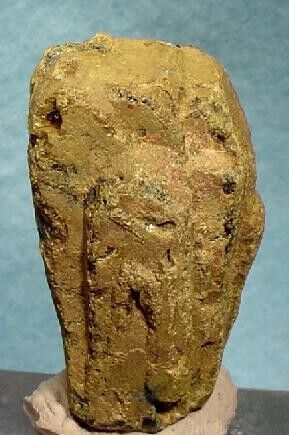 Aeschynite-(Nd)Nd(TiNb)O6Mineral—
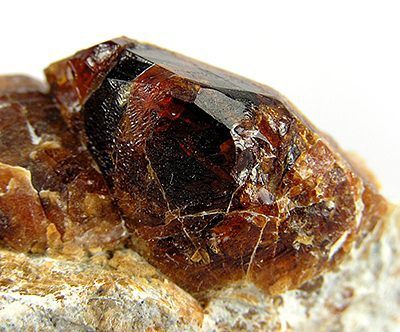 ChondroditeMg5(SiO4)2F2Mineral—
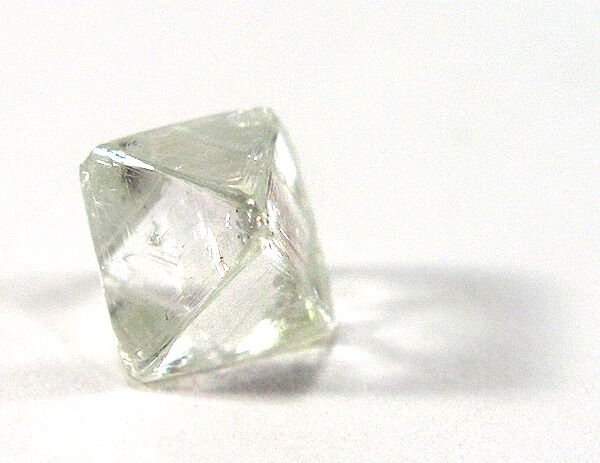 DiamondCMineral—
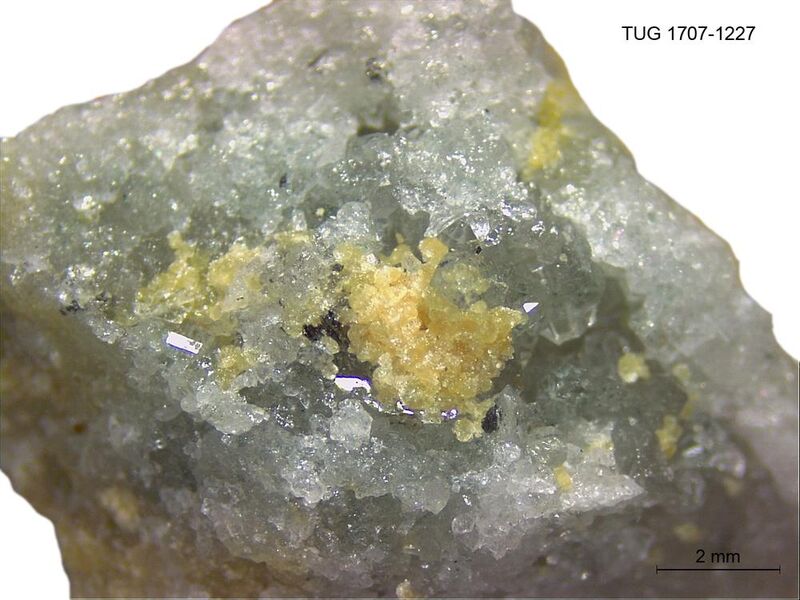 FluorapatiteCa5(PO4)3FMineral—
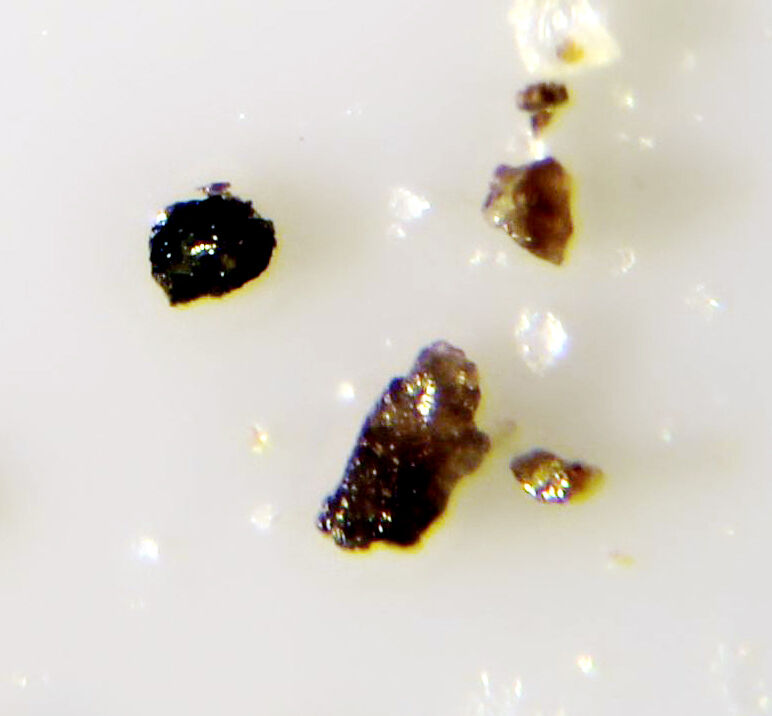 HafnonHf(SiO4)Mineral—
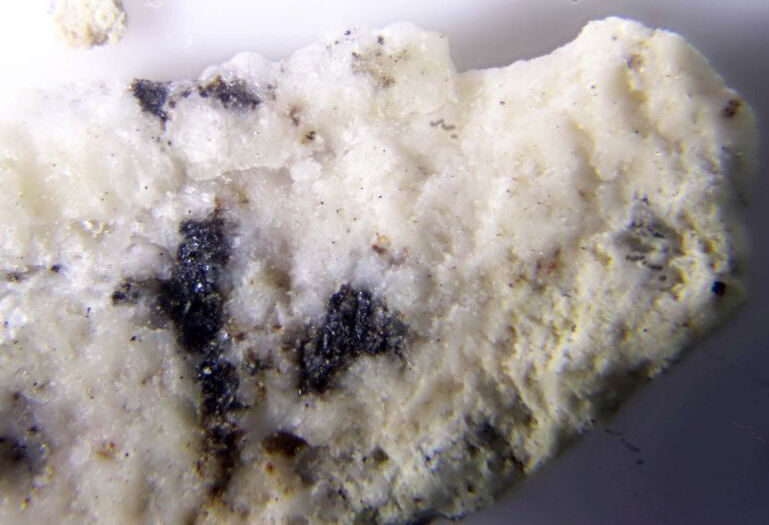 HarkeriteCa48Mg16[AlSi4O15(OH)]4(BO3)16(CO3)16 · 2(H2O,HCl)Mineral—
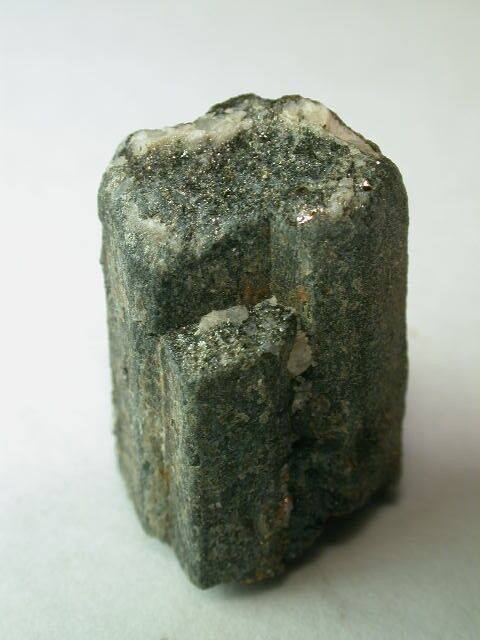 Kornerupine(Mg,Fe2+,Al,◻)10(Si,Al,B)5O21(OH,F)2Mineral—
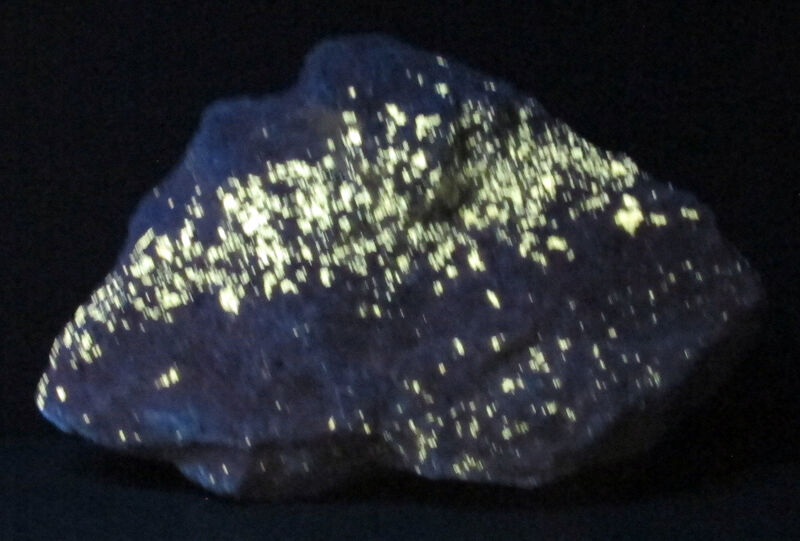 NorbergiteMg3(SiO4)F2Mineral—
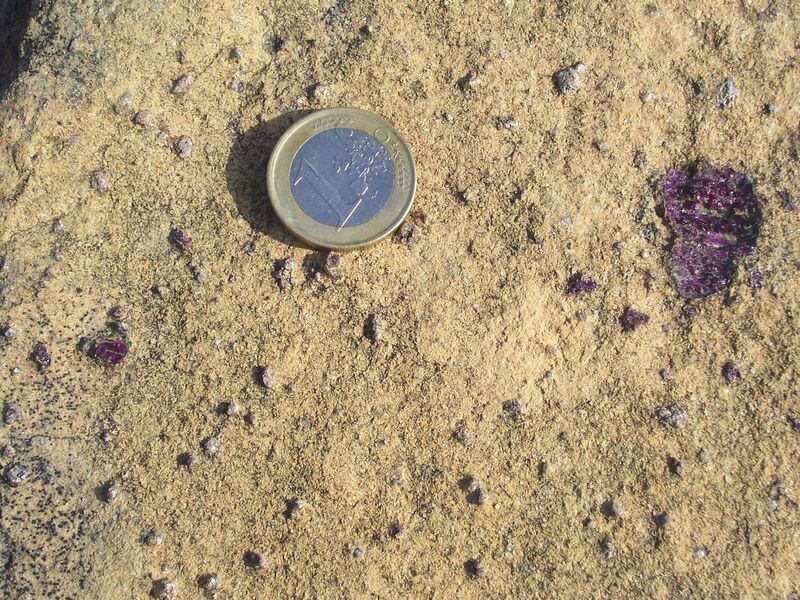 PyropeMg3Al2(SiO4)3Mineral—
Literature, links & citation
- 1841Breithaupt, J.F.A. (1841) Phengites Phlogopites. in Vollständige Charakteristik des Mineral-Systems 2nd Edition, Arnoldische Buchhandlung (Dresden and Leipzig), 398-399,
- 1954Levinson, A. A., Heinrich, E. Wm. (1954) Studies in the mica group; single crystal data on phlogopites, biotites, and manganophyllites. American Mineralogist, 39 (11-12) 937-945
- 1954Yoder, H.S., Eugster, H.P. (1954) Phlogopite synthesis and stability range. Geochimica et Cosmochimica Acta, 6 (4) 157-185 doi:10.1016/0016-7037(54)90049-6DOI: 10.1016/0016-7037(54)90049-6
- 1957Yoder, Hatten S. (1957) Experimental Studies on Micas: A Synthesis. Clays and Clay Minerals, 6 (1) 42-60 doi:10.1346/ccmn.1957.0060105DOI: 10.1346/ccmn.1957.0060105
- 1964Crowley, M. S., Roy, Rustum (1964) Crystalline solubility in the muscovite and phlogopite groups. American Mineralogist, 49 (3-4) 348-362
Entry last updated
@misc{mineral2026,
  author    = {Mineral Index editorial board},
  title     = {Phlogopite — Mineral Index},
  year      = {2026},
  url       = {https://mineralindex.org/minerals/phlogopite-3193}
}